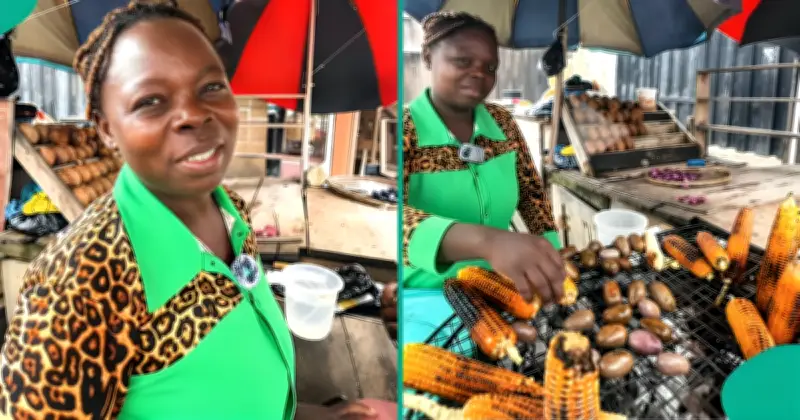
Viral video ignites debate over roadside business earnings
A Nigerian roasted corn seller has become the center of a heated online discussion after claiming in a viral TikTok video that she earns approximately ₦2.5 million every month from her roadside business. The video, posted by a content creator who stopped by her stand, shows the woman confidently stating her monthly income, sparking immediate reactions across social media platforms.
The timing of the claim added fuel to the fire, as it came just days after Nigeria's First Lady, Oluremi Tinubu, faced criticism for encouraging Nigerians to consider small businesses like selling roasted corn, akara, and kuli-kuli as a means of livelihood. Many social media users drew connections between the two events, with some accusing the corn seller of being paid to defend the First Lady's remarks.
Social media reactions divided
Nigerians on platforms like X (formerly Twitter) and TikTok expressed mixed opinions. One user wrote: "So Remi Tinubu was right? Well, she can still pay her to say this. E no get wetin these people no fit do." Another questioned the sustainability of the business: "So what happens when Corn is out of season."

However, many defended the corn seller, arguing that the informal economy is often underestimated. A commenter noted: "I don't know why Nigerians find it hard to believe she makes that. Little things we look and call poor man's business has put many people like her above most of you calling her a scam." Another added: "The ₦2.5M roasted corn story has people shocked. But do the math. Good spot, steady supply, loyal customers. The informal economy feeds this country. People clowning street vendors have never stood at a busy junction at 6pm watching the money move."
Corn seller defends her trade
In a subsequent video, the same corn seller defended her business, emphasizing its transformative potential. "You can use the money and train your children. You can use the money and build a house. You can use the money to do a lot of things," she said. "But when you look at people roasting corn and you think that it is a small business. But when you join the business, you will see, you will be happy." However, she did not clarify whether the ₦2.5 million figure represented total sales or net profit, leaving many questions unanswered.
Real costs of the roasted corn business
Mrs Lateef Rukayat, a roasted corn seller at Oke-Ado in Ibadan, provided insight into the actual expenses involved. She explained that inflation has significantly increased operating costs, though corn prices have recently dropped. "A few days ago, the price of a bag of corn reduced. Before this time, I used to buy a bag of corn between ₦30,000 to ₦35,000 and above. But, as the price reduced, a bag is now sold for ₦15,000," she said.
She also highlighted other costs: "The cost of everything we are going to buy is one of the reasons people do not want to start the trade again. We will start from transportation, the money used to take the corn from the farm to where we’re going to sell. Also, we buy charcoal to roast the corn, nylon and paper for packaging. These are all to consider in starting a roasted corn business. You now see that it’s not some kind of trade to just jump into."
Informal economy under spotlight
The debate has reignited conversations about the earning potential of Nigeria's vast informal economy, which employs millions but often goes unrecognized. While some vendors in high-traffic areas with loyal customer bases may achieve impressive sales during peak seasons, the business also faces challenges like seasonal demand, rising input costs, and operational expenses. Whether the viral seller's ₦2.5 million claim is revenue or profit remains unclear, but her statement has certainly sparked a necessary dialogue about the value and respect roadside businesses deserve.