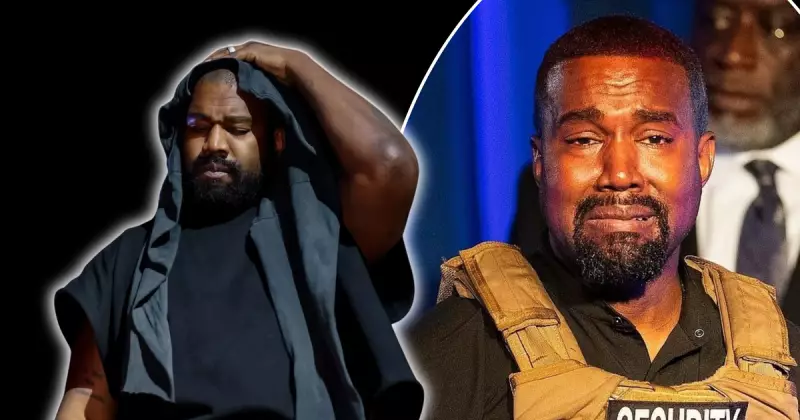
In a dramatic turn of events, the artist formerly known as Kanye West, now legally named Ye, has issued a comprehensive public apology for years of antisemitic rhetoric and controversial behavior. The apology was published as a full-page advertisement in the Wall Street Journal on January 26, 2026, under the title "To Those I've Hurt." This move represents a significant attempt by the 48-year-old rapper to address the fallout from his actions and explain their origins.
The Core of Ye's Apology
In his open letter, Ye explicitly denied being a Nazi or an antisemite, stating, "I love Jewish people." He expressed deep mortification for his past actions, particularly his use of the swastika and the sale of merchandise bearing the symbol. Ye described these actions as products of a "fractured state" where he gravitated toward "the most destructive symbol I could find." The apology delves into the medical and psychological factors that he claims contributed to his behavior.
Medical Background and Brain Injury
Ye revealed that 25 years ago, he was involved in a car accident that broke his jaw and caused injury to the right frontal lobe of his brain. At the time, the focus was on visible damage, such as fractures and swelling, while the deeper neurological injury went unnoticed. Comprehensive scans were not conducted, and the possibility of a frontal-lobe injury was never raised. This oversight, according to Ye, was not properly diagnosed until 2023, leading to serious damage to his mental health and a subsequent diagnosis of bipolar type-1 disorder.

He explained that bipolar disorder comes with a defense system of denial, where during manic episodes, individuals may feel they are seeing the world more clearly when they are actually losing their grip on reality. Ye cited statistics from the World Health Organization and Cambridge University, noting that people with bipolar disorder have a life expectancy shortened by 10 to 15 years on average and a two-to-three-times higher all-cause mortality rate than the general population.
Regret and Accountability
Ye admitted, "I lost touch with reality. Things got worse the longer I ignored the problem. I said and did things I deeply regret." He acknowledged treating some of the people he loves the worst, causing fear, confusion, humiliation, and exhaustion. In his fractured state, he gravitated toward destructive symbols like the swastika, which he now regrets. Ye emphasized that his actions do not excuse what he did, but he is committed to accountability, treatment, and meaningful change.
Apology to the Black Community and Seeking Help
Ye also addressed the Black community, apologizing for letting down the foundation of his identity. He expressed gratitude for their support through highs and lows, stating, "The Black community is, unquestionably, the foundation of who I am. I am so sorry to have let you down. I love us."
He detailed a four-month-long manic episode in early 2025 that led to psychotic, paranoid, and impulsive behavior, destroying his life. After hitting rock bottom, his wife encouraged him to seek help. Ye found comfort in Reddit forums, where he realized he was not alone in his struggles. He acknowledged the global impact of his words as a leader in his community and expressed newfound clarity through medication, therapy, exercise, and clean living.
Ye concluded by stating, "I'm not asking for sympathy, or a free pass, though I aspire to earn your forgiveness. I write today simply to ask for your patience and understanding as I find my way home."
Reactions and Broader Context
The Anti-Defamation League (ADL) acknowledged the apology as "long overdue" but cautioned that it does not automatically undo the damage caused by his history of hate speech. Ye's statement comes after a series of controversies that severely impacted his career, including being dropped by his agents in February 2025 following social media posts praising Adolf Hitler and declaring himself a Nazi. His online shop on Shopify was also shut down after he sold merchandise featuring swastikas.

Prior scandals include wearing a "White Lives Matter" T-shirt at a 2022 fashion show and collaborating with Marilyn Manson during the promotion of his album Donda. Ye first publicly disclosed his bipolar disorder in 2018 on his album Ye, but the new statement reveals the long-overlooked frontal lobe injury. Despite maintaining a lower profile recently, the 24-time Grammy winner has continued releasing music, with singles expected on his upcoming album Bully.
Recent Controversies and Settlements
Further controversy arose in May 2025 with the release of the song "Heil Hitler," which resulted in his travel rights to Australia being revoked. In late 2025, Adidas officially concluded its "Yeezy sunset" phase. After the catastrophic split in October 2022, the brand was left with over $1.3 billion in unsold inventory. The last remaining stocks of Yeezy Boost 350s and Slides were sold off in August 2025, with a significant portion of profits (roughly $150 million) donated to anti-hate groups like the ADL.
In late 2024, the long-standing "secret arbitration" and multi-million dollar legal battle between Ye and Adidas reached a settlement. According to a statement from Adidas CEO Bjorn Gulden in October 2024, both parties reached an amicable out-of-court agreement to end all legal proceedings. The settlement was finalized without any money changing hands, with Gulden stating, "No one owes anybody anything anymore. So whatever was is history." All pending claims from both sides were withdrawn as part of the deal.
Future Plans
Immediately following his public apology, Ye is set to take center stage in Mexico City with a high-stakes weekend of live music and the launch of his next solo era. He will perform back-to-back shows at the Monumental Plaza de Toros México on Friday, January 30, and Saturday, January 31, 2026. The first concert on January 30 doubles as the official release event for his 11th studio album, Bully.
This apology marks a pivotal moment in Ye's career, as he seeks to rebuild his reputation and address the serious implications of his past actions while highlighting the profound effects of untreated mental health issues.