Leo DaSilva Terminates Employee Over Theft, Voices Deep Frustration
Reality television personality Leo DaSilva has publicly lamented after firing yet another employee for theft, questioning the motives behind such actions despite his efforts to provide substantial support. The Big Brother Naija alum took to social media to share his dismay, highlighting a pattern of dishonesty that has left him exasperated.
Details of the Incident and DaSilva's Outburst
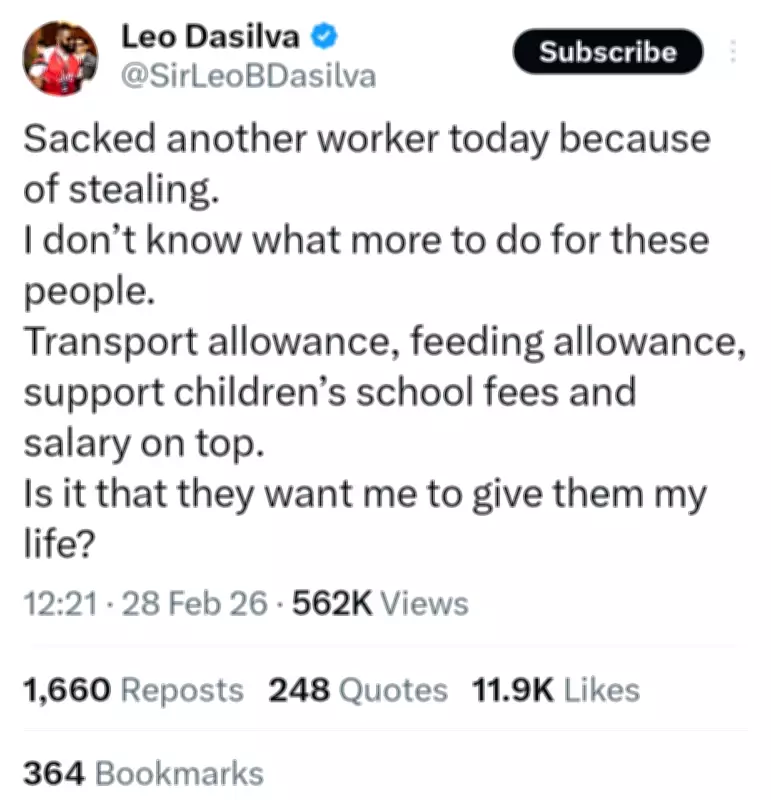
In a recent post on the platform X, DaSilva revealed that he had to sack a worker due to stealing, marking another instance in what appears to be a recurring issue. He expressed confusion and frustration, stating that he goes above and beyond to ensure his employees are well-compensated and cared for. According to DaSilva, his benefits package includes transport allowances, feeding allowances, support for children's school fees, and a competitive salary on top of these perks.
DaSilva wrote emphatically: "Sacked another worker today because of stealing. I don’t know what more to do for these people. Transport allowance, feeding allowance, support children’s school fees and salary on top. Is it that they want me to give them my life?" This rhetorical question underscores his sense of betrayal and the emotional toll of dealing with repeated thefts from his team.

Background and Broader Implications
Leo DaSilva, known for his appearance on Big Brother Naija, has built a public persona that often includes sharing personal and professional challenges. This incident sheds light on the difficulties faced by celebrities and entrepreneurs in managing staff, particularly when trust is breached. Theft in the workplace can lead to significant financial losses and strained relationships, as evidenced by DaSilva's candid reaction.
This is not the first time DaSilva has encountered such issues, suggesting a potential pattern that may require stricter oversight or revised hiring practices. His lament reflects a common dilemma among employers who strive to create supportive environments but face dishonesty from some employees. The situation raises questions about employee loyalty and the effectiveness of incentive structures in preventing misconduct.
Reactions and Industry Context
While specific responses from the fired employee or others involved have not been disclosed, DaSilva's post has likely sparked discussions among fans and followers about workplace ethics and the challenges of fame. In the entertainment industry, where personal brands are closely tied to public perception, such incidents can impact reputations and business operations.
DaSilva's experience highlights the importance of robust security measures and clear communication in employment settings. It also serves as a reminder that even with generous benefits, some individuals may resort to theft, prompting employers to balance trust with accountability. As he continues to navigate his career, this episode may influence how he manages his team moving forward.