Margaret Obi's Lavish Party Display Sparks Debate on Peter Obi's 'No Shishi' Stance
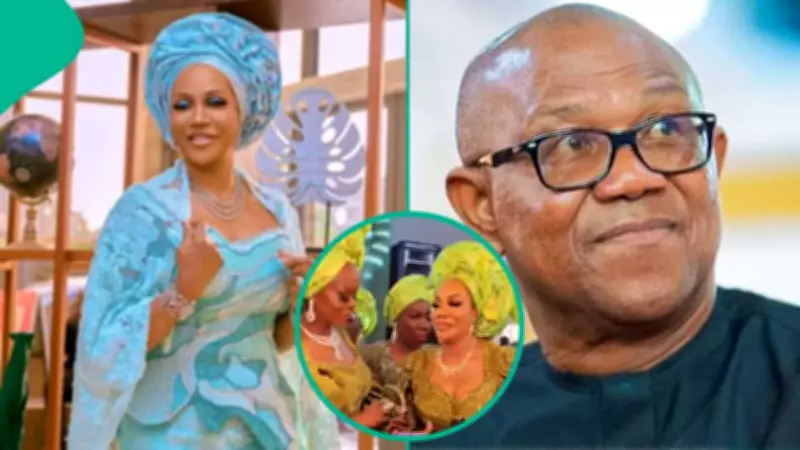
The wife of former Anambra state governor Peter Obi, Margaret Obi, recently became a trending topic on social media platform X following her appearance at an exclusive high-class event in Lagos. A viral video captured the politician's wife elegantly dressed on the dance floor, where she was seen handing money to another woman during the celebration.
High-Profile Event Attracts Nigeria's Elite
The event in question was the combined 85th and 70th birthday party and thanksgiving celebration for Alhaji Olugbenga Olusanya and Alhaja Idowu Olusanya, who are in-laws to billionaire Chief Kessington Adebutu, popularly known as Baba Ijebu. The lavish gathering attracted numerous prominent figures from Nigeria's social and business elite.
Among the distinguished guests were billionaire industrialist Razak Okoya and his wife Shade Okoye, alongside other notable personalities from various sectors. However, it was Margaret Obi's presence and actions that captured the most attention and subsequently went viral across social media platforms.

Social Media Erupts with Contrasting Reactions
The video shared by media personality Bisi Olatilo showed Margaret Obi dancing joyfully to a live performance of Asake's hit song "Lonely at the Top" before she was seen handing what appeared to be bundles of money to another woman at the event. This display quickly ignited a heated debate on social media, with many netizens drawing comparisons to her husband's well-known political stance against the monetization of politics.
Peter Obi has famously used the phrase "we no dey give shishi" to emphasize his opposition to the practice of distributing money during political campaigns and activities. The contrast between this public position and his wife's actions at the party prompted widespread discussion and commentary across various online platforms.
Defenders and Critics Clash Online
Social media users expressed sharply divided opinions about Margaret Obi's party behavior. Some critics questioned the source of the money she was distributing, with one user asking "Where Margret See Money?" while noting the apparent contradiction with her husband's political messaging.
However, supporters quickly came to her defense, arguing that her personal activities should be separated from her husband's political stance. Several commenters pointed out that Margaret Obi is an independent adult woman who should be free to spend her own money as she chooses, regardless of her husband's political career.
Other defenders highlighted the Obi family's established business background, noting that Peter Obi was a successful businessman before entering politics and that his wife likely has her own sources of income. One user commented that the family's wealth is traceable through legitimate business ventures, unlike some other political figures whose financial sources remain unclear.
Previous Public Appearances and Statements
This is not the first time Margaret Obi has attracted public attention at high-profile events. She was previously among the prominent figures who attended the burial ceremony of the late Otunba Adekunle Ojora at Eko Hotel and Suites in Lagos, demonstrating her regular presence in elite social circles.
Regarding their marriage, Peter Obi has made public statements emphasizing his commitment to his wife. The former governor has previously vowed never to divorce Margaret Brownson Obi regardless of any circumstances, stating that their marriage was "sealed" and that he would never consider marrying another woman.
Broader Implications for Political Image
The incident raises questions about how the personal lives and actions of political family members intersect with public political messaging. While Peter Obi has built his political brand around principles of financial prudence and opposition to the monetization of politics, his wife's visible participation in what some perceive as lavish spending creates a potential contradiction that opponents may seek to exploit.

The debate also touches on broader issues of gender roles in political families, with some commentators arguing that political spouses should be allowed personal autonomy separate from their partners' public positions. Others maintain that in the context of Nigerian politics, where family image is closely tied to political perception, such distinctions are less clear-cut.
As the discussion continues to unfold across social media and potentially in broader political discourse, the incident serves as a reminder of how quickly personal moments can become public controversies in the digital age, particularly for families of prominent political figures.