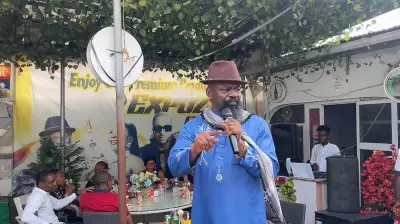
Radiogad Launches Scathing Attack on Cubana Chief Priest, Endorses Isaac Fayose's Controversial Remarks
In a recent video that has ignited widespread debate across social media platforms, Nigerian influencer Radiogad has launched a blistering critique of prominent businessman Cubana Chief Priest. The controversial media personality accused the socialite of being excessively focused on displays of wealth and personal status while neglecting critical issues affecting the Igbo community in Nigeria.
Support for Isaac Fayose's Controversial Claims
Radiogad explicitly endorsed the contentious statements made by Isaac Fayose, who recently asserted that many Igbos are easily swayed by personal gain rather than collective progress. The media personality declared his agreement with Fayose's assessment, despite identifying as Igbo himself, stating that selfishness within the community has hindered effective responses to systemic injustices.
"I'm an Igbo man but I completely agree with Isaac Fayose," Radiogad stated emphatically in his video. "Igbos are cheap. Igbos are selfish. Igbos are greedy. They can be easily bought."

Questioning Priorities and Community Leadership
The influencer specifically questioned Cubana Chief Priest's response to Fayose's original comments, challenging whether the businessman possessed the maturity to engage with an elder on such matters. Radiogad pointed to the continued detention of pro-Biafran leader Nnamdi Kanu as a prime example of an urgent community issue that he believes is being overshadowed by displays of luxury and political alliances.
According to Radiogad, figures like Cubana Chief Priest represent what he described as a culture of self-interest that undermines solidarity among Igbos. He contrasted the lavish lifestyles of some Igbo elites with businessmen from other communities who maintain modest lives despite greater wealth, suggesting that showmanship has not translated into meaningful support for the Igbo people.
Background of the Controversy
The controversy originated when Isaac Fayose criticized prominent Igbo businessmen, including Obi Cubana and Cubana Chief Priest, suggesting they prioritize personal enrichment over community support. Fayose's remarks were reportedly motivated by perceptions that these businessmen were aligning with the ruling All Progressives Congress (APC) party.
Radiogad's intervention has amplified the debate, with his video circulating widely online and sparking intense discussions about internal divisions within the Igbo community. He concluded his remarks by urging Igbos to confront these internal challenges, emphasizing that unity and genuine concern for collective struggles are essential for meaningful progress.
Online Reactions and Divided Opinions
The video has generated polarized responses from netizens, with some supporting Radiogad's critique while others questioned his credibility and motives.
One user commented: "The level of negative mentality in this country is too much and you wonder how we're going to move forward as a country with this level of illiterate young people who think being involved in politics is just about money."
Another netizen defended Cubana Chief Priest: "Chiefpriest has been an active politician for a long time and I think he's been SSA to the Governor of his State."
A different perspective emerged from another commenter: "Everybody talking about Igbos and it's annoying. Igbos are greedy because of Cubana? But you won't reason that they are selfless when they did sit at home in solidarity for MNK as one man show his greed."
Yet another user challenged Radiogad directly: "Radio god wey him Radio don spoil tey tey oo. Even if anyone is wrong between Isaac and Chief Priest, who's radiogod in that space?"
Broader Implications and Community Reflection
This incident highlights ongoing tensions within Nigerian ethnic communities regarding leadership, representation, and priorities. Radiogad's comments have touched upon sensitive issues of intra-community criticism, generational respect, and the appropriate role of successful individuals in addressing collective struggles.

The debate continues to evolve online, with many calling for more substantive discussions about how ethnic communities can balance individual success with collective advancement in Nigeria's complex socio-political landscape.