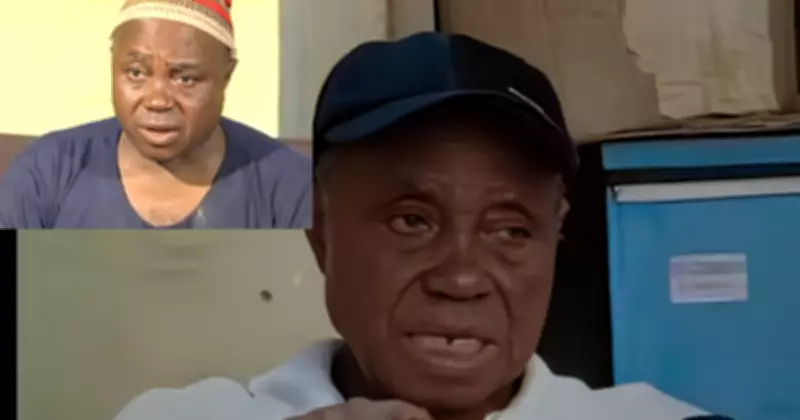
Veteran Nollywood actor Roy De Nani has spoken out about what he describes as a deep culture of abandonment within Nigeria's film industry, revealing that he lost a son and a daughter to sickle cell disease while colleagues he worked alongside for years never reached out to him. Speaking on the Where Is The Lie podcast, De Nani, known for his roles in Midnight Love, Onye Eze, and Prince of Fire, recounted how his children, both carriers of the SS genotype, required blood transfusions he could not afford. They did not survive. A brother also died during the same period. Through all of this, no actor or actress from the industry he remains a registered member of came to visit.
A Measured Testimony
De Nani was measured in how he assigned blame. He did not accuse his colleagues of malice, but he said they had not been moved. For many listeners, this distinction was worse than outright condemnation. He closed by stating he would still return to acting if the opportunity arose. His account is the latest in a series of public testimonies from veteran Nigerian entertainers exposing the financial and emotional toll of a career in Nollywood's earlier era.
Other Veterans Share Similar Struggles
In March, Abiodun Ayoyinka, the actor behind the iconic Papa Ajasco character, revealed he has spent decades unable to commercially leverage the role that made him famous because the persona is trademarked by producer Wale Adenuga, blocking him from endorsement deals and advertising campaigns without prior approval. Ayoyinka disclosed that he owns neither a house nor a car, and that production on the sitcom has become so irregular that it sometimes resumes only once every two years. He ultimately shared his bank details publicly, appealing to strangers for financial support.

The question of structural reform has moved beyond individual testimonies. In April, Kanayo O. Kanayo submitted a formal proposal to the Actors Guild of Nigeria calling for a policy that would mandate lifetime royalty payments for actors whose work appears on streaming platforms. He argued that the existing one-time payment model is the root cause of the financial precarity veterans routinely face in their later years. Patience Ozokwor offered perhaps the most direct summary of the problem: actors are paid once for their work, regardless of how long that work continues to generate revenue for producers and platforms.
Industry Challenges and Pushback
The proposal drew immediate pushback, with industry analysts noting that most Nollywood productions are independently financed with no studio infrastructure behind them, limiting long-term support structures. The debate over royalties, pension protections, and welfare structures for veteran performers is not new. What is new is the frequency and candour with which those veterans are now speaking in podcasts, interviews, and public appeals for cash. Roy De Nani's account adds a particular edge to that conversation and is only the latest in a series of revelations.