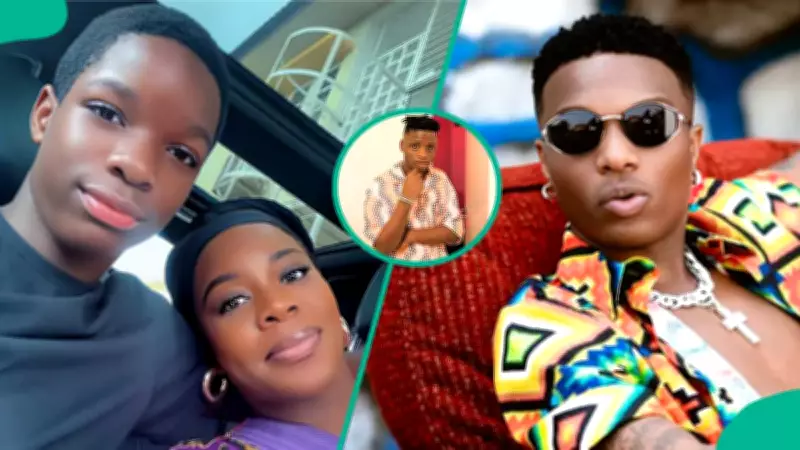
Wizkid's Baby Mama Unleashes Fiery Response to Disturbing Comment About Son
Oluwanishola Ogudu, the mother of Wizkid's eldest son Boluwatife Balogun, has ignited a social media firestorm with her fierce condemnation of a critic who made a disturbing prayer targeting her 15-year-old son. The explosive exchange highlights the toxic undercurrents of online fan culture and the protective instincts of celebrity parents.
The Triggering Incident
The controversy erupted when Boluwatife, popularly known as Bolu Champz, shared stylish photographs of himself on the X platform with a playful caption that read: "Fine boy no pimple, I resemble who dey follow do promo." This seemingly innocent post drew an unexpected and deeply troubling response from a user identifying as @30bguser0, who claimed affiliation with Davido's fan base known as 30BG.
The critic's comment crossed into dangerous territory with a morbid prayer that suggested divine intervention to swap the teenager's existence for the return of deceased musician Destiny Boy. The exact words that triggered the uproar were: "God take him and give us back Destinyboy." This reference to the late singer, whose real name was Afeez Adesina and who passed away in January 2026 at age 22 after a brief illness, added another layer of insensitivity to the already disturbing remark.

Maternal Fury Unleashed
Oluwanishola Ogudu did not let this comment slide. The protective mother responded with blistering intensity, describing the critic as mentally unstable and extending her rebuke to their entire family lineage. Her fiery reply read: "You are a mentally deranged individual!!! I wish this prayer on you and your godforsaken generation. Bloody nuisance."
This outburst represents more than just celebrity gossip—it showcases the raw emotional response of a parent shielding their child from harmful online rhetoric. The incident has sparked widespread discussion about the boundaries of acceptable commentary regarding celebrity children and the psychological impact of such toxic exchanges.
Fan Rivalry Escalation
The exchange exposes the ongoing toxic rivalry between fan groups of Nigeria's two biggest Afrobeat stars, Wizkid and Davido, which frequently spills into personal attacks online. The critic attempted to justify their comment by referencing past incidents, writing: "When your useless ex mocked my fave's late mom and his friends who passed, what did you say? Now that I'm responding in same toxic way, it's a problem right?"
This tit-for-tat mentality reveals how fan conflicts can escalate into disturbing territory, with innocent parties like Boluwatife becoming collateral damage in online wars between celebrity supporters. The incident demonstrates how tragic events, like Destiny Boy's untimely death, can be weaponized in unrelated disputes, adding further pain to already grieving communities.
Online Reactions and Divided Opinions
The social media response has been polarized, with fans and observers taking various positions on the controversy. Some supporters urged Ogudu to involve authorities, with user @DJ_NEWGUY commenting: "Abeg involve police, make he sleep inside cell small, don't let it slide please." Others warned against engaging with negativity, as @wizkidgfriend advised: "These people don't have a life behind those phones, your response is their biggest life achievement, please don't give negativity visibility."
User @Aibee_baba expressed concern for the young celebrity, stating: "Pick am up naaaaa. Make una no allow this kind thing for this young champ jare. Make him papa go eat watery beans," while @prepre_talented cautioned: "Mama please don't take this lightly cuz if you let this slide there will be more to come from them." The divided reactions highlight the complex dynamics of managing online harassment in the celebrity sphere.
Broader Context of Protection
This incident follows previous instances where Shola Ogudu has defended her son's musical journey. Earlier this year, she responded to critics who questioned the performance of Bolu Champz's debut EP titled Champions Arrival, urging the public to stop pressuring the teenager and focus on his growth as he balances school and music.

The current controversy amplifies ongoing conversations about the psychological safety of celebrity children in the digital age, the responsibilities of social media platforms in moderating harmful content, and the ethical boundaries of fan commentary. As online spaces become increasingly hostile, particularly in entertainment circles, incidents like this raise important questions about digital citizenship and the human cost of viral controversies.
The exchange serves as a stark reminder of how quickly online interactions can escalate from playful banter to deeply disturbing territory, with real emotional consequences for those involved. It also underscores the challenges celebrity families face in navigating public scrutiny while protecting their children's wellbeing in an increasingly connected world.