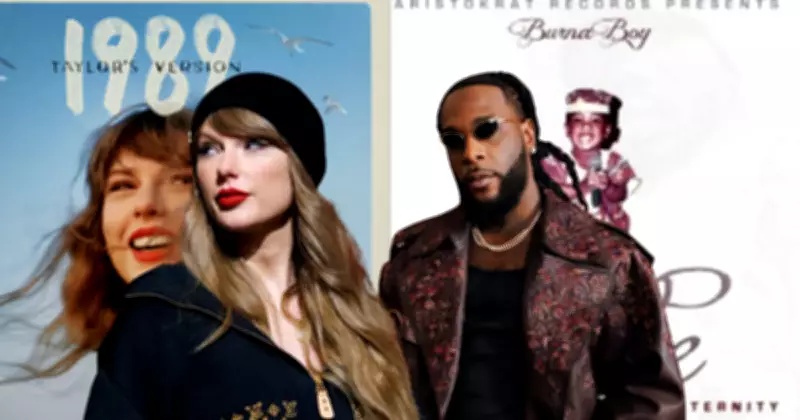
The High-Stakes Battle for Music Masters: Why Artists Like Burna Boy and Taylor Swift Are Paying Millions
In the dynamic world of the music industry, the term "masters" has emerged as a pivotal concept, frequently appearing in song lyrics, artist interviews, and high-profile label disputes. Recently, this term has captured significant attention in Nigerian music circles following Grammy-winning superstar Burna Boy's multi-million dollar purchase of his catalogue from his former label, Aristokrat Records—a transaction now entangled in legal proceedings.
Burna Boy joins a prestigious list of international artists, including Taylor Swift, who have invested substantial sums to reclaim their masters, a strategic move driven by a desire to maintain comprehensive control over their careers. For those unfamiliar, masters refer to the original recordings of songs—the primary files from which all copies, variations, and adaptations are derived. These masters represent the culmination of lyrics, melodies, and production, forming the final, polished version of a track.
The Financial and Creative Imperatives Behind Masters Ownership
Masters hold immense value, which is why record labels and investors pour significant resources into acquiring them, aiming to recoup their investments through royalties. However, the sheer monetary worth alone does not fully explain why artists go to great lengths, often facing litigation and power struggles, to buy back their masters. The decision is typically influenced by a blend of business, personal, and creative factors.

Ownership as a Premium Asset in Music
A recent example that underscores the importance of masters ownership involves rapper French Montana, who sparked online controversy by revealing he has not received any royalty payments from his diamond-certified hit "Unforgettable," featuring Swae Lee. Despite the song achieving 11x platinum status, with 2.7 billion streams on Spotify and 1.8 billion views on YouTube, French Montana's lack of earnings stems from his label's ownership of the masters. The label continues to collect streaming royalties, deducting marketing costs and advances before any payments reach the artist.
This reality is reshaping how top music stars structure their label deals and distribution contracts, with many now negotiating for masters ownership upfront. Traditionally, labels retain masters for extended periods to safeguard their investments, prompting successful artists or those seeking independence to pursue buybacks. Notable figures like Jay Z, Rihanna, and Frank Ocean have also reclaimed their masters, setting a precedent in the industry.
Control Over Creative Destiny and Intellectual Property
Whoever owns the masters effectively dictates the fate of the catalogue, using it as collateral for financing, setting terms for licensing or sampling, or even selling it without the artist's consent. Taylor Swift's highly publicized conflict with music executive Scooter Braun exemplifies this: after her former label, Big Machine Label Group, sold her first five albums' masters to Braun without her approval, she embarked on a bitter battle. Unable to repurchase them initially, Swift re-recorded her early albums as "Taylor's Version," eventually securing a $360 million deal in 2025 to regain control.
Artists like Burna Boy seek to buy back their masters to manage access to their intellectual property and ensure their work aligns with their vision. In Burna Boy's case, his 2024 purchase from Aristokrat Records, reportedly worth millions, granted him control over albums and songs released during his 2010-2014 tenure with the label. However, this sale has sparked legal challenges from 960 Music Group, which claims a 40% stake in Aristokrat Records and argues the deal was conducted without its knowledge, potentially voiding the transaction.

The Lucrative Resale Market and Status Symbol
Music catalogues have become increasingly valuable in equity markets, attracting venture capitalists and financiers willing to pay hundreds of millions for the works of renowned artists. For instance, Bruce Springsteen sold his catalogue to Sony Music Group for $550 million in 2021, while Justin Bieber and Britney Spears have engaged in similar high-value deals. For Burna Boy, whose career has soared exceptionally, repurchasing his masters presents an attractive option for potential future resale, especially if he retains ownership.
Beyond financial gains, owning masters serves as a status symbol in the music industry. In hip-hop, artists like Megan Thee Stallion and 21 Savage have proudly highlighted their masters ownership, while others, such as Rick Ross, have used the lack thereof to critique peers. This cultural significance, combined with creative autonomy and financial control, likely influenced Burna Boy's decision to reclaim his catalogue from Aristokrat Records.
Comparing Burna Boy and Taylor Swift's Journeys
Both Burna Boy and Taylor Swift have invested millions to regain their catalogues, driven by a shared desire for ownership and control. However, their situations differ markedly. Swift's struggle involved her masters being sold without her consent, leading to a public feud and eventual repurchase. In contrast, Burna Boy's purchase from Aristokrat Records is contested in court by 960 Music Group, which alleges the sale infringes on its investment interests. The outcome hinges on legal evidence regarding corporate governance and agreements under Nigerian law.
As the music industry evolves, the trend of artists buying back their masters reflects a broader shift toward empowerment and independence. For stars like Burna Boy and Taylor Swift, this investment is not merely about money—it's about securing their legacy, creative freedom, and long-term financial stability in an ever-changing landscape.