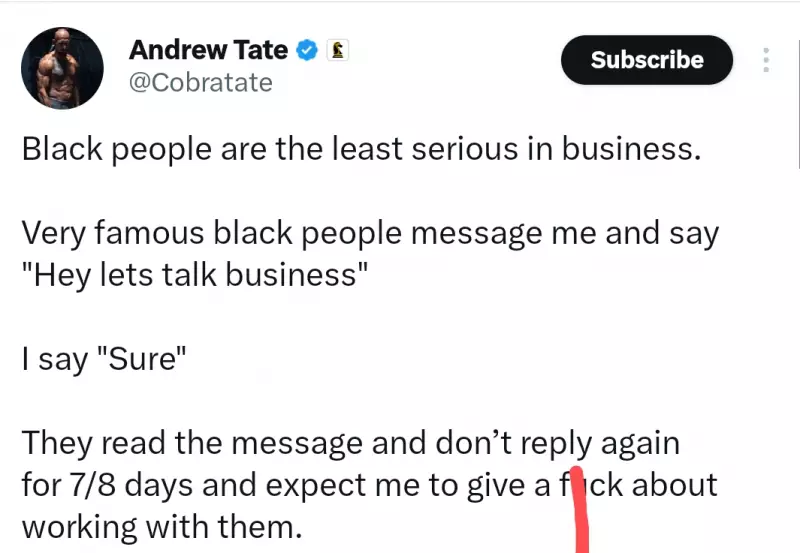
Controversial internet personality Andrew Tate has ignited a firestorm of criticism on social media following a contentious post about Black people and their approach to business.
Tate's Provocative Claim on X
The former kickboxer, known for his polarizing views, took to his X account on Monday, January 13, 2026, to make a broad generalization. In the post, which has since been widely circulated, Tate asserted that "Blvck people are the least serious in business." He elaborated by claiming that famous Black individuals often initiate contact with him to discuss potential ventures, only to then become unresponsive for days before replying.
Tate stated that this pattern of communication, in his view, demonstrates a lack of seriousness which ultimately makes him disinterested in pursuing any business collaborations with them. The post did not name any specific individuals but presented the behavior as a common trait.

Immediate Online Backlash and Reactions
The statement was met with swift and widespread condemnation from users across X and other platforms. Many accused Tate of perpetuating harmful stereotypes and employing racist rhetoric under the guise of discussing business etiquette.
Critics were quick to point out the fallacy of applying a personal anecdote or limited experience to an entire racial group. The backlash highlighted the dangerous impact such statements from figures with large followings can have. Commenters also questioned the validity of his claim, noting the vast and successful landscape of Black entrepreneurship globally and within Nigeria's thriving business ecosystem.
The controversy was first reported by popular blogger Linda Ikeji on her site on the same day, January 13, 2026, at approximately 9:51 AM. Her coverage amplified the story, bringing it to the attention of a wider Nigerian audience.
Broader Implications and Discussion
This incident has reignited discussions about responsibility on social media, the spread of stereotypes, and the intersection of race and business commentary. Tate, who has a history of making inflammatory statements, often frames his content as blunt business advice or masculine coaching.
However, this particular post has been largely interpreted as a step beyond his usual provocations, venturing into racially charged territory. The episode serves as a reminder of how quickly unsubstantiated generalizations can damage productive discourse, especially in the diverse and dynamic world of international business where Nigerian professionals and entrepreneurs are key players.
The fallout continues online, with many calling for the post to be taken down and for platforms to hold influential users accountable for spreading divisive rhetoric.