Singer Simi Ignites National Debate on Male Accountability and Rape Culture
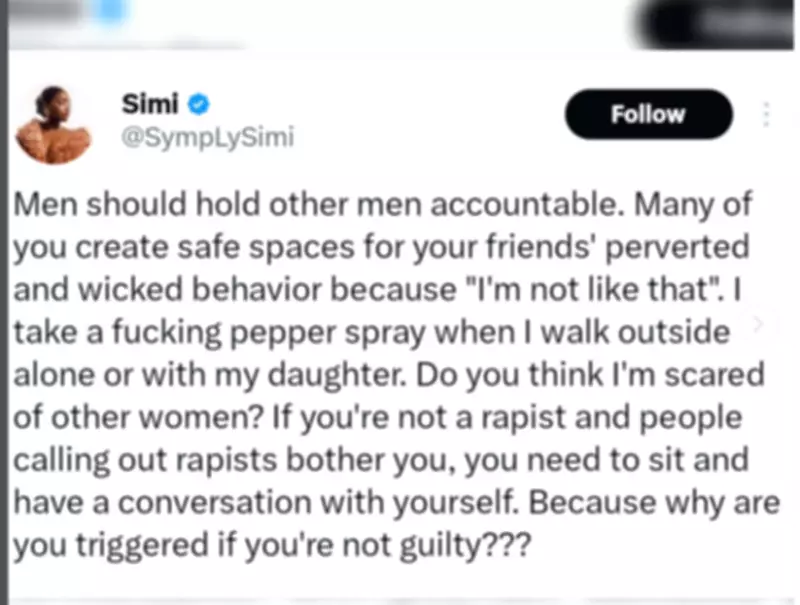
Nigerian music star Simi has triggered intense nationwide conversations after sharing a powerful message about male accountability and societal responsibility regarding sexual violence. The award-winning singer took to social media platform X to express her views, creating waves across digital platforms throughout Nigeria.
Simi's Direct Message About Male Complicity
In her detailed post, Simi specifically addressed what she described as problematic behavior among men who maintain friendships with individuals exhibiting predatory tendencies. She argued that many men actively create "safe spaces" for their friends' harmful actions rather than confronting inappropriate behavior directly. According to the singer, simply declaring "I'm not like that" represents insufficient action when friends engage in concerning conduct.
The vocalist emphasized that true allyship requires active intervention and vocal opposition when witnessing problematic behavior among peers. Her commentary highlighted what she perceives as widespread passive complicity that enables harmful environments to persist unchecked within social circles.

Personal Safety Measures and Societal Fears
Simi revealed personal safety precautions that underscore her concerns about potential threats. She disclosed carrying pepper spray whenever venturing out alone or with her young daughter, explicitly stating that her apprehension stems not from women but from potential male threats. This admission provided concrete examples of how safety concerns manifest in daily life for many Nigerian women.
Her most provocative statement directly addressed defensive reactions to conversations about sexual violence: "If calling out rapists makes you uncomfortable, you need to question yourself." She elaborated that individuals who aren't perpetrators but feel bothered when rapists face criticism should engage in serious self-reflection about their positions and values.
Polarized Public Reactions and Counterarguments
The post generated immediate and divided responses across Nigerian social media platforms. Supporters strongly endorsed Simi's position, arguing that:
- Male accountability represents a crucial component of addressing sexual violence
- Decent individuals should never defend or ignore predatory behavior
- Creating cultures of accountability requires active participation from all community members
However, critics presented alternative perspectives, contending that:
- While rape remains unequivocally wrong, conversations must also address false accusations
- Constructive dialogue should avoid creating unnecessary divisions among people working toward safer societies
- Selective outrage about specific incidents undermines comprehensive solutions
Some commenters questioned whether individuals making proven false accusations face consequences comparable to convicted offenders, while others accused Simi of inconsistent engagement with past incidents. The debate expanded beyond initial parameters to encompass broader discussions about justice systems, social responsibility, and gender dynamics in contemporary Nigeria.
Broader Implications for Nigerian Society
This exchange highlights ongoing national conversations about gender relations, personal safety, and collective responsibility. As a prominent cultural figure, Simi's intervention carries significant weight in shaping public discourse around sensitive but crucial topics. The polarized reactions demonstrate both progress in discussing previously taboo subjects and persistent divisions in approaches to addressing complex social issues.
The conversation continues evolving as Nigerians grapple with balancing individual accountability, community safety, and equitable justice systems in a rapidly changing social landscape.