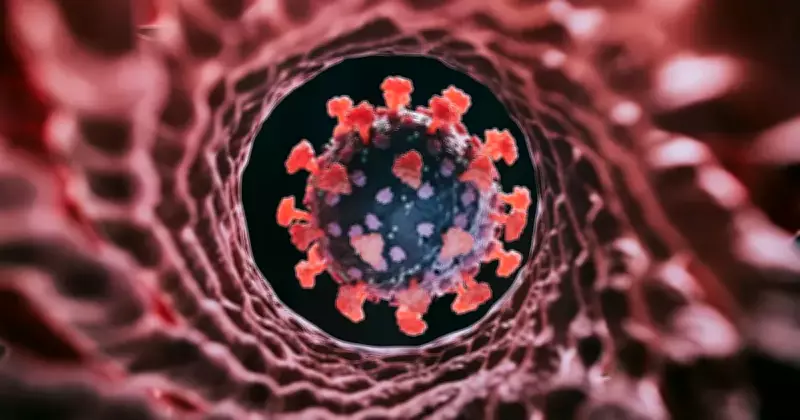
Cicada COVID Variant Detected in 23 Countries: What We Know About BA.3.2
A newly identified COVID-19 variant designated BA.3.2, nicknamed "Cicada," is being closely monitored by global health authorities after spreading to more than 23 countries worldwide. The variant, first identified in South Africa in November 2024, has now been detected across multiple continents including Africa, Europe, Asia, and North America.
Understanding the Cicada Variant
The Cicada variant belongs to the Omicron family of COVID-19 viruses, which has been dominant globally since 2021. What distinguishes BA.3.2 is its unusually high number of mutations, particularly in the spike protein region responsible for attaching to human cells. This genetic profile has raised concerns about potential increased transmissibility and possible partial evasion of immunity from prior infections or vaccinations.
Despite these characteristics, global health organizations have not classified BA.3.2 as a "variant of concern." Instead, it remains designated as a "variant under monitoring," indicating that while it's being tracked carefully, there's no current evidence suggesting it causes more severe disease than previous variants.

Global Spread and Detection
The variant has been confirmed in at least 23 countries including Japan, Kenya, the United Kingdom, France, New Zealand, Australia, Germany, Denmark, the Netherlands, and the United States. Health agencies report detection through multiple methods:
- Routine testing of symptomatic individuals
- Wastewater surveillance systems
- Genomic sequencing programs
The widespread geographical distribution suggests BA.3.2 is already crossing international borders, with experts believing it may be more prevalent than reported, particularly in regions with limited testing and genomic surveillance capabilities.
Symptoms and Severity Assessment
Current evidence indicates BA.3.2 does not cause more severe illness than previous Omicron variants. Reported symptoms remain consistent with typical COVID-19 infections:
- Sore throat
- Fever and fatigue
- Mild respiratory discomfort
- Cough and congestion
Public health experts emphasize that while the variant appears more transmissible, increased spread doesn't automatically translate to higher severity. No data currently suggests BA.3.2 poses greater danger to public health than existing circulating variants.
Vaccine Effectiveness and Protection
Early observations suggest existing COVID-19 vaccines may offer reduced protection against infection from the Cicada variant due to its numerous mutations. However, vaccines continue to provide strong defense against severe outcomes:
- Hospitalization prevention
- Reduced risk of death
- Protection for high-risk populations
Health officials worldwide continue to recommend vaccination, particularly for vulnerable groups, as the primary strategy for minimizing serious health impacts. The concern surrounding BA.3.2 focuses not on current impact but on potential future developments, given its significant mutation profile.
Implications for Nigeria and Global Health
While no confirmed cases have been widely reported in Nigeria as of early April 2026, the risk of introduction remains present due to international travel and limited genomic surveillance in some regions. The situation serves as a reminder that COVID-19 continues to evolve despite decreased public attention.
The Cicada variant represents another chapter in the ongoing pandemic narrative, demonstrating that viral surveillance and adaptive public health responses remain essential. While not currently classified as a major threat, BA.3.2 underscores the importance of maintaining monitoring systems and vaccination programs as the virus continues its evolutionary journey.