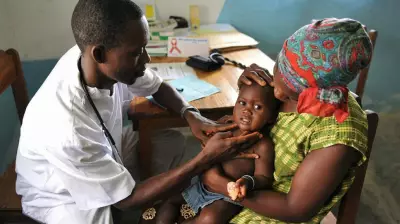
NBS Report Reveals Sharp Decline in Health Worker Diagnostic Accuracy Across Nigeria
The National Bureau of Statistics (NBS) has released alarming data showing a significant drop in diagnostic accuracy among clinical health workers operating within Nigeria's public health facilities. According to the newly published National Health Facility Survey (NHFS), diagnostic accuracy has plummeted from 56.2 per cent in 2023 to just 46.1 per cent in 2025, marking a concerning trend in healthcare service quality nationwide.
Survey Methodology and Key Findings
The comprehensive report, unveiled in Abuja on Wednesday, provides updated insights into service quality and healthcare delivery across the country. Researchers assessed diagnostic accuracy using standardized vignettes across five priority diseases: diarrhoea, pneumonia, malaria, postpartum haemorrhage, and asphyxia. The findings highlight persistent gaps in healthcare delivery and clinical decision-making processes throughout Nigeria's public health system.
Regional Disparities in Clinical Performance
The data reveals striking regional variations in diagnostic accuracy levels. The North-East region recorded the highest performance at 54.3 per cent, while the South-West region showed the lowest accuracy at just 36.7 per cent. This substantial gap underscores the uneven distribution of clinical capabilities and resources across different geographical areas of the country.

State-Level Performance Extremes
At the state level, the disparities become even more pronounced. Zamfara State emerged with the highest diagnostic accuracy at 79.0 per cent, demonstrating relatively strong health worker capacity. In stark contrast, Osun State recorded the lowest accuracy at a mere 13.4 per cent, indicating severe challenges in clinical decision-making and diagnostic processes within that region.
Facility-Level and Cadre-Based Analysis
The report further breaks down performance by facility type and health worker category:
- Facility Level: Secondary health facilities performed significantly better with 68.1 per cent diagnostic accuracy, compared to primary facilities which recorded only 44.6 per cent accuracy. This highlights substantial gaps between different levels of care provision within the healthcare system.
- Health Worker Cadre: Doctors demonstrated the highest diagnostic accuracy at 74.3 per cent, followed by nurses and midwives at 56.3 per cent. Other healthcare categories performed considerably lower, revealing important differences in clinical competency across professional groups.
Implications for Healthcare Delivery
These findings present serious implications for Nigeria's healthcare system. The declining diagnostic accuracy, combined with significant regional and facility-level disparities, suggests systemic challenges that require immediate attention. The data points to potential issues in training, resource allocation, and quality assurance mechanisms within public health facilities across the country.
The National Health Facility Survey serves as a crucial benchmark for policymakers, healthcare administrators, and development partners working to improve healthcare outcomes in Nigeria. The documented decline in diagnostic accuracy underscores the urgent need for targeted interventions to enhance clinical decision-making, improve training programs, and address resource gaps that may be contributing to these concerning trends.