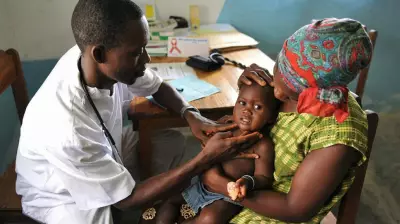
In the sprawling, waterlogged community of Makoko, Lagos, the absence of accessible and affordable formal healthcare has forced residents into a dangerous cycle of self-diagnosis and reliance on unregulated herbal remedies to combat malaria. Despite living in the shadow of Lagos Island's luxury, the people of this informal settlement treat malaria-like symptoms as a routine part of life, often without ever confirming the disease through a medical test.
A Life of Guesswork: Self-Diagnosis as the Norm
The unique geography of Makoko, built on stilts over dark, polluted lagoon waters, creates an ideal breeding ground for mosquitoes. Professor Olugbengba Ayodeji Mokuolu of the University of Ilorin confirms that stagnant water and low socioeconomic conditions predispose the community to a higher burden of malaria. However, for residents, confirming an infection is a luxury they cannot afford.
Sarah Aifoji, a lifelong Makoko resident and food vendor, experiences malaria-like symptoms at least three times a month. In over forty years, she has never visited a hospital for a test. Her daughter, Hannaj, and others like Folorunsho Oke, a 31-year-old fashion designer, follow the same path, treating presumed malaria monthly based on symptoms alone.

Chief Orioye Jephter Ogbubure, a traditional ruler in the community, attributes this crisis to governmental neglect, noting that politicians only engage with Makoko during election cycles. The high cost of testing and treatment at private hospitals on the mainland puts formal care out of reach for most, leaving patent medicine vendors (chemists) and herbal concoctions as the first line of defense.
The Dangerous Reliance on Unproven Herbal Cures
In the void left by the formal health system, a deep-seated culture of alternative medicine thrives. Residents routinely brew herbal mixtures, locally known as "agbo," from leaves, roots, and bark. Lorim Loko and Maria Zanu are among many who turn to these home remedies first, citing cost and tradition.
This practice extends to the most vulnerable. Elizabeth Mehento, a mother of eight, and Natalie Messe, an 18-year-old mother, administer herbal preparations to their children, including infants as young as six months old. Pregnant women also use these unregulated remedies.
However, Professor Mokuolu issues a stern warning: no local herbal remedy has been scientifically proven to cure malaria. Even the widely touted neem leaves ("dongoyaro") lack the concentrated active ingredients needed for effective treatment. He cautions that these concoctions can cause kidney damage, contain harmful heavy metals, and most critically, lead to drug resistance due to incomplete treatment.
A Stark Disconnect: Official Data vs. Ground Reality
The scale of the problem is stark. A 2023 research sample in Makoko found that 20% of respondents treat malaria weekly, and 28% treat it monthly. Mathew Sunuf, who works at a private floating clinic in Makoko, says they see about 60 malaria cases a month, confirming the disease's prevalence.
This stands in contrast to official statements. While Nigeria bears the world's highest malaria burden—accounting for an estimated 30.3% of global malaria deaths in 2024—Lagos State Commissioner for Health, Prof Akin Abayomi, notes the state has the country's lowest prevalence, with about 900,000 cases annually.
A telling experiment revealed the peril of self-diagnosis. When 12 Makoko residents who believed they had malaria were given rapid diagnostic tests, every single result came back negative. This underscores Professor Mokuolu's point: symptoms like fever and headache cannot confirm malaria, and treating the wrong illness wastes time and money while allowing the real condition to worsen.
For the residents of Makoko, illnesses like malaria are not emergencies but expected hardships, managed with whatever their meagre incomes can afford. As government malaria eradication efforts show progress elsewhere in Lagos, communities like Makoko remain on the margins, where poverty and exclusion dictate health choices, clinging to the hope that quality care will one day cease to be a luxury.