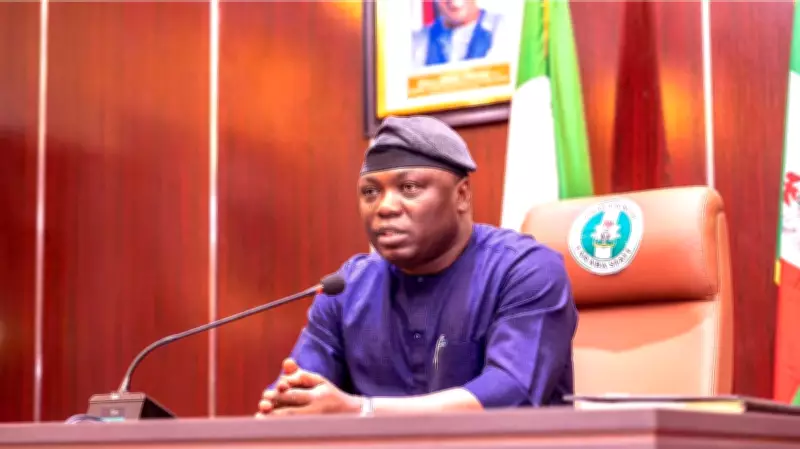
Governor Agbu Kefas of Taraba State has reaffirmed his administration's unwavering commitment to supporting initiatives that protect women's rights and improve their socio-economic status. He emphasized that sustainable development must begin at the grassroots level. Kefas made this known over the weekend in Jalingo during an engagement and orientation programme for Project Champions under the Nigeria for Women Programme Scale-Up Project (NFWP-SU). He described the initiative as timely and critical to addressing challenges facing women across the state.
Represented by the Commissioner for Women Affairs and Child Development, Mary Sinjen, the governor urged the newly engaged Project Champions to take the lead in promoting gender equality and advancing women's rights in their communities. He noted that many women still face barriers in accessing economic opportunities, participating in decision-making, and securing their fundamental rights. According to him, the programme is designed to tackle these challenges at the grassroots level. He also assured that his administration would continue to support the project through effective implementation and timely approval of funds.
Highlighting the responsibilities of the Project Champions, Kefas called on them to raise awareness about harmful cultural practices, promote inclusive participation of women in community development, and serve as advocates for gender equality. "Your voices and actions are vital in shaping a more equitable and inclusive society," he said, urging participants to remain committed and proactive.

In his remarks, the State Coordinator of NFWP-SU, Elder Isaac Finya Yarafa, described the programme as a significant step toward strengthening women's voice, agency, and economic independence across Taraba communities. He emphasized that sustainable development cannot be achieved without eliminating barriers that limit women's participation in social and economic activities. Yarafa charged the Project Champions to act as advocates and catalysts for women's empowerment, noting that previous interventions have shown that empowered women contribute significantly to positive change within households and communities. "You are not just participants; you are advocates, influencers, and agents of transformation within your communities," he said.
He explained that the orientation would equip participants with knowledge of the project's structure, goals, and their roles, as well as expose them to key issues affecting women, including access to opportunities, protection from violence, and inclusion in decision-making processes. Yarafa also commended the Ministry of Women Affairs and Child Development, facilitators, and development partners for their collaboration, noting that their contributions are essential to the success of the initiative.
The engagement, as gathered by The Guardian, forms part of ongoing efforts under the NFWP-SU to expand women's empowerment programmes and strengthen grassroots advocacy across Taraba State.