Lawmakers Freeze $460 Million CCTV Project Payments Amid Probe
The House of Representatives Ad-Hoc Committee investigating the $460 million Closed Circuit Television surveillance project in the Federal Capital Territory has taken decisive action by directing the Central Bank of Nigeria to suspend further disbursements to ZTE Corporation. This resolution was reached on Tuesday following mounting concerns over inconsistencies, vague responses, and a lack of transparency from ZTE officials regarding the project's scope, deployment locations, and current operational status.
Committee Demands Comprehensive Documentation
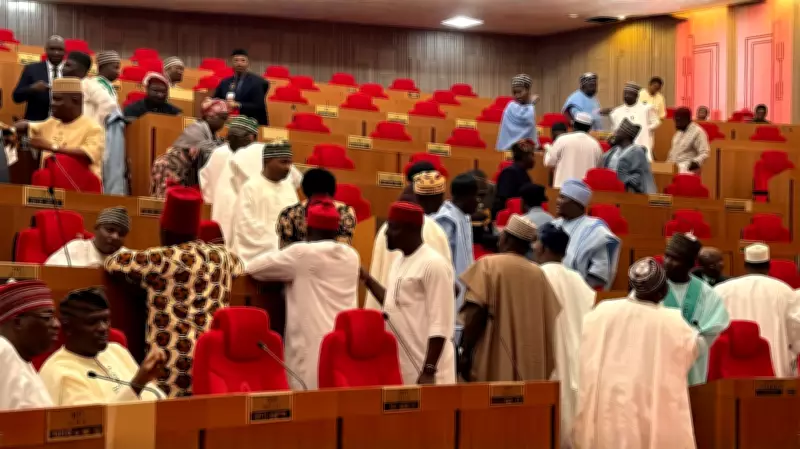
The committee has mandated that ZTE Corporation reappear with comprehensive and verifiable documentation to clarify the project's execution. This includes a full inventory of all equipment supplied and installed, precise locations of infrastructure nationwide, and detailed information on the 456 Nigerians reportedly trained to operate and maintain the system. The decision was prompted by a motion moved by Ali Shettima, representing Bursari/Geidam/Yunusari Federal Constituency, and seconded by Kolawale Akinlayo during an investigative hearing at the National Assembly.
Committee Chairman Donald Ojogo emphasized that the exercise is not a witch-hunt but a fact-finding mission aimed at addressing public concerns. "This is a constructive engagement, not an attempt to witch-hunt anyone. Nigerians deserve clear answers, and we expect ZTE to respond in line with the documents before us," he stated, underscoring the committee's commitment to accountability.

ZTE's Responses Spark Controversy
Representing ZTE Corporation, Irene Momoh claimed that the company supplied and installed CCTV infrastructure in Abuja and Lagos, with the project completed between 2011 and 2012. However, under intense questioning, Momoh admitted uncertainty about the current functionality of the system. "To the best of our knowledge, the equipment was delivered and installed within the project timeline, but I cannot confirm its present operational status," he said, which sparked strong reactions from lawmakers.
Lawmakers questioned how a project of such magnitude could lack a sustainable maintenance and continuity framework. Momoh explained that ZTE had an initial three-month maintenance agreement, which was voluntarily extended to six months before handing over the system. He attributed the project's decline to the government's inability to sustain funding post-handover. "There was no continued funding from the government to maintain and run the system after handover," he added, highlighting a critical gap in project sustainability.
Disputes Over Installation Locations
Despite ZTE's claims, lawmakers challenged several assertions, particularly regarding the geographical spread of the installations. Citing documents from the Federal Ministry of Police Affairs, Iyawe Esosa disputed ZTE's assertion that installations were limited to Abuja and Lagos. "Official records indicate installations in Edo State. As someone who lives in Benin City, I can confidently say these facilities do not exist in the listed locations," he said, casting doubt on the company's transparency.
Similarly, Kolawale Akinlayo rejected claims of installations in Ekiti State, insisting there was no evidence of deployment across the state. "None of the locations listed, including Ado-Ekiti, has any of these facilities. Outside Lagos, there is no visible deployment in the South-West," he asserted, further complicating the investigation.
Tensions Escalate Over Accountability
Tensions escalated when Momoh attributed gaps in his responses to the fact that he only assumed office in 2023, noting that several officials involved in the original contract were no longer with the company. Lawmakers viewed this as an attempt to evade responsibility and warned of a possible referral to the Nigerian Bar Association for disciplinary action, emphasizing the need for accountability in public contracts.
The probe continues as the committee seeks to uncover the truth behind the $460 million CCTV project, with implications for transparency and governance in Nigeria's public sector.