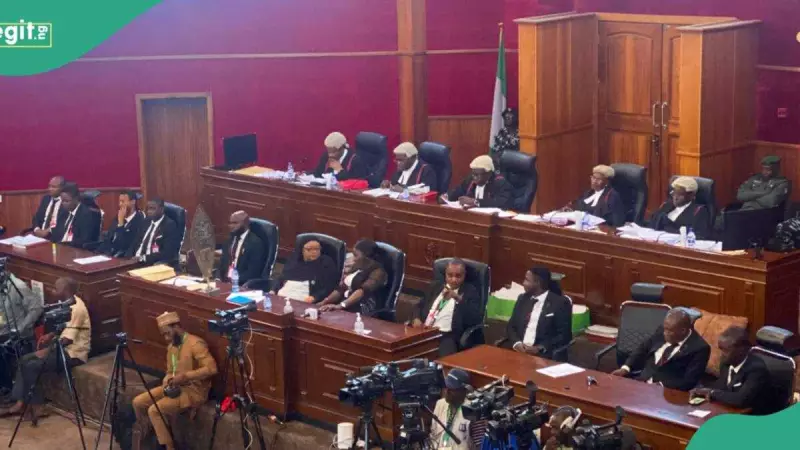
A Federal High Court in the nation's capital has approved the release from custody of a former Attorney General of the Federation, his wife, and their son, setting a hefty financial bond and stringent conditions for their freedom.
Strict Bail Conditions Imposed by Justice Nwite
On Wednesday, January 7, 2026, Justice Emeka Nwite of the Federal High Court in Abuja delivered a ruling that has captured national attention. The court granted bail to the immediate past Minister of Justice, Abubakar Malami, alongside his wife and son, who are facing charges brought by the Economic and Financial Crimes Commission (EFCC). The bail amount was set at N500 million for the trio, with two sureties required in like sum.
Justice Nwite outlined specific, high-value conditions for the sureties. Each surety must possess a landed property within one of three affluent districts of the Federal Capital Territory: Asokoto, Maitama, or Gwarinpa. This requirement underscores the court's intention to ensure the defendants' availability for trial.

Additional Travel Restrictions for the Defendants
Beyond the substantial property-backed surety, the court imposed further restrictions on the former minister and his family members. In a move to prevent any potential flight risk, Justice Nwite ordered Malami, his wife, and son to surrender their international travel documents to the court's registry. This measure effectively bars them from leaving the country while their case is ongoing.
The ruling followed arguments from both the prosecution and defense counsels regarding the bail application. The court's decision to grant bail, albeit with rigorous conditions, is based on constitutional provisions that presume innocence until guilt is proven.
Context and Implications of the Ruling
This development marks a significant moment in a high-profile case that has linked a former key official of the Muhammadu Buhari administration to the anti-corruption efforts of the EFCC. The case is being closely watched as a test of the judiciary's handling of corruption allegations against prominent political figures.
The strict bail conditions, particularly the demand for property in high-brow areas of Abuja, reflect the court's assessment of the case's gravity and the status of the accused. It balances the legal right to bail with the need to guarantee that the defendants will appear for trial. The next steps in the legal process will involve the fulfillment of these bail conditions and subsequent hearings on the substantive charges.
Legal analysts suggest that this ruling sets a precedent for how courts may handle bail applications for high-profile individuals accused of financial crimes, emphasizing substantial financial commitments and concrete asset-backed sureties over mere promises.