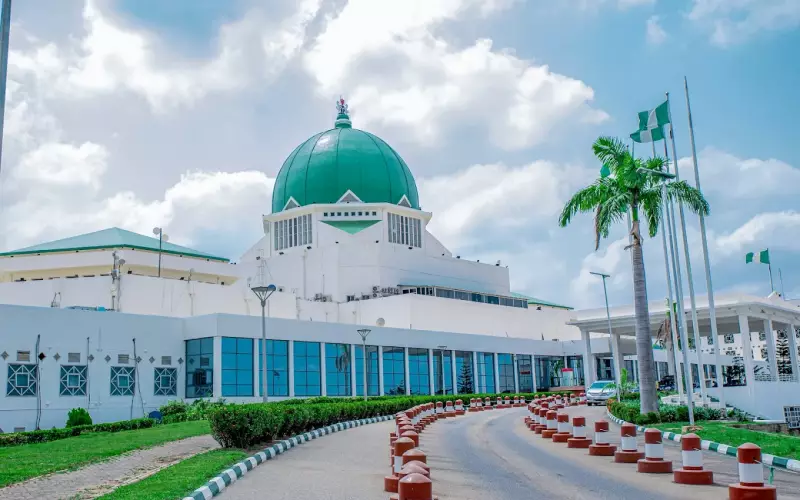
The staggering N720 billion debt owed by the Federal Government to indigenous contractors is far more than an administrative lapse. It represents a profound scandal, exposing the state's fiscal recklessness, moral bankruptcy, and a blatant disregard for the private sector partners who fuel national development. This crisis has escalated to the point of disrupting official activities at the National Assembly and the Ministry of Finance, revealing a government either ignorant of the sanctity of contracts or indifferent to the catastrophic reputational and economic damage its failures cause.
Protests and Broken Promises Paralyse Institutions
The dire consequences of this unpaid debt are already manifesting. Recently, the Nigerian House of Representatives was forced to suspend its plenary for a week. This unprecedented move was in solidarity with local contractors who staged protests at the National Assembly complex over unpaid bills for projects completed as far back as the previous year. The agitation did not stop there.
Under the banner of the All-Indigenous Contractors Association of Nigeria, the aggrieved businessmen and women took their protest to the Ministry of Finance, further disrupting government operations. Media reports suggest the actual debt burden could be as high as N2 trillion, painting an even grimmer picture of the crisis.

Babatunde Seun-Oyeniyi, the association's National Secretary, detailed the government's pattern of deception. He accused officials of repeatedly shifting goalposts and failing to honour commitments made in earlier dialogues. Oyeniyi highlighted the cruel irony: contractors borrowed funds at exorbitant interest rates, sometimes nearing 40 per cent, to deliver public projects, only to be abandoned by the very government that commissioned the work.
A Cycle of Impoverishment and Hypocrisy
The association levels an even more serious allegation: the Federal Government prioritises paying foreign contractors, who often serve as fronts for the political elite. This preferential treatment starkly contradicts the Tinubu administration's public sermons on economic revival, job creation, and improving the ease of doing business.
For years, successive governments have treated local contractors as involuntary lenders, coercing them into bankrolling public projects with no repayment guarantee. The current cycle is devastating: many firms are now insolvent, have laid off staff, shut down sites, or entered forced debt restructuring with banks. Behind each corporate collapse is a chain of suffering for employees, artisans, suppliers, and local communities.
The government's hypocrisy is glaring. While it rigorously enforces tax and regulatory compliance for citizens and businesses, it casually ignores its own contractual obligations. This normalises a destructive double standard that erodes the very foundation of a just society. Furthermore, the continued award of new contracts amidst this huge backlog is an act of fiscal recklessness, effectively building a future debt crisis while failing to solve the existing one.
Systemic Consequences and the Path Forward
The ripple effects are profound for the broader economy. The debts increase pressure on banks' non-performing loans, raising systemic risks. This may lead banks to re-price credit for public infrastructure, ultimately increasing project costs for the government. A credit crunch could also hit small businesses and manufacturers if banks tighten lending to the private sector.
The opacity surrounding these debts is a key enabler of the crisis. The absence of a public, verifiable ledger of contractual obligations and a lack of sanctions for errant Ministries, Departments, and Agencies (MDAs) foster an environment where corruption thrives.
To break this cycle, the government must treat this debt as a national emergency. Concrete steps include:

- Publishing a transparent, verified register of all contractor debts, broken down by MDA, project, and year.
- Creating legally-binding payment guarantee mechanisms to ensure timely settlement.
- Strictly enforcing the Authority to Incur Expenditure (AIE) to prevent MDAs from awarding new contracts without proven, ring-fenced funding.
- Automating invoicing and payment systems to eliminate favouritism and ensure a fair, first-come-first-served process.
Nigeria's development cannot be built on the backs of bankrupt contractors. The N720 billion debt is not just a number; it is the cost of a broken governance culture. A nation that refuses to honour its contracts cannot attract credible investment. A government that drives local businesses to ruin cannot claim to support job creation. The time for excuses is over; the time for urgent, transparent action is now.