There seems to be an unbreakable covenant between Nigeria and darkness, as the country has been enveloped in embarrassing darkness for decades. Prior to 1999, the military could not solve the intractable power supply challenges. When former President Olusegun Obasanjo appointed Chief Bola Ige as Minister of Mines and Power in May 1999, hopes for stable power supply soared. However, Ige could not achieve much before leaving the portfolio in January 2000.
Failed Efforts by Successive Ministers
Subsequent ministers of power, including the late Olusegun Agagu, Liyel Imoke, Saleh Mamman, Chinedu Nebo, Bart Nnaji, Lanre Babalola, and Babatunde Fashola, failed to impress Nigerians. A comparative analysis of electricity generation between Nigeria and South Africa highlights the disparity. Nigeria, with a population of about 240 million, generates between 3,500 MW and 5,500 MW despite an installed capacity of 13,000-14,000 MW. South Africa, with 63 million people, generates around 32,246 MW with an installed capacity of 45,521-58,095 MW. The highest megawatts ever generated in Nigeria since civilian rule is about 7,000 MW, achieved under Fashola.
Persistent Grid Collapses
Electricity supply and grid collapses have become Siamese twins. In 2024 alone, Nigeria experienced over 12 grid collapses, with similar numbers in 2025. Collapses occurred on January 23 and 27, 2026, when generation dropped to zero megawatt. Generation dropped to between 3,940 MW and 4,384 MW in early 2026. These collapses are attributed to technical deficiencies, weak infrastructure, and vandalism.

Privatization Disappointment
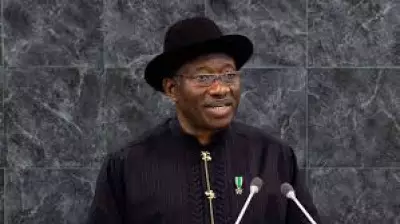
Following the Roadmap for Power Sector Reforms in 2010, former President Goodluck Jonathan's administration privatized the power sector in 2013. The Power Holding Company of Nigeria (PHCN) was unbundled into 10 generation companies (GenCos) and five distribution companies (DisCos) and sold to private investors. However, these investors did not bring expected relief, as they failed to invest adequately in generation and distribution equipment. Governors and private individuals have resorted to donating transformers to boost power distribution. The Presidential Villa has opted for solar power, indicating frustration with the system.
Current Minister's Efforts
Incumbent Minister of Power, Adebayo Adelabu, appointed on August 21, 2023, has been trying to change the narrative amid massive corruption, ineptitude, and collapsed infrastructure. Challenges include N4 trillion outstanding subsidies, rampant vandalism, electricity theft, refusal to pay bills, poor investment in distribution infrastructure, and resistance to commercialization. Despite these, the Federal Ministry of Power has focused on reforms, energy access, and infrastructure upgrades under the National Integrated Electricity Policy (NIEP) and Integrated Resource Plan (IRP), aligning with the Electricity Act 2023.
The ministry has implemented cost-effective tariffs for Band A customers, transferred regulatory oversight to 11 states, increased generation to 6,003 MW in March 2025, inaugurated off-grid solar mini-grid projects, and added over 70 transformers between 2024 and 2025. The World Bank and African Development Bank added over 12,000 MVA transformation capacity. Nigerians are waiting to see the effects of these steps on the epileptic power sector.