Little Karima held her father Muhammad Nasiru's arm, struggling to keep pace with him. Her flowing gown obscured her uneven gait—the way she swung one leg and limped with the other. The father raised her gown as they walked, exposing her dusty legs from knee to ankle. One of Karima's legs was stiff and bent. Until mid-last year, her legs were straight, and she walked well at one year and six months old. But her gait changed. One leg became stiff, and the little girl limped. Karima's test result showed she had contracted cVDPV2, a strain of the Wild Polio Virus.
Polio Detection and Response
At the time, Mubarak Umar, the Surveillance Focal Person at the Primary Healthcare Centre in Kajiji, Shagari Local Government Area, Sokoto State, suspected a polio case. He took samples of the girl's faeces and urine, along with those of other children in the neighbourhood, and sent them to the Ibadan National Polio Laboratory for testing. Karima's result came back positive for circulating Vaccine-Derived Poliovirus type 2, a strain currently endemic in Nigeria. This virus is found among populations with low herd immunity and has caused more polio cases annually than the wild poliovirus since 2017, according to the World Health Organisation.
Sokoto's Polio Burden
Although Nigeria was declared polio-free in 2020, the country has battled the spread of the cVDPV2 variant in northwestern states, including Kebbi, Sokoto, and Zamfara. The situation persists due to low routine immunisation coverage, population movement, and vaccine hesitancy. Mr. Nasiru insisted all his children, including Karima, were vaccinated and did not know how his daughter contracted the disease. However, multiple sources, including immunisation officers and traditional rulers in the community, said Mr. Nasiru's household was known for rejecting vaccinations. Karima's test results indicated 'unknown' for all other vaccines she ought to have taken at that age.

Vaccine Hesitancy Challenges
The refusal of vaccines remains one of the biggest challenges facing polio eradication, according to Bashar Garba, the Sokoto State Immunisation Officer. Although more suspected cases have been reported in other local government areas, vaccine hesitancy is more prevalent in metropolitan areas comprising Sokoto North, Sokoto South, and Wamakko LGAs. These areas have recorded the highest level of non-compliance in polio vaccine administration. Mr. Garba noted that during a campaign in Kano and other northern states, Arkilla Ward in Wamakko LGA emerged as the leading ward with the highest number of rejections and non-compliance. Vaccine hesitancy has consequences. Last year, Sokoto recorded at least 20 cases of cVDPV2, with at least six in Kajiji ward of Shagari LGA.
Community Vanguards to the Rescue
Government- and citizen-led initiatives, including UNICEF-employed Volunteer Community Mobilisers, traditional rulers, and other volunteers, have formed a line of defence in communities. They help track and identify unvaccinated children and report suspected polio cases. In Shagari LGA, Routine Immunisation providers have increased outreach visits to nearby villages from once to twice a week. Abdullahi Liman, an RI provider at PHC Kajiji, said they used to administer routine immunisation at the hospital on Tuesdays and conduct outreach once a week. However, since cases surged last year, all 28 providers covering over 200 settlements in Shagari LGA now conduct at least two outreach visits per week.
Manpower and Coverage
Another challenge is manpower shortage, which Mr. Garba said the state government is addressing. Some health workers were recently hired but have yet to be posted to health centres. RI providers also work with community leaders to ensure vaccine acceptance, sometimes setting up shop at the leaders' palaces. One official who supervises immunisation data said adding one more weekly outreach visit helped increase coverage in Shagari to 88 per cent last year, a feat that would be impossible with only one outreach visit per week.

House-to-House Campaign
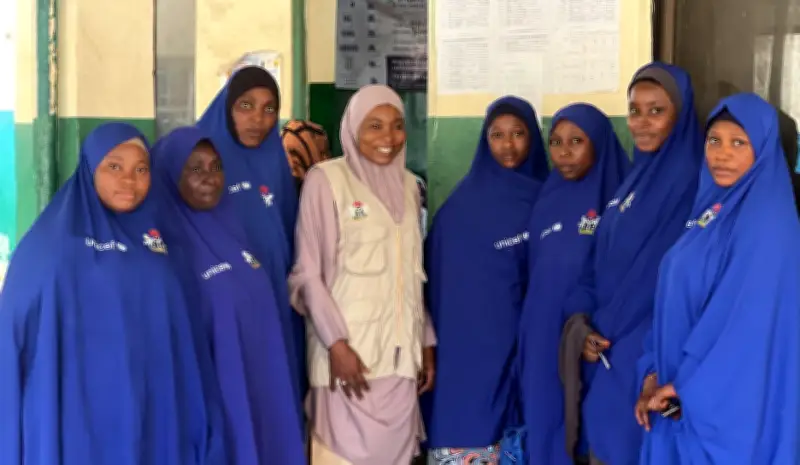
One Friday morning in February, a group of women draped in blue hijabs bearing inscriptions of Nigeria's coat of arms on the left and UNICEF on the right clutched vaccine carrier boxes and marched through communities in Sokoto North LGA in search of newborns and their mothers. Their first stop was the Fakon Idi area, where they spread a mat under a tree and set up to attend to mothers and infants. A mother, Asmau Adamu, presented her five-day-old child to one of the women known as VCMs. An RI service provider, Hafsat Isa, unlocked the vaccine carrier box, drew up doses, and injected the child's arm. She then opened the child's mouth and dropped doses of another vaccine on his tongue. Before returning the child, another VCM scribbled something into a card presented by the mother. Mrs. Adamu collected her child as another mother took her place. Mrs. Adamu told PREMIUM TIMES that the VCMs explained the vaccines would prevent polio and other diseases.
Role of VCMs
The VCMs are employed by UNICEF to help improve health outcomes, particularly on polio eradication and routine immunisation. They go house to house to inquire about newborns, educate mothers on child care, and check immunisation cards to inform parents when to take children for the next round. On some days, they follow RI service providers for community outreach.
Track, Report, Engage
Across Sokoto State, VCMs and RI providers work with community leaders and influential figures to identify and track households that refuse vaccines. Ms. Isa, who works at PHC Kofar Rini in Sokoto North LGA, said VCMs are instrumental in tracking households that haven't brought newborns for vaccinations. They also note households that refuse vaccines and report them to community leaders. When traditional leaders are informed, they visit the houses and encourage vaccination. The district head of Fakon Idi, Aminu Muhammad, recounted a recent case where he convinced a father who refused polio vaccines for his children after explaining the importance.
Cash-for-Vaccines Initiative
At PHC Kofar Rini, Tuesdays are now busy at the immunisation unit. New Incentives, a non-governmental organisation, offers cash to mothers who bring their children for vaccination at the hospital or during outreaches. Mrs. Adamu said she receives 1,000 naira every time her child gets a vaccine. When children complete their doses, mothers receive an additional 6,000 naira as a lump sum. Ms. Isa said the population of vaccinated children has increased since New Incentives came. She used to immunise about 70 babies a day with the incentive, compared to fewer before. The cash incentives are meant to help with transportation costs. However, some critics claim mothers are being paid to 'sell their children.' Ms. Isa explained that they clarify the purpose is transportation support, as false information has spread.
Why Do They Reject Polio Vaccines?
Vaccine hesitancy has a long history in Nigeria, particularly in the north. A notable cause was the 1996 Pfizer Trovan drug trial in Kano during a meningitis outbreak, which left nearly a dozen children dead and many permanently disabled. That episode fueled a boycott of the polio vaccine campaign years later. Misinformation about the polio vaccine causing infertility or reducing populations persists in 2026. In Sokoto, those who refuse vaccines cite religious, personal, or political reasons. Some say vaccines make children stubborn, while others claim ingredients include monkeys' blood or other substances not lawful for Muslims. Mr. Umar, the surveillance focal person in Kajiji, noted these beliefs. A resident, Liman Jabi, now 65, said he became sceptical and refused polio vaccination for his child after hearing it causes infertility, even though his older children had received it. He later dismissed the thought because his vaccinated children now have healthy children of their own.
Community Advocacy
Community leader Umar Umar in Kajiji said some residents wonder why they never receive free drugs when sick but have vaccines brought to their doorsteps. Abubakar Sahabi, who now works alongside Mr. Umar to ensure immunisation, used to reject vaccines himself. He turned outreach officials away after hearing about infertility. After being summoned to the community leaders' palace, he was convinced through explanations that vaccines prevent polio without side effects. Clerics were brought to discuss how vaccines align with Islam. Now, Mr. Sahabi receives reports of households that refuse vaccines and talks them into accepting.
Challenges and Progress
Mr. Garba, the state immunisation officer, said the quality of the campaign has improved, though challenges remain. He noted that digitisation of state records is a big win, easing progress monitoring. However, some immunisation officers fail to report households rejecting vaccines and sometimes collude to report false positives. Mr. Garba stressed the need for a mindset change to encourage truth-telling for community benefit. At the community level, volunteers are winning support. Mr. Umar said people are now aware and report cases. Mr. Sahabi, a polio vaccine reformist, convinced his own uncle to allow vaccination.