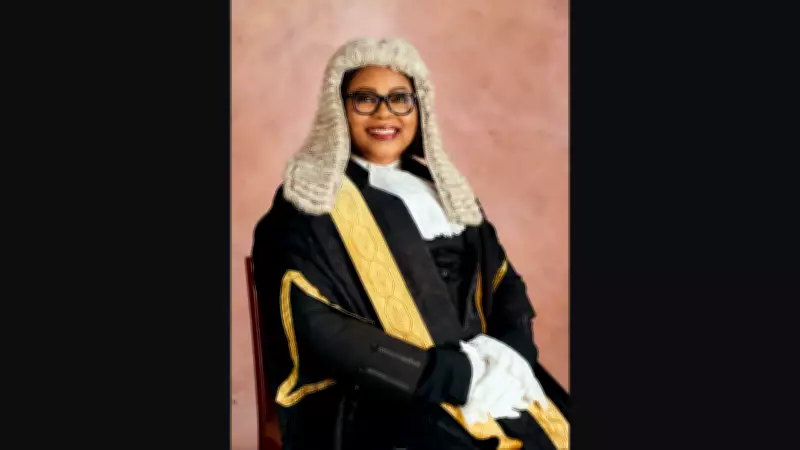
Few Nigerians have shaped conversations around gender justice, human rights and access to justice as profoundly as Professor Joy Ngozi Ezeilo. A distinguished legal scholar, Senior Advocate of Nigeria (SAN), former United Nations Special Rapporteur on Trafficking in Persons, and founder of the Women Aid Collective (WACOL), Ezeilo has spent more than three decades at the forefront of efforts to advance the rights of women, children and other vulnerable groups. From challenging harmful traditional practices and expanding access to legal aid, to influencing legislation and representing Nigeria on global platforms, her career has bridged the gap between grassroots activism and international advocacy. Her work has helped drive reforms on gender-based violence, human trafficking, reproductive rights and women’s political participation, while earning her recognition at home and abroad. In this interview with The Guardian, Ezeilo reflects on the personal experiences that shaped her life’s mission, the milestones of a career dedicated to justice and social change, the barriers that continue to limit women’s participation in leadership, and the reforms she believes are necessary to build a more inclusive society.
Background and Founding of WACOL
Please tell us about your background, the defining moment that shaped your leadership journey, and the experiences that led to the founding of the Women Aid Collective (WACOL). My journey is one I often describe as moving from local to global, a phrase that also inspired my recent biography, From Local to Global: A Woman on a Mission. I was born in Enugu in 1966, just over a year before the Nigerian Civil War began in July 1967. The trauma of war, combined with the loss of my father during my teenage years, profoundly shaped my childhood and ultimately my life’s purpose. Those early experiences awakened me to the deep inequalities and systemic biases faced by women. One pivotal moment stands out. When my father died, my mother was subjected to harmful widowhood practices. Until then, having grown up largely in an urban environment, I had not fully confronted the harsh realities of entrenched gender discrimination. Watching her endure those injustices ignited in me a determination to study law, become a lawyer, and dedicate my life to defending the rights of women and other vulnerable groups. Academically, I studied law at the University of Nigeria, Nsukka, later earning an LL.M. from Queen Mary College, University of London, and a PhD in Nigeria. I also obtained a Diploma in Peace and Conflict Resolution from Uppsala University, Sweden, and a Diploma in Gender Studies from CODESRIA in Senegal. Although I began my career in corporate law, representing banks, I quickly realized that my true calling lay in human rights, social justice, and transformational change. That realization led me to specialize in public international law, human rights, and criminal law. Several formative leadership experiences prepared me to establish the Women Aid Collective (WACOL) in 1997. They include serving as Enugu State Coordinator and National Publicity Secretary of Women in Nigeria (WIN), acting as Publicity Secretary of the International Federation of Women Lawyers (FIDA), mobilizing grassroots women ahead of the 1995 Beijing World Conference on Women, and later serving as Commissioner for Women Affairs and Social Development in Enugu State. These experiences revealed a major institutional gap: Nigeria lacked an organization that addressed both women’s access to justice and reproductive health rights in a holistic way. That insight gave birth to WACOL. The leadership development support I received from the MacArthur Foundation in 1998 further strengthened my vision of building an organization dedicated to advancing the rights of women and young people and securing justice and effective remedies for those whose rights are violated.

Core Values Shaping Professional Journey
What core values have shaped your professional journey and the milestones you have attained? The milestones I have been privileged to attain, becoming a Professor of Law, a Senior Advocate of Nigeria, a Life Bencher, a former United Nations Special Rapporteur on Trafficking in Persons, Especially Women and Children, and receiving the national honour of Officer of the Order of the Niger, are grounded in a few non-negotiable values. Integrity, Justice, and Empathy: I have always believed that laws have little meaning unless they transform the lives of the most vulnerable. Empathy has guided my pro bono work, while integrity has been a lifelong compass. My father taught me early that a good name is worth more than wealth, and that principle has remained central to how I live and lead. Intellectual Rigor and Innovation: Capacity, competence, and a relentless pursuit of knowledge have been the cornerstones of my personal and professional journey. Whether pioneering the teaching of Women, Children, and the Law at UNN in 1997, which is now an accredited course, or helping to develop curricula in human rights, health law, and reproductive rights, I have always believed that professionals must continue to break new ground. For me, scholarship must not only interpret society; it must help transform it. Resilience and Persistence: In human rights advocacy, setbacks are inevitable. Bills fail, policies stall, and resistance can be intense. But real leadership means staying the course, regrouping, and continuing the work with conviction. I have never been afraid to speak truth to power, and I do not walk away from causes I believe in. Grassroots Accountability: No matter how global my work has become, when presenting reports before the United Nations General Assembly, I have remained accountable to the communities and ordinary people whose lives inspire this work. The traditional honours I have received are deeply meaningful to me because they reflect trust from the grassroots, not just recognition from institutions.

Progress of Nigerian Women in Leadership
How do you assess the progress of Nigerian women in leadership, and what steps are needed to accelerate it? My assessment is one of serious concerns. Women’s political participation in Nigeria remains far below where it should be. Current figures place women’s representation in both elective and appointive positions at about 6.7 percent, well below the West African, continental, and global averages. No country can credibly pursue sustainable development while excluding more than half of its population from governance and economic decision-making. To change this trajectory, we must move beyond rhetoric and put in place firm institutional frameworks. Legislative Reform and Affirmative Action: We need sustained advocacy for constitutional and legislative reforms. Having contributed to efforts that embedded affirmative action in Rwanda’s constitutional framework, I know that legal quotas can make a measurable difference. Nigeria must pass the Special Seats Bill and the Gender and Equal Opportunities Bill to ensure women’s inclusion is protected by law rather than left to goodwill. Passage of Critical Gender Bills: Nigeria must also advance the key gender-related bills that have repeatedly faced resistance in the National Assembly, including reforms on women’s political representation, citizenship by registration, internal party affirmative action, and indigeneship rights. Resource Mobilization and Collective Action: We must also invest deliberately in women-led organizations and public institutions that advance gender equality, including the Ministries of Women Affairs, the National Centre for Women Development, NAPTIP, and the National Human Rights Commission. Gender budgeting should be mainstreamed at both federal and state levels. Nigeria has made important international and regional commitments; it must now match those commitments with real resources and measurable action.
Greatest Challenges in Work
What have been some of the greatest challenges in your work, and how have you responded to them? The challenges have been institutional, cultural, and political, but I have always sought to confront them with strategy, persistence, and purpose. Legislative Roadblocks: One of the most frustrating moments was seeing five critical gender bills rejected by the 9th National Assembly. Our response has been sustained coalition-building, persistent advocacy, and civic mobilization to ensure those reforms are reintroduced and advanced. At the state level, there has been progress: 35 states have now passed versions of the Violence Against Persons Prohibition Law, building on the federal VAPP Act of 2015, a reform I strongly supported alongside many committed partners. The Access to Justice Gap: Nigeria’s justice gap remains enormous, especially for poor and vulnerable citizens. Too often, rights are violated without remedy. Through WACOL, we have responded by providing free legal aid and comprehensive support services for women, children, and persons with disabilities in difficult circumstances. To date, we have supported more than 82,000 survivors and victims, while also establishing Tamar Sexual Assault Referral Centres to provide integrated medical, legal, and psychosocial care. The Scale of Gender-Based Violence: When we began this work, there were no dedicated safe spaces for abused women. In response, I established WACOL’s first safe house in 1998 and later built Nigeria’s first ultra-modern private shelter for survivors of sexual and gender-based violence in 2002. Creating these spaces was not only about protection; it was about restoring dignity and providing a pathway to healing and justice. Institutional Bias and Political Exclusion: Women continue to face entrenched bias in leadership spaces, including academia and politics. My own experience contesting for the office of Vice-Chancellor at several universities underscored how often merit alone is insufficient. In many cases, women confront invisible barriers sustained by patriarchal systems, political bargaining, and gatekeeping structures. These realities have strengthened my resolve to keep advocating for transparent, merit-based systems and greater inclusion of women in leadership. Political Godfatherism and Electoral Malpractice: My brief experience in electoral politics in 2006 exposed the corrosive effects of political godfatherism and malpractice. I entered the race with a reform agenda rooted in human rights and gender equity, but the process revealed how difficult it can be for principled candidates, especially women, to compete within compromised systems. Rather than allow that experience to define me, I returned to academia and grassroots advocacy with even greater clarity of purpose.
Proudest Achievements
Which achievements are you proudest of, and what impact do you believe they have had on society? Over nearly three decades, I have been privileged to record achievements at local, national, and international levels, but what matters most to me is their impact on people’s lives. Pioneering Legal Aid: Through WACOL, we have provided free legal aid and pro bono support to more than 80,000 women, children, and vulnerable individuals, helping to expand access to justice for those who might otherwise have been left unheard and unprotected. Legislative Legacy: In 2005, I chaired the committee that drafted the federal bill on the elimination of violence in society. That early work contributed to the foundation of what later became the Violence Against Persons (Prohibition) Act of 2015. Beyond that, we have also supported the passage of laws addressing widowhood practices, female genital mutilation, harmful traditional practices, early marriage, safe motherhood, and anti-discrimination protections for people living with HIV and AIDS. Global Leadership Against Human Trafficking: As United Nations Special Rapporteur on Trafficking in Persons, especially women and children, from 2008 to 2014, I carried out official country missions across 16 nations and presented key reports to the UN Human Rights Council in Geneva and the General Assembly in New York. That work helped spotlight the global dimensions of modern slavery and strengthen international advocacy against trafficking. Academic Transformation: One of my greatest joys has been helping to institutionalize the teaching of gender, human rights, and health law within Nigerian universities. Seeing former students grow into activists, practitioners, scholars, and development leaders is deeply rewarding because it shows that the work is multiplying far beyond me. Recognition and Honours: The awards and honours I have received- nationally, internationally, and from traditional institutions- are meaningful not simply as titles, but as reflections of years of service. Whether it is being named among influential women globally, receiving national recognition, or being honoured by communities at the grassroots, I see each one as a reminder of the responsibility to keep serving with integrity and purpose.
Structural Barriers Limiting Women's Participation
In your view, what structural barriers continue to limit women’s participation in governance and high-level decision-making? The barriers remain structural, institutionalized, and deeply self-reinforcing. Some women have internalized the dichotomized public-private divide, which frames women’s roles as reproductive and domestic, and not in governance or the public arena. Thus, where the power is, women are not. A Heavily Monetized Political System: The cost of contesting public office in Nigeria is prohibitively high, and that reality disproportionately excludes women, who already face systemic economic disadvantages in areas such as income and inheritance. Patriarchal Party Structures: Many political parties still operate through old-boy networks where key decisions are made in spaces and at times that are exclusionary to women. Without internal reforms and affirmative measures, women remain sidelined during candidate selection and party advancement. Discriminatory Legal Frameworks: Conflicts around indigeneship and residence by marriage continue to disadvantage many women politically. In practical terms, some women are denied full belonging both in their state of origin and in their marital communities, leaving them excluded from meaningful participation. Socio-Cultural and Religious Stereotyping: Deep-seated cultural expectations still frame leadership and public ambition as unfeminine for many women. Breaking this pattern will require legal reform, institutional redesign, and a broader cultural shift toward inclusion and equal representation.