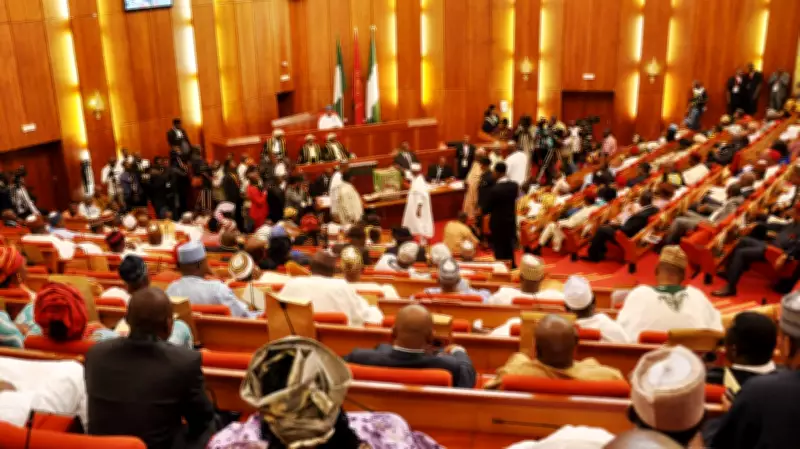
The Senate Committee on Ethics, Code of Conduct and Public Petitions has defended its controversial dismissal of multiple petitions, asserting that its decisions were not arbitrary but firmly grounded in law, judicial precedent, and verified evidence. Chairman Senator Neda Imasuen made the clarification in Abuja following a public hearing, emphasizing that the Senate cannot function as an appellate court or overturn valid judicial decisions under the guise of legislative intervention.
According to Imasuen, many petitions failed not due to a lack of emotion or public interest, but because they lacked legal substance and full disclosure of material facts. “The committee’s actions were guided strictly by the law and available evidence,” he stated, adding that petitioners are often undermined by their failure to disclose previous court judgments.
One key case involved the Nigeria Customs Service, where a petitioner accused the agency of wrongdoing over seized goods. Imasuen explained that investigations revealed a clear violation of import regulations. “The complainant violated import regulations by failing to declare goods contained in a truck,” he noted, adding that the Federal High Court had already ruled in favor of Customs and ordered forfeiture of the items. He stressed that once a competent court has ruled on a matter, the Senate cannot reopen or contradict such judgment, regardless of public pressure.

In another case involving Fidelity Bank, the committee dismissed allegations of financial misconduct after documentary evidence showed that funds were legitimately disbursed and accessed by the petitioner. “The petitioner admitted taking a loan which was credited into his account, and records confirmed that withdrawals were duly authorized,” Imasuen said.
Despite the wave of dismissals, the committee remains actively engaged in at least one major ongoing investigation: a pension dispute involving retirees of the defunct Afribank and the Central Bank of Nigeria (CBN). Imasuen described the case as sensitive and concerning, particularly due to allegations of missing pension funds and administrative lapses that may have affected vulnerable retirees. He disclosed that all parties involved have been given a two-week ultimatum to submit additional documents and evidence, after which the committee will take a final position. “We are still investigating this matter thoroughly. Where there is merit, justice will not be denied,” he assured.
The committee reaffirmed that while the Senate remains open to public petitions, only cases backed by credible evidence, transparency, and full disclosure will be considered for redress, warning against attempts to politicize legislative oversight mechanisms.