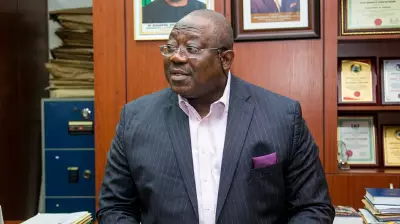
President Bola Ahmed Tinubu's administration has borrowed N65.9 trillion in 24 months, surpassing the total debt Nigeria incurred in its first 55 years of independence, according to Dele Oye, chairman of the Alliance for Economic Research and Ethics LTD/GTE.
Oye, former chairman of the Organised Private Sector of Nigeria (OPSN), noted that while previous governments accumulated debt over decades, the Tinubu administration added N65.9 trillion in just two years, compared to N12 trillion over 55 years.
With Nigeria's total public debt at N159.28 trillion as of April 2026, according to the Debt Management Office, every Nigerian owes N670,000. Oye warned that without urgent measures to boost revenue and fiscal discipline, the rising debt burden could pressure public finances and limit spending on critical sectors.

He recalled that in 2006, President Olusegun Obasanjo paid $12 billion to cancel $30 billion in Paris Club debt, leaving Nigeria briefly debt-free. By 2015 under President Goodluck Jonathan, debt had crept back to N12.06 trillion. Under President Muhammadu Buhari, debt surged from N12.06 trillion to N87.38 trillion, a 620% increase, including N23.7 trillion in securitised Ways and Means advances.
Oye cautioned against relying solely on the debt-to-GDP ratio, which stands at 35.5% below the IMF's 55% distress threshold. He stressed that the debt service-to-revenue ratio is more critical, noting it was 116.8% in 2024 and 113% in Q1 2025. In January 2025, the Federal Government paid N696.27 billion in debt service against N483.47 billion in retained revenue, a 144% coverage ratio.
Oye expressed confidence in Nigeria's potential, urging digitised tax collection, enforcement of the Fiscal Responsibility Act, restructuring Eurobond maturities, channelling oil windfalls into a stabilisation fund, and empowering states to generate revenue.