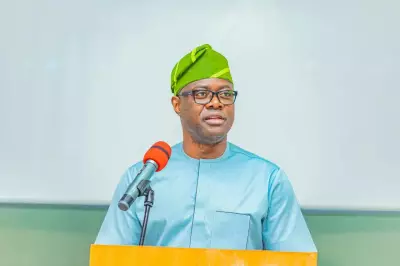
In a thought-provoking article, Godwin Sogolo revisits the concept of 'useless disciplines' first introduced by Scottish theologian Allan Douglas Galloway in 1956. Galloway, who taught at University College Ibadan, used the term ironically during a lecture to the Philosophical Society. He categorized disciplines as 'useful' if they had clear market value and led to employment, such as engineering, medicine, and law. 'Useless' disciplines included philosophy, history, and literature, whose value was not easily quantifiable.
The Current Context in Nigeria
Sogolo argues that today, such debates have been replaced by administrative fiat, with policies imposed without scholarly input. In 2007, history was removed from primary and junior secondary school curricula, a decision reversed only in 2022. More recently, in 2022, the Core Curriculum and Minimum Academic Standards (CCMAS) review attempted to remove GST 112: Philosophy and Logic from compulsory courses, citing irrelevance. This was thwarted by the Nigerian Philosophical Association.
Recent Developments
In April 2026, the Federal Ministry of Education announced plans to purge universities of 'useless' disciplines, favoring market-relevant courses like artificial intelligence and data science. Sogolo criticizes this narrow utilitarian vision, emphasizing that no discipline is inherently useless. The real issue, he contends, is the weak absorptive capacity of Nigeria's economy and limited job creation.

The Value of Humanities
Sogolo stresses the complementary nature of science and humanities. While engineers build bridges, philosophers and ethicists decide where bridges should lead and ensure just distribution. Similarly, artificial intelligence requires ethical guidance to prevent harm. He notes that Nigeria's challenges—corruption, weak institutions, and moral crisis—cannot be solved by technology alone but require critical thinking and ethical reasoning nurtured by the humanities.
As an Emeritus Professor of Philosophy with over five decades of experience, Sogolo calls for a balanced approach to education, warning that sidelining humanities impoverishes the intellectual foundations necessary for national development.