Tinubu Administration Proposes ₦135 Billion for Election-Related Legal Battles
President Bola Tinubu's administration has ignited a political firestorm with its 2026 budget proposal, which includes a staggering ₦135.22 billion allocation specifically designated for "Electoral Adjudication and Post-Election Provision." This substantial financial provision has triggered widespread criticism from opposition parties, legal experts, and civil society organizations who are questioning both the timing and transparency of such a massive allocation ahead of the 2027 general elections.
Budgetary Details and Controversial Allocation
The contentious budgetary item was revealed in the House of Representatives Order Paper dated March 31, 2026, which contained the report on the 2026 Appropriation Bill currently under legislative consideration. According to the budget document, this fund has been listed under Service-Wide Votes, a centrally managed pool of resources that the Federal Government utilizes to finance obligations not directly tied to any specific ministry, department, or agency.
Service-Wide votes represent the Federal Government's primary contingency funding mechanism within the national budget framework. These funds typically support expenses spanning various institutions, including unexpected obligations, national commitments, and liabilities that cannot be easily assigned to a single government agency. In many instances, such allocations cover costs for activities requiring further approvals or those whose details remain undetermined at the time of budget preparation.

Within this context, the ₦135.22 billion set aside for electoral adjudication and post-election matters suggests the government anticipates significant fiscal strain resulting from election-related legal conflicts, settlements, and administrative processes that have become characteristic of Nigeria's electoral landscape.
Financial Breakdown and Institutional Funding
Further examination of the budget reveals that this item forms part of the larger Consolidated Revenue Fund (CRF) charges, indicating it represents a centrally managed obligation rather than a direct allocation to any specific government arm. The overall CRF charges amount to ₦3.70 trillion, making the electoral adjudication provision approximately 3.65 percent of this portion of government expenditure.
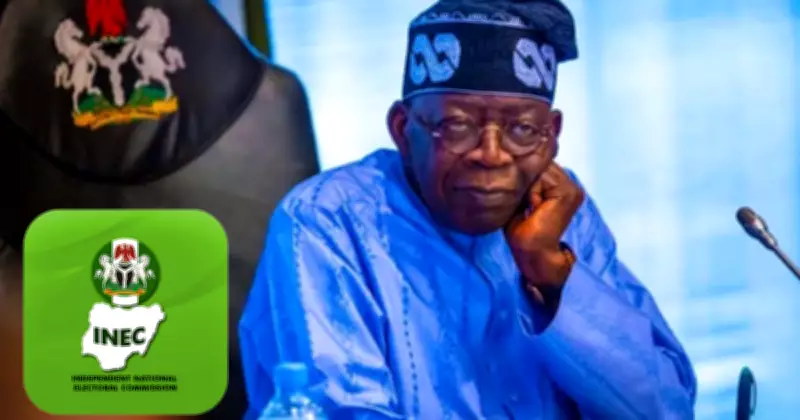
Simultaneously, the Federal Government's 2026 budget proposal includes a substantial ₦1.01 trillion statutory transfer to the Independent National Electoral Commission (INEC). INEC leads the statutory transfer category, receiving about 21 percent of the total ₦4.80 trillion statutory transfers proposed in the budget. Statutory transfers refer to constitutionally mandated funds disbursed directly to government bodies such as INEC, the National Assembly, and the National Judicial Council.
These allocations are considered first-line charges to the Consolidated Revenue Fund and therefore are not subject to direct executive control. Organizations receiving statutory transfers achieve significant financial independence with guaranteed funds to execute their constitutionally mandated functions, particularly those related to governance, democratic processes, and institutional oversight.
Opposition Parties Voice Strong Objections
The development follows INEC's notification to the National Assembly in February 2026 that it required ₦873.78 billion to conduct the 2027 general elections, plus an additional ₦171 billion for operational activities during the 2026 fiscal year. However, analysts have noted that the ₦135.22 billion allocation for post-election legal matters appears to be a new budgetary item not clearly listed in the initial draft of the 2026 budget submission.
The presence of this disputed allocation has opened floodgates of criticism from opposition parties, particularly the Peoples Democratic Party (PDP) and the African Democratic Congress (ADC), who are raising serious questions about the transparency and logical basis for such substantial funding.

Ini Ememobong, National Publicity Secretary of the PDP, warned that a massive budget for post-election legal battles suggests the electoral commission may already be anticipating widespread disputes arising from the 2027 polls. "This allocation jeopardizes the integrity of our entire electoral process," Ememobong stated. "These enormous expenditures reflect how election organizers themselves believe election results will be widely challenged."
Ememobong elaborated that if INEC operated with greater transparency, post-election litigation would decrease dramatically. "It is the lack of transparency and obvious opacity of INEC during elections that result in post-election litigation," he asserted. The PDP spokesman questioned why such extensive legal funding would be necessary when the electoral body already maintains internal legal teams, suggesting that many legal responsibilities should be handled internally rather than through external counsel that could expose the process to political interference.
Concerns About Electoral Integrity and Accountability
Bolaji Abdullahi, National Publicity Secretary of the ADC, acknowledged that it is normal for INEC to prepare for post-election litigation since the commission is frequently joined as a party in legal disputes arising from elections. However, he expressed deep concern about the scale of the proposed funding.
According to Abdullahi, while planning for election-related litigation is understandable, allocating ₦135 billion for such purposes raises serious accountability questions. "If elections are free, transparent, and credible, litigation should be minimal," he emphasized, questioning how many legal cases the government expects to emerge from the 2027 elections to justify such extraordinary funding.
Both opposition representatives warned that weak institutions and flawed electoral conduct have historically undermined Nigeria's democracy, urging authorities to prioritize governance and democratic stability ahead of the 2027 elections. Ememobong specifically advised that "the APC-led Federal Government, INEC, and everyone involved in the 2027 elections should take a step back to ensure we protect the country and democracy before talking about elections and partisanship."
The substantial allocation for election lawsuits in the 2026 budget proposal has thus become a focal point for broader debates about electoral transparency, institutional integrity, and the government's preparedness for the 2027 general elections, with opposition parties demanding greater clarity and accountability regarding how these funds will be utilized.