ADC on Brink of 2027 Exclusion as Court Battles and Deadlines Intensify
The African Democratic Congress (ADC) is facing severe pressure that threatens its participation in the 2027 general elections, with mounting legal battles, institutional friction, and a compressed electoral timetable creating uncertainty. The Supreme Court of Nigeria's decision to adjourn the ADC leadership dispute to April 22 has introduced a new layer of anxiety, narrowing the party's window to comply with the Independent National Electoral Commission (INEC) schedule.
INEC Timetable and Compliance Challenges
According to INEC's timetable, presidential and National Assembly elections are slated for January 16, 2027, while governorship and State Houses of Assembly elections will follow on February 6, 2027. Party primaries are expected between April 23 and May 30, 2026, with nomination form submissions fixed for June 27 to July 11, 2026. Campaign activities for presidential and National Assembly elections will run from August 19, 2026, to January 14, 2027, and for governorship and state assembly campaigns from September 9, 2026, to February 4, 2027.
With INEC requiring parties to conclude primaries, submit candidate lists, and clarify leadership structures within strict deadlines, the April 22 hearing leaves the ADC with a narrow compliance window. Observers warn that even if judgment is delivered promptly, any directive requiring fresh congresses or conventions could push the party beyond regulatory limits. If the apex court nullifies the party's recent National Convention in Abuja, similar to its intervention in the PDP convention dispute in November 2025, the ADC might be forced to restart internal processes, risking its ability to meet INEC's May deadline.

Internal Party Tensions and Expulsions
Meanwhile, the ADC has expelled a former national vice chairman, Nafiu Bala Gombe, along with four other members, including House of Representatives member Leke Abejide, over alleged anti-party activities. The decision was taken at the party's national convention in Abuja, where delegates approved a motion moved by Senator Binos Yaroe. Party officials cited conduct detrimental to unity, such as Bala instituting a court case against the leadership and Abejide expressing support for his actions.
Convention Held Without INEC Presence
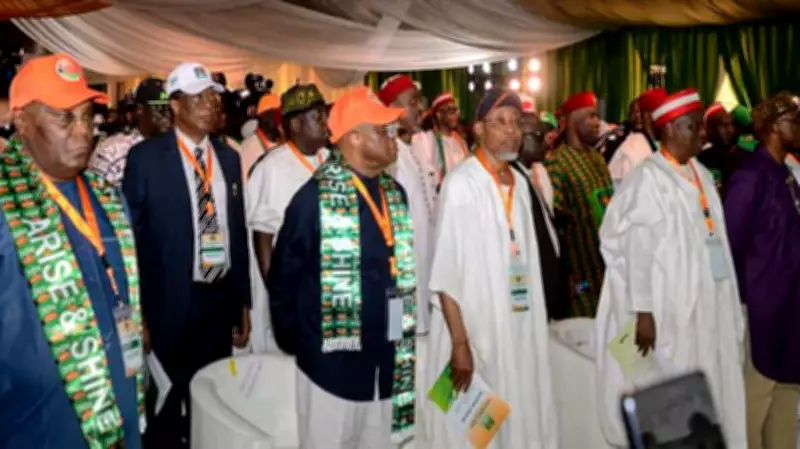
The ADC national convention commenced at the Rainbow Event Centre in Abuja without INEC officials present, heightening concerns among party members. This followed INEC's announcement on April 1 that it would no longer recognise the ADC leadership led by Senator David Mark, citing an interim Court of Appeal ruling. Despite tensions over the venue and INEC's absence, party members proceeded with the convention, a key step in preparations for the 2027 elections.
Leadership Statements and Opposition Concerns
National Chairman David Mark described the convention as a defining moment in Nigeria's democratic journey, emphasizing resilience and opposition survival. He warned that forces had attempted to stop the convention through courts and institutions but affirmed the party's commitment to democratic principles.
Former Vice President Atiku Abubakar and National Secretary Rauf Aregbesola criticized INEC and the Federal Government, raising alarms about democracy, the economy, and governance. Atiku alleged INEC is being used to scuttle democracy, while Aregbesola highlighted economic issues like naira devaluation and rising fuel prices, questioning the effectiveness of the government's "Renewed Hope" agenda.
Judicial and Legal Developments
A High Court in Abuja has ordered all parties in the ADC leadership dispute to maintain the status quo pending the determination of a substantive suit, adjourned to April 23. The Human Rights Writers Association of Nigeria (HURIWA) cautioned against judicial interference in party affairs, warning it could threaten democracy and the rule of law, citing Section 83 of the Electoral Act, 2026.
As the April 22 Supreme Court hearing approaches, the outcome could determine not only the ADC's participation in 2027 but also its viability as a political platform. The case underscores a recurring lesson in Nigeria's electoral politics: timing is decisive, and parties entangled in unresolved disputes risk exclusion regardless of circumstances.