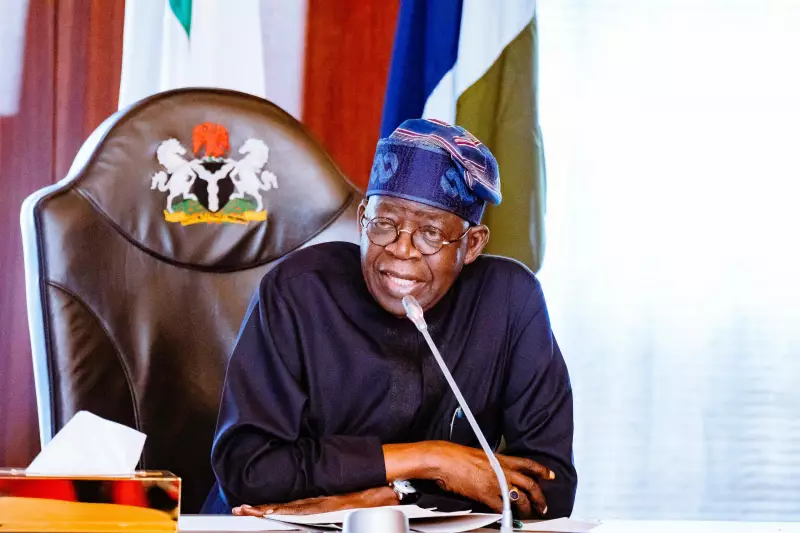
In a powerful show of unity, Nigeria's Vice President Kashim Shettima, Senate President Godswill Akpabio, and House of Representatives Speaker Tajudeen Abbas have firmly closed ranks behind President Bola Tinubu. The trio used the platform of the All Progressives Congress (APC) National Executive Committee (NEC) meeting on Friday, December 27, 2025, to rally the ruling party, emphasizing disciplined expansion and closer coordination between the legislature and the executive as the nation looks toward the decisive 2027 general elections.
A Call for Unity and Institutional Memory
The meeting, held inside the Presidential Villa in Abuja, saw the three leaders framing the APC's future strength around key pillars: preserving institutional memory, building political coalitions, ensuring coherent lawmaking, and avoiding damaging internal splits. Vice President Kashim Shettima delivered a lengthy tribute to President Tinubu's political journey, crediting him with the survival and eventual success of Nigeria's opposition politics long before the 2013 merger that created the APC.
"Politics rewards memory, and today memory must begin with gratitude," Shettima told the NEC members. He argued that the party's current control of 28 states was rooted in a historic resistance to one-party dominance. Shettima cautioned that incumbency alone would not guarantee victory in 2027, describing the coming electoral cycle as a major responsibility requiring discipline, organization, and learning from past lessons.

He emphasized a pragmatic approach to politics, stating, "Elections are not won on Facebook or Twitter; they are won by coalitions, credibility and conviction." This was a clear signal that the party's strategy would focus on ground-level political work rather than social media agitation.
Legislative Pledges and Electoral Reforms
Senate President Godswill Akpabio pledged the continued support of the National Assembly for President Tinubu's reform agenda. He reported that lawmakers had processed executive bills and requests in a timely manner to help stabilize governance. Akpabio stressed the paramount role of the legislature in a democracy, urging governors to work more deliberately with legislators at both state and federal levels.
He made a significant announcement regarding the nation's electoral framework, revealing that amendments to the Electoral Act would be concluded before the end of January 2026. This move is designed to provide clear timelines for party congresses, primaries, and the 2027 contest itself, aiming to prevent the administrative gaps that often plague pre-election periods. Akpabio joined the party's governors in approving a fresh vote of confidence in President Tinubu, praising him for navigating "difficult terrain" and insisting that economic and security reforms were beginning to yield results.
Focus on Governance Delivery and Internal Cohesion
Speaker of the House Tajudeen Abbas shifted the focus to tangible delivery and institutional alignment. He urged the APC to deepen internal cohesion and view governance as a binding contract with the Nigerian people. Abbas presented compelling statistics to demonstrate the National Assembly's productivity, noting that between June 2023 and June 2025, the House had processed 2,263 bills, passed 237, and seen 68 assented to by the President. He called this the most productive two-year stretch since 1999, with nearly 80% of enacted laws originating from private-member bills.
Abbas issued a stark warning about the party's internal dynamics, noting that "the APC is not the same party it was in 2015, 2019 or 2023." He stated that managing relations between founding members and newer blocs must become a strategic priority to avoid fragmentation. To safeguard cohesion, he proposed three key mechanisms:
- A quarterly governance-delivery dashboard to track performance.
- A legislative-executive programme grid to monitor manifesto promises, bills, and budget allocations.
- Stronger internal dispute resolution processes.
He also called for more rigor in candidate selection to avoid fielding electoral liabilities in the 2027 polls.

While their emphases differed—Shettima on coalition discipline, Akpabio on legislative acceleration, and Abbas on institutional coherence—the three leaders echoed a common, powerful theme. They argued that the APC must remain a party that wins power and, more importantly, earns public trust not through political rhetoric, but through demonstrable governance outcomes that improve the lives of Nigerians. Their unified front and endorsement of the vote of confidence in President Tinubu set a clear tone for the ruling party's strategy in the run-up to the 2027 elections.