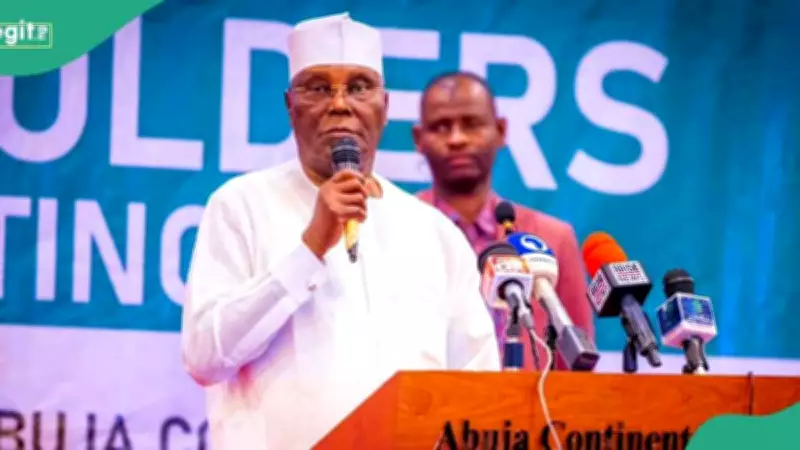
Atiku Abubakar Levels Serious Allegations Against INEC Over ADC Leadership Dispute
Former Vice-President Atiku Abubakar has made fresh and serious allegations against the Independent National Electoral Commission (INEC), accusing it of acting beyond its legal powers and displaying clear bias in favor of the ruling administration led by Bola Tinubu. The controversy centers on INEC's decision to withdraw recognition from a faction of the African Democratic Congress (ADC), which Abubakar claims is part of a broader effort to manipulate the political landscape in Nigeria.
INEC's Actions Spark Legal and Political Controversy
INEC announced earlier in April that it would no longer acknowledge the ADC leadership associated with former Senate President David Mark, as well as a rival faction led by Nafiu Bala. The commission cited a directive from the Court of Appeal instructing all parties to maintain the status quo pending further legal proceedings. However, Abubakar, speaking during an interview on BBC Newsday, argued that INEC exceeded its authority by interpreting this interim court order, a responsibility he insists rests solely with the judiciary.
"We are accusing them of misinterpreting the law, even though it is not their responsibility to do that. The court has already interpreted the law. We are also accusing them of bias," Abubakar stated. When questioned if this bias was intended to secure political advantage for the current administration, he responded unequivocally, "For sure." He further contended that INEC's actions contradict established legal precedents, referencing Supreme Court rulings that affirm internal party matters should remain outside external institutional control.

Warnings of Democratic Erosion and Governance Failures
Abubakar warned that such developments could undermine democratic norms in Nigeria, describing the situation as a drift toward authoritarian practices. He cited what he believes is growing interference in both electoral and judicial processes, stating, "We call it dictatorship because we have seen evidence of government interference in the electoral process, even in the judicial process in the country." He emphasized that decades of democratic struggle risk being reversed if institutions like INEC fail to act independently, stressing the need for credible elections and an impartial electoral system.
Beyond electoral issues, Abubakar raised significant concerns about national security and the economy. He questioned the government's ability to address persistent violence and criminal activity despite available resources, alleging that insecurity may be allowed to persist as a means of intimidation, particularly affecting farmers and business owners. On the economic front, he criticized rising unemployment levels, warning that widespread joblessness could contribute to increased criminal activity. He called for stronger collaboration with the private sector, including incentives aimed at job creation, and expressed confidence that voters would make decisive choices in the next general election cycle to elect leaders capable of addressing these challenges.
Background on Atiku's Broader Political Moves
Earlier reports indicated that Atiku Abubakar has entered into a $1.2 million agreement with a United States lobbying firm, Von Batten-Montague-York, aimed at reshaping his public image and expanding his influence within American policy circles. This move, documented with the US Department of Justice, will see the firm represent Abubakar for one year, highlighting his ongoing efforts to bolster his political standing both domestically and internationally.
The allegations against INEC come at a critical time for Nigeria's political environment, as debates over electoral integrity and governance continue to dominate public discourse. Abubakar's statements reflect deep-seated concerns about the independence of key institutions and the overall direction of the country's democracy.