Atiku Abubakar Announces 2027 Presidential Bid as Final Political Endeavor
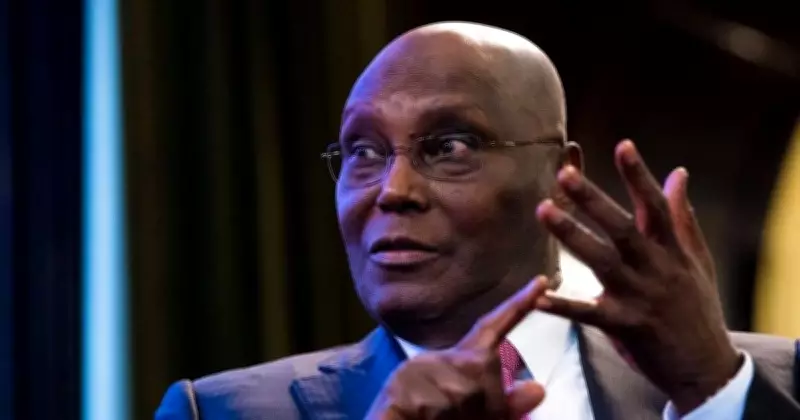
In an exclusive interview with Arise TV on April 15, 2026, former Nigerian Vice President Atiku Abubakar publicly declared his intention to run for the presidency in the 2027 general elections. The seasoned politician, who served as Vice President under Olusegun Obasanjo from 1999 to 2007, revealed that this upcoming campaign will mark his final attempt to secure the nation's highest office.
Final Political Chapter for Veteran Politician
Atiku Abubakar made his intentions clear during the televised interview, stating emphatically that the 2027 election represents his last political outing. "The stakes are higher because I believe this will be my last outing," the former vice president declared. He emphasized that this would be his ultimate attempt at contesting for the presidency, bringing closure to a political career that has spanned decades.
When questioned about why Nigerian voters should consider his candidacy given this being his final campaign, Abubakar positioned himself as a bridge between Nigeria's political past and future. "I represent both the past and the future simply because we have seen various types of leadership in the country, both the old and the young," he explained. The politician argued that while expectations for younger leadership remain high, the experience and guidance from older generations remain essential for national development.

African Democratic Congress as Political Vehicle
The former vice president confirmed his plans to contest under the banner of the African Democratic Congress, joining a coalition of politicians who have adopted the party as their platform to challenge the incumbent All Progressives Congress administration. This strategic move represents a significant shift in Nigeria's political landscape as opposition forces consolidate ahead of the crucial 2027 elections.
Addressing questions about party unity and candidate selection, Abubakar outlined the ADC's approach to choosing their standard bearer. "It is not about stepping aside, the first option in coalition is to work out a consensus," he stated. The politician explained that the party would initially seek to produce a consensus candidate through negotiation and agreement among stakeholders. Should this approach prove unsuccessful, the party would then proceed to conduct direct primaries to determine their presidential nominee.
Competitive Landscape and Political History
Atiku Abubakar's path to securing the ADC nomination faces significant challenges from several political heavyweights who have also expressed interest in the party's ticket. Among his potential competitors is former Anambra State Governor Peter Obi, who finished third in the 2023 presidential election while representing the Labour Party despite winning the most states.
The field also includes former Rivers State Governor and Transport Minister Rotimi Amaechi, who previously contested for the APC presidential ticket alongside current President Bola Tinubu in 2023. Additionally, former Kano State Governor Rabiu Musa Kwankwaso, who ran under the New Nigeria People's Party banner in 2023, has recently joined the ADC and may enter the primary contest.
Should Abubakar successfully secure the ADC nomination, this would represent his fourth presidential campaign in Nigeria's political history. His previous attempts include the 2007 election under the Action Congress of Nigeria where he placed third, the 2019 election as the People's Democratic Party candidate where he finished second to incumbent Muhammadu Buhari, and the 2023 election as PDP flagbearer where he lost to current President Bola Tinubu.
Between these campaigns, Abubakar experienced several political transitions, including losing the 2011 PDP primaries to then-incumbent Goodluck Jonathan, briefly joining the APC coalition in 2015 before being defeated by Muhammadu Buhari in the party's primary, and ultimately returning to the PDP ahead of the 2019 election cycle.
The 2027 presidential election, scheduled for January of that year, promises to be a defining moment in Nigeria's political trajectory as veteran politicians like Atiku Abubakar make what they describe as their final attempts to shape the nation's future while navigating complex coalition politics and evolving voter expectations.