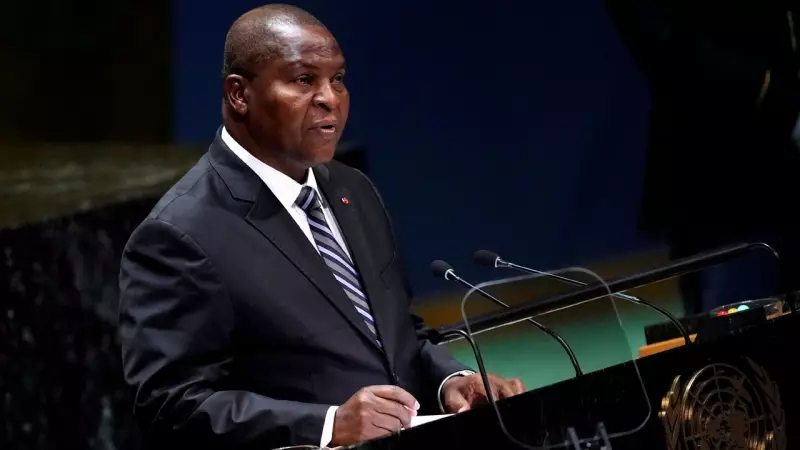
Polls opened across the Central African Republic (CAR) on Sunday, 28 December 2025, in a crucial vote where incumbent President Faustin-Archange Touadera is seeking a third term in office. The election, which also selects legislators and local representatives, is unfolding under a heavy security presence and accusations of being orchestrated to favour the sitting leader.
A Campaign of Contrasts and Controversy
Approximately 2.3 million citizens are registered to vote in this election. As polling began, scenes like the one at Bangui's city hall, where about 30 people waited, were reported. Retired soldier Martin Dekonamkona, emphasizing his civic duty, stated he had never missed a vote in his life. Voting is scheduled to close at 1700 GMT.
President Touadera, 68, concluded his campaign with a large rally in a Bangui stadium, buoyed by a constitutional amendment he championed that allows him to run for a third term. His campaign has focused on claims of improved security and infrastructure projects like paved roads and public lighting in the capital.

However, the campaign period was marked by significant imbalance. Key opposition figures, Anicet-Georges Dologuele and former prime minister Henri-Marie Dondra, faced obstacles, including being prevented from flying to the provinces to hold rallies. Furthermore, they confronted legal challenges based on a new constitutional requirement for candidates to hold only CAR citizenship, a rule introduced in 2023.
Security, Skepticism, and Stalled Progress
The streets of Bangui witnessed a significant deployment of security forces, including the national police, army, and fighters from the Russian Wagner Group mercenary force. This security blanket underscores the fragile peace in a nation where, despite a reduction in major conflict since Touadera first took office in 2016, armed groups still operate on main highways and in eastern regions near Sudan and South Sudan.
Political analyst Paul Crescent Beninga criticized the campaign, describing pro-Touadera rallies as "orchestrated" to create an illusion of overwhelming support. This perception is reinforced by the omnipresent campaign materials featuring the president's image across the capital.
A segment of the opposition has called for a boycott, labelling the electoral process a sham. Critics accuse Touadera of clinging to power in one of the world's poorest nations, where 71% of the population lives below the poverty line. For many citizens, daily life remains a struggle with inadequate basic services, unemployment, and a rising cost of living, despite the government's cited achievements.
A Repeat of Past Electoral Tensions?
The shadow of the disputed 2020 election looms large. Touadera's last re-election was marred by fraud allegations and a major rebel offensive, which was ultimately repelled with assistance from Rwandan troops and Wagner mercenaries. The current election, alongside Guinea's presidential vote on the same day, concludes a year packed with African polls.
Despite courts allowing Dologuele and Dondra to stand, scepticism about the vote's transparency persists. Dologuele's ordeal, which included having his Central African passport revoked in October even after renouncing French citizenship, led him to file a complaint with the UN human rights office. As CAR voters cast their ballots, the international community watches to see if this election will deepen stability or exacerbate the nation's long-standing political divisions.