Former Police Chief Mohammed Abubakar Adamu Declares Nasarawa Governorship Ambition
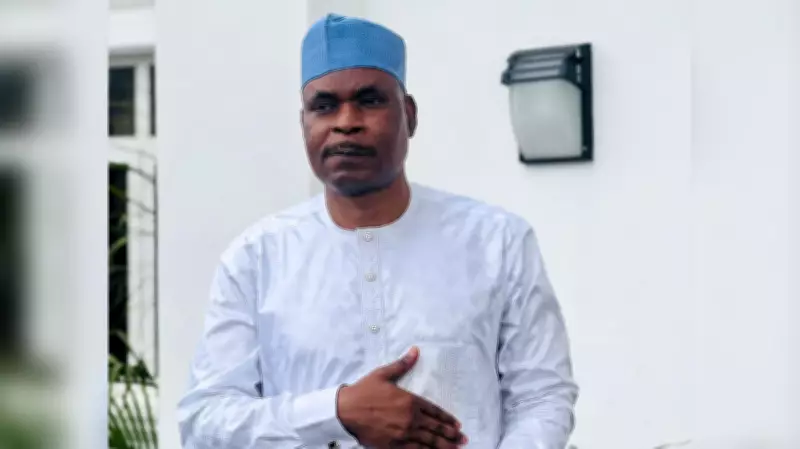
Former Inspector-General of Police Mohammed Abubakar Adamu has officially announced his intention to contest the Nasarawa State governorship election in 2027, positioning himself as a candidate with superior social service credentials compared to career politicians. Adamu made his declaration during an extensive media interaction where he detailed his motivations and outlined key policy positions following a comprehensive tour of all 147 wards across the state.
State Police Debate and Local Government Autonomy
On the contentious issue of state police, Adamu argued that Nigeria already operates multiple policing structures in practice, despite constitutional provisions for a single force. "We have Neighbourhood Watch groups, vigilantes, and regional outfits like Amotekun Corps performing policing duties nationwide," he stated. "The real question isn't whether to create state police but how to properly regulate existing structures with accountability mechanisms."
Regarding local government autonomy, the former police chief expressed strong support for full implementation of constitutional provisions. "Local governments operate at the mercy of state governments currently," he observed. "When they control their resources, they can be properly evaluated and held accountable for performance."

Security Background as Key Qualification
Adamu emphasized his security sector experience as particularly relevant for Nasarawa State, which faces challenges common across North-Central Nigeria. "We experience communal clashes, kidnapping, and insecurity affecting neighboring states like Benue, Kogi, Taraba, Plateau, and Niger," he explained. "With my background, I understand these challenges and believe I should be in the driving seat to implement solutions."
The former IGP proposed a multi-layered security approach:
- Job creation through agriculture and mining to address poverty-driven crime
- Community mediation to resolve farmer-herder conflicts
- Empowered traditional leadership with youth participation in intelligence gathering
- Conventional policing deployment where local mechanisms fail
Development Gaps Identified During Ward Tours
During his consultations across Nasarawa's 147 wards, Adamu identified several critical development deficiencies:
- Infrastructure shortcomings: Poor rural roads hindering farmers' market access and unreliable electricity even in the state capital
- Youth and women unemployment: Insufficient job training programs and skills development opportunities
- Water supply problems: Inadequate access to clean water across communities
- Urban development lag: Limited progress beyond the Makurdi road dualization and persistent sandy conditions in Lafia
"Small-scale businesses suffer without reliable electricity," Adamu noted. "A woman with a fridge selling iced water to fund her children's education cannot achieve this without power."
Proximity to Abuja as Development Opportunity
The former police chief outlined plans to leverage Nasarawa's adjacency to Nigeria's capital for economic development. "Areas like Mararaba remain largely slums despite their strategic location," he acknowledged. His proposed solutions include:
- Creating express road connections to bypass congested areas
- Developing large estates along the Gitata-Panda to Mpape axis
- Upgrading existing settlements with proper planning and modern infrastructure
- Reshaping slum areas to match Abuja's development standards
Political Landscape and Zoning Controversy
Addressing political dynamics, Adamu dismissed zoning as a non-factor in Nasarawa's political history. "There has never been anything like zoning in practice," he asserted, tracing gubernatorial transitions from Abdullahi Adamu to Aliyu Akwe, Tanko Al-Makura, and current Governor Abdullahi Sule.

Regarding the governor's apparent succession preference for a Keffi zone candidate, Adamu responded: "I don't expect political patronage from him. Power ultimately comes from the electorate, which is why I visited all 147 wards directly."
The aspirant expressed support for direct primaries under the Electoral Act, noting that "consensus cannot work if even one aspirant disagrees." He emphasized his grassroots engagement strategy, having met with party officials, stakeholders, and community members who had considered leaving the party.
Track Record and Future Promises
Adamu highlighted his tangible contributions to Nasarawa State during his tenure as Inspector-General of Police:
- Implementation of nationwide security strategies benefiting the state
- Facilitation of police recruitment from which Nasarawa citizens benefited
- Establishment of a Police Mobile Training School in the state
- Construction of police secondary schools, hospitals, and road infrastructure
"Compared to many aspirants who have been in politics for years, my record of tangible contributions stands out," he concluded, positioning himself as a development-focused alternative to traditional political candidates.