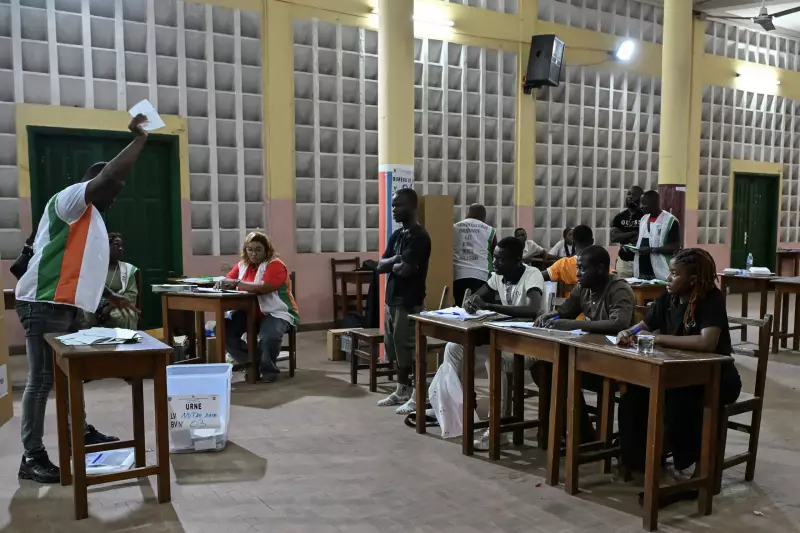
Voting concluded in Ivory Coast's parliamentary elections this Saturday, marked by a notably low voter participation. The polls, held just two months after President Alassane Ouattara secured a fourth term, were largely boycotted by major opposition parties, leading to sparse activity at many polling stations.
Scenes of Apathy in Abidjan
In key districts of the economic capital, Abidjan, the lack of voters was stark. Journalists reported that in the Yopougon and Plateau areas, fewer than 100 people out of 400 registered had cast their ballots. The situation was mirrored elsewhere, with one polling booth in Yopougon seeing only about 20 voters by midday. The process was further hampered by logistical delays, as some stations in Abidjan opened an hour late due to heavy rain.
The Independent Electoral Commission (CEI) released a provisional participation rate of 32.35 percent early Sunday. This figure is lower than the 37.88 percent turnout recorded in the previous legislative elections in 2021, highlighting growing voter disengagement or protest.

Opposition Boycott and Political Tensions
The low turnout follows calls for a boycott by opposition groups. The political landscape remains tense after the October presidential election, which President Ouattara won with nearly 90% of the vote amid the exclusion of key rivals. Eleven people died in related violence, and dozens of opposition supporters were detained.
The PPA-CI party of former President Laurent Gbagbo, barred from the presidential race, officially boycotted this vote, though about 20 of its members ran as independents. Meanwhile, the PDCI party of excluded presidential candidate Tidjane Thiam did participate. Notably, its spokesman, Soumaila Bredoumy, was detained in November on charges of "terrorism" and "plotting against state authority."
Security and the Path Forward
Given Ivory Coast's history of electoral violence, security was a major focus. Authorities maintained the deployment of over 40,000 security personnel from the October presidential election. Ibrahime Kuibiert Coulibaly, head of the CEI, acknowledged minor scuffles but stated they were quickly controlled and did not disrupt the overall process.
With the ruling RHDP party already holding a majority in the 255-seat National Assembly, this election is set to further consolidate President Ouattara's 14-year rule. Prime Minister Robert Beugre Mambe and the president's brother, Defence Minister Tene Birahima Ouattara, were among the RHDP candidates. The final results will determine the assembly's composition for the next five years, but the low participation rate casts a shadow over its mandate and the nation's political cohesion.