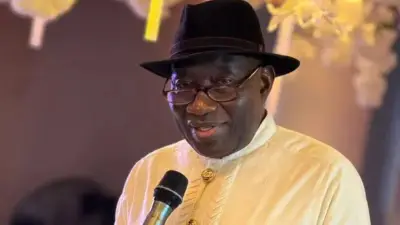
A prominent figure in the All Progressives Congress (APC) from Abia State, Prince Paul Ikonne, has provided insights into the significant nationwide mobilisation of the Igbo community in favour of President Bola Ahmed Tinubu's anticipated 2027 re-election bid. Ikonne, who recently served as the Executive Secretary and CEO of the National Agricultural Land Development Authority (NALDA), stated that this movement is a calculated strategy to end the region's political marginalisation, safeguard its widespread economic investments, and secure a pivotal role in Nigeria's central governance.
Strategic Realignment: Ending Isolation and Protecting Business
During an appearance on TVC's Politics Tonight on Tuesday, January 14, 2026, Ikonne emphasised that South-east leaders have made a conscious decision to actively campaign for President Tinubu across all geo-political zones. He argued that the region's future political relevance and economic survival are intrinsically linked to aligning with the ruling party at the federal level.
The mobilisation effort extends far beyond the South-east's borders. Ikonne revealed that a team assembled by Governor Hope Uzodinma of Imo State, which includes himself, is touring states with significant Igbo populations to galvanise support. "This is not just about votes from the South-east," Ikonne clarified. The goal is to sensitise Igbos living in other regions on the necessity of backing Tinubu's re-election.

He connected this political shift directly to the Igbo community's economic profile. "We are traders and business people spread across Nigeria. Aligning with the centre helps our businesses. No Igbo person wants this region to continue to stay outside power," Ikonne stated, highlighting the pragmatic drive behind the support.
APC's Growing Dominance and Opposition Decline
Ikonne pointed to the wave of defections to the APC across the South-east as evidence of this strategic shift. He made a bold claim, suggesting that even if the region delivered 90% of its votes to the APC in 2027, it would be considered insufficient given the scale of the ongoing political realignment. "With the calibre of leaders now in the APC in the South-east, even 90 per cent will not be a good result for us," he asserted.
Using his home state as a case study, Ikonne declared that the Peoples Democratic Party (PDP) structure in Abia has largely collapsed into the APC, a trend he says is repeating throughout the region. "What that tells you is that votes previously lost are now being recovered. The political structures are coming together, and the numbers will follow," he explained.
This consolidation, according to Ikonne, has drastically reduced the influence of opposition parties like the Labour Party and its 2023 presidential candidate, Peter Obi. He also dismissed the political clout of Abia State Governor, Alex Otti, describing him as isolated. "Our governor is minus one. He does not even have a functional party. He has effectively abandoned Peter Obi," Ikonne claimed.
Endorsements Signal a Return to Mainstream Politics
Ikonne underscored the significance of endorsements for President Tinubu from a broad spectrum of South-east political heavyweights, including serving and former governors, ex-Senate Presidents, and ministers. He framed this as a deliberate and collective return of the region to the heart of national politics.
"The calibre of leaders backing this endorsement shows a clear consolidation of political structures in favour of President Tinubu," he said. Ikonne brushed off narratives that the APC lacks credibility in the South-east, positioning it instead as the new destination for politicians seeking influence. "The Igbos are not fools. No Igbo man wants to make the same mistake twice," he added, alluding to past electoral choices.
He also addressed criticism from Senator Eyinnaya Abaribe, representing Abia South, downplaying the lawmaker's relevance and predicting a tough re-election battle ahead. Ikonne's comments paint a picture of a region strategically repositioning itself within Nigeria's political calculus, with the 2027 election as the immediate focal point.