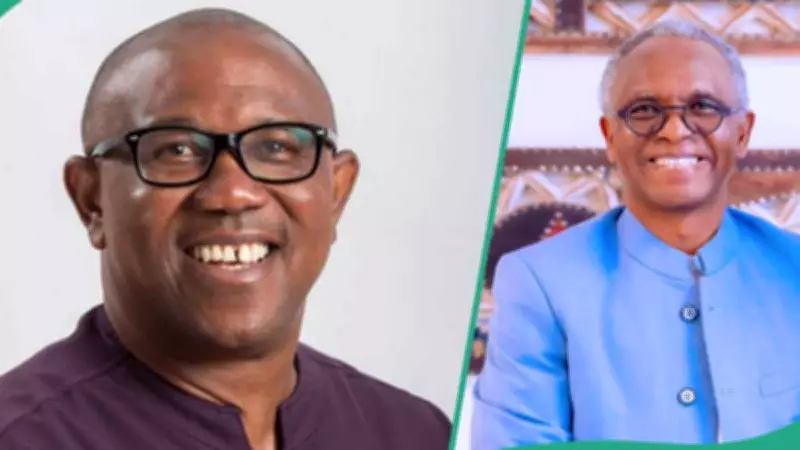
El-Rufai Clarifies Position on Electoral Act Protests Led by Peter Obi
Former Kaduna State governor Malam Nasir El-Rufai has provided detailed explanations regarding his absence from the recent protest at the National Assembly organized by Peter Obi and other political figures. The demonstration, which took place on Monday, February 9, 2026, specifically targeted the exclusion of real-time electronic transmission provisions within the amended Electoral Act legislation currently under parliamentary consideration.
Critical Electoral Reforms at Stake
During an exclusive interview broadcast on Trust TV, El-Rufai expressed strong criticism toward the Senate's handling of electoral reform measures. He revealed that while the House of Representatives had previously approved clauses mandating electronic transmission of election results, the Senate has systematically frustrated these progressive provisions. The former governor emphasized that real-time electronic transmission represents a fundamental requirement for conducting credible elections throughout Nigeria.
"It's unfortunate I have not been able to return to Nigeria," El-Rufai stated during the televised discussion. "I would have joined Mr. Peter Obi and other party leaders in protesting to the National Assembly to restore the real-time and mandatory transmission of results from the polling unit."

Addressing Electoral Malpractice Mechanisms
El-Rufai provided insightful analysis regarding where electoral manipulation primarily occurs within Nigeria's voting processes. Contrary to popular assumptions, he asserted that significant malpractice happens not at individual polling units but rather within coalition centers where results are aggregated and processed. This distinction carries important implications for electoral integrity reforms.
"It is the only way we can stop the manipulation that goes on in the coalition centers," El-Rufai explained. "That is where the real rigging takes place. Rigging doesn't take place in the polling units. It is in the coalition centers."
Political Motivations Behind Resistance
The former governor offered candid perspectives regarding political motivations behind resistance to electronic transmission mandates. He suggested that certain political interests recognize their electoral vulnerabilities without manipulation capabilities, leading to systematic opposition against transparency measures.
"But we all know why the ruling party and the sitting government don't want that," El-Rufai commented. "Because they know they can't win the elections, and the only way they have a fighting chance is to be able to manipulate the results after people have voted. So I would have joined them."
Broader Context of Electoral Reform Advocacy
The protest led by Peter Obi represents a significant moment within Nigeria's ongoing electoral reform discourse. Demonstrators specifically advocated for mandatory electronic transmission mechanisms ahead of anticipated 2027 general elections. This mobilization has sparked wider conversations about civic engagement effectiveness and social media activism's role in influencing governmental policy decisions.
Parallel developments include international dimensions, with reports indicating that activist Comrade Timi Frank has petitioned United States authorities regarding perceived threats to Nigeria's democratic processes. These concerns focus particularly on alleged manipulation of electoral reforms ahead of the 2027 electoral cycle, highlighting the multidimensional nature of current electoral integrity discussions.
El-Rufai's detailed explanations provide valuable insights into the complex dynamics surrounding Nigeria's electoral reform processes, while simultaneously clarifying his personal position regarding recent protest actions at the National Assembly complex in Abuja.