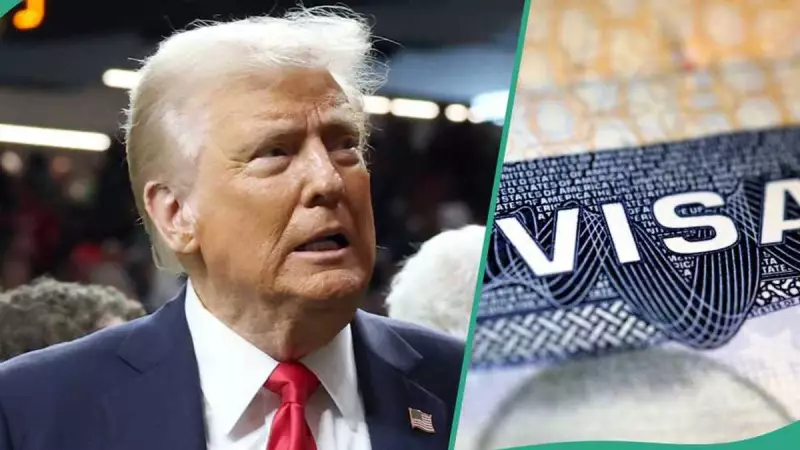
The United States government has rolled out a stringent new visa policy that imposes a significant financial requirement on certain Nigerian citizens seeking to visit the country. Effective from January 2026, applicants for specific short-term visas may be required to post a refundable bond of up to $15,000 (approximately over ₦20 million) as a guarantee against overstaying their authorised period.
Understanding the US Visa Bond Policy
This policy revival, initially introduced during the Trump administration in 2020 but paused due to the pandemic, has now been fully implemented and expanded. It targets visitors from 38 countries, including 24 African nations, with Nigeria prominently on the list. The bond is specifically for applicants of the B-1 (business) and B-2 (tourism) visitor visas.
A US consular officer will determine during the interview if a bond is necessary and set the amount, which could be $5,000, $10,000, or the maximum $15,000. The decision is based on an assessment of the applicant's travel history, perceived risk of overstay, and overall compliance record. It is crucial to note that paying this bond does not guarantee visa approval; the officer retains full discretion to deny the application.

How the Refund Process Works for Nigerians
The substantial bond amount is fully refundable under strict conditions. The funds will be returned automatically if the traveller adheres to all visa stipulations. Key conditions for a refund include:
- The traveller must exit the United States on or before their authorised departure date.
- The visa expires without the traveller ever entering the US.
- The traveller is denied entry at a US port of entry.
However, securing a refund is contingent on proper exit documentation. The US Department of Homeland Security (DHS) must capture accurate departure records. Under the new rules, bondholders are only permitted to exit through three designated airports: Boston Logan International Airport, John F. Kennedy International Airport in New York, and Washington Dulles International Airport in Virginia. Departing from any other airport could result in an unrecorded exit and potential forfeiture of the bond.
Major Implications and Financial Burden
For Nigerian travellers, this policy represents a formidable new barrier. The upfront cost, potentially exceeding twenty million naira, places spontaneous tourism and short business trips to the US far out of reach for many. This move is part of a broader tightening of US immigration rules aimed at curbing visa overstays.
The bond will be forfeited if the visa holder violates conditions, such as overstaying, applying to adjust their nonimmigrant status, or claiming asylum. The policy mirrors practices in other countries like Australia and Canada but involves notably higher financial stakes.
This development follows recent partial travel restrictions affecting Nigeria and signals a more rigorous approach to visitor visas from the US authorities. Nigerian applicants are now faced with a process that combines the existing scrutiny of the visa interview with a substantial financial guarantee, fundamentally altering the landscape of short-term travel to America.