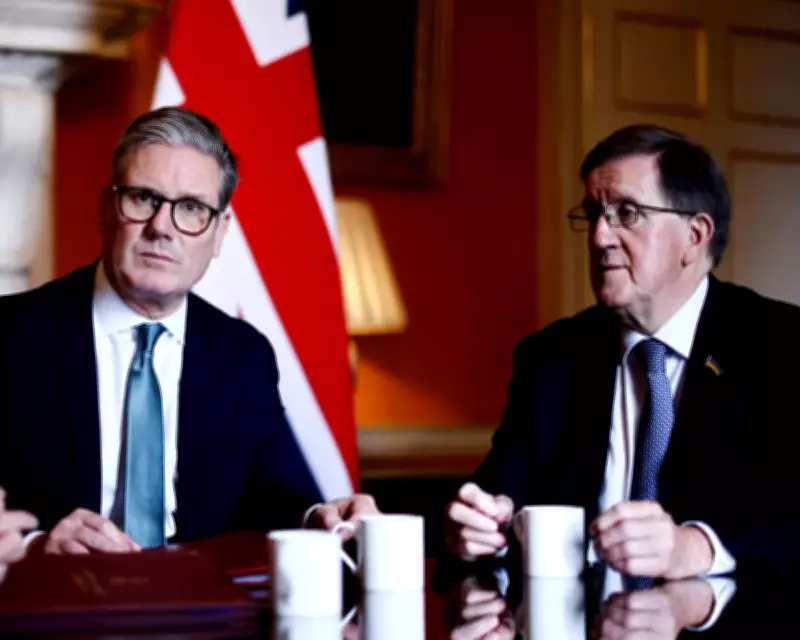
Former NATO Leader Issues Grave Warning Over UK Defense Preparedness
In a powerful address that has sent shockwaves through British political circles, former NATO Secretary General George Robertson delivered a blistering condemnation of Prime Minister Keir Starmer's administration on Tuesday. The seasoned statesman, who previously served as Labour Defense Secretary and led the government's own Strategic Defence Review, accused the current leadership of fostering a "corrosive complacency" that has left the United Kingdom dangerously exposed to potential conflicts.
A Widening Gap Between Rhetoric and Reality
Robertson's carefully prepared speech, scheduled for Tuesday evening, represents one of the most significant interventions in British defense policy in recent years. The former NATO chief warned that a growing chasm between the Prime Minister's public statements and actual financial commitments is placing national security "in peril." He described the ongoing conflict with Iran as a "rude wake-up call" for a political establishment that he claims is prioritizing social welfare expenditures over essential military investments.
"We are underprepared. We are underinsured. We are under attack. We are not safe... Britain's national security and safety is in peril," Robertson declared in extracts from his forthcoming address that have already circulated widely among defense analysts and political commentators.

Targeting Treasury Decision-Makers
The former defense secretary specifically directed his criticism toward the Treasury, accusing "non-military experts" of committing what he termed "vandalism" by allegedly obstructing the funding necessary to modernize Britain's armed forces. "We cannot defend Britain with an ever-expanding welfare budget," Robertson emphasized, highlighting what he perceives as a fundamental misalignment in national priorities.
This sharp critique follows a series of postponements affecting the government's promised Defence Investment Plan, which was originally intended to outline how the sixty-two recommendations from Robertson's Strategic Defence Review would receive financial backing. While Downing Street representatives have maintained that the current administration has delivered the "largest sustained increase in defense spending since the Cold War," with over £270 billion allocated across this parliamentary term, critics point to a projected £28 billion funding gap in existing military plans.
Military Experts Echo Concerns
General Sir Richard Barrons, who co-authored the Strategic Defence Review alongside Robertson, has reinforced these concerns, noting that while the United Kingdom is moving in what he considers the right direction, current progress would require approximately a decade to achieve "war-ready" status. This timeline stands in stark contrast to intelligence assessments suggesting a "three-to-five-year" window before potential direct confrontation with Russia.
International Tensions Compound Domestic Pressure
The domestic defense debate unfolds against a backdrop of escalating diplomatic tensions between London and Washington. United States President Donald Trump has recently criticized Prime Minister Starmer's leadership, particularly following the British leader's initial reluctance to permit American forces to utilize the Diego Garcia airbase for strikes against Iranian targets. "This is not Winston Churchill we're dealing with," Trump remarked on March 3, later suggesting that the United Kingdom was no longer the "Rolls-Royce of allies."
A Growing Consensus on Insufficient Investment
With the British government aiming to elevate defense spending to 2.5% of Gross Domestic Product by 2027 and 3.5% by 2035, Robertson's intervention signals what appears to be a developing consensus among military experts that the current pace of investment remains inadequate to address the urgent security threats anticipated in the late 2020s. The former NATO leader's warnings highlight fundamental questions about Britain's strategic preparedness as geopolitical tensions continue to intensify across multiple theaters.