Ghana's President Expresses Concern Over Potential Nigerian Exodus
In a candid public address, Ghanaian President John Mahama has disclosed that he engages in daily prayers for the Nigerian government to enhance its governance and economic management. The President emphasized that his prayers are motivated by a desire to prevent a scenario where large numbers of Nigerians might feel compelled to migrate to Ghana due to instability or hardship in their homeland.
Regional Stability and Economic Implications
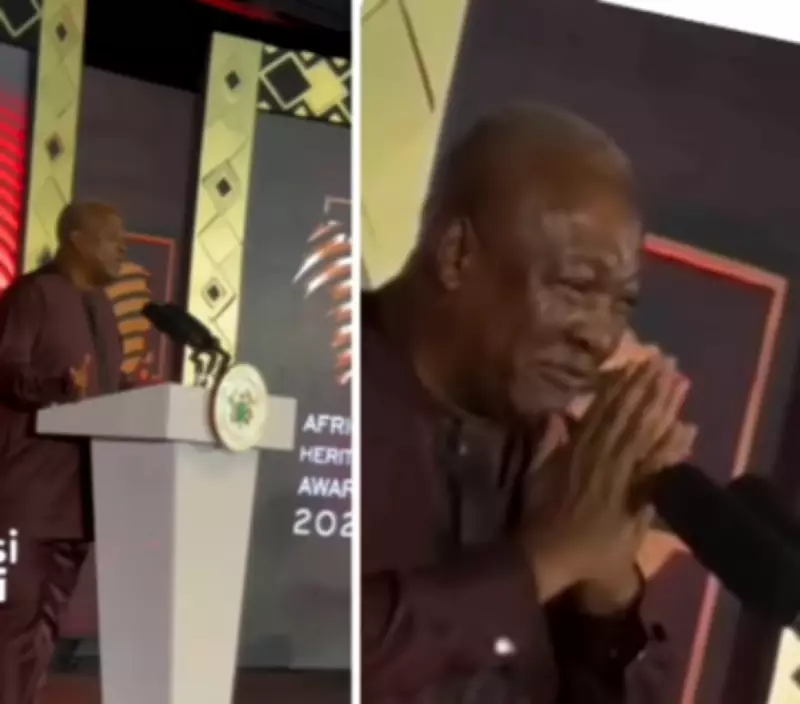
Speaking at a recent award ceremony, President Mahama articulated a clear perspective on the interconnectedness of West African nations. He stated that a prosperous and stable Nigeria is fundamentally beneficial for the entire region, including Ghana. The President highlighted that Nigeria's success directly contributes to regional security and economic vitality, which in turn helps mitigate the pressures of cross-border migration.
"Nigeria is of keen security interest to us. If Nigeria does well, Ghana does well," Mahama remarked during his speech. He elaborated on this point by drawing a familial analogy, noting, "I mean, when you have cousins, 250 million of them, you want them to do well so that one million of them don't come drifting towards a small country like Ghana."

A Daily Prayer for Progress
The Ghanaian leader shared a personal ritual that underscores his deep concern for Nigeria's trajectory. "So everyday when I wake up, I pray for Nigeria: 'God let Nigeria get their acts together,'" he revealed. This statement reflects a genuine hope for Nigeria to address its challenges effectively, thereby fostering an environment where citizens can thrive domestically without seeking refuge or opportunity elsewhere.
Mahama's comments come at a time when economic and security issues in Nigeria have been topics of regional discussion. His prayerful approach signifies a diplomatic and empathetic stance, recognizing that Nigeria's internal developments have far-reaching consequences for neighboring countries. The President's remarks also subtly acknowledge Ghana's own capacity limitations, referring to it as a "small country" that could be overwhelmed by a significant influx of migrants.
This public expression by President Mahama serves as a reminder of the delicate balance in West African geopolitics, where national stability is not merely a domestic concern but a collective regional interest. It underscores the importance of collaborative efforts towards sustainable development and governance across borders.