Ghanaian Leader Expresses Candid Concerns Over Nigeria's Stability
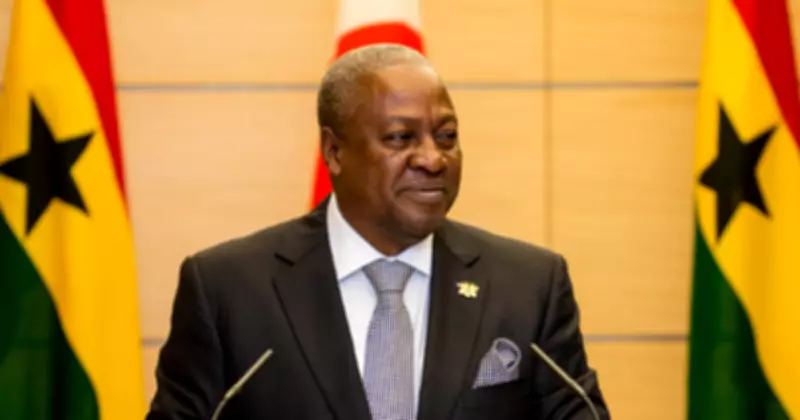
Ghana's President John Dramani Mahama has made headlines with his unusually frank remarks about Nigeria's future, revealing during the 2026 African Heritage Awards in Accra that he offers daily prayers for Nigeria's success. The Ghanaian leader framed Nigeria's stability as a direct security and demographic concern for his nation, drawing both laughter and serious reflection from attendees and online observers alike.
A Prayer for Continental Stability
Speaking as Special Guest of Honour at the ceremony held on April 11 at the Mövenpick Ambassador Hotel in Accra, President Mahama explained his personal investment in Nigeria's prosperity. "Nigeria is of keen security interest to us," Mahama stated. "If Nigeria does well, Ghana does well. When you have cousins, 250 million of them, you want them to do well so that 1 million of them don't come drifting towards a small country like Ghana."
The Ghanaian president added, "So every day I wake up, I pray, 'God, let Nigeria get their act together.'" While the remarks were delivered with a smile and met with laughter in the room, the underlying message has generated significant discussion across social media platforms, particularly among Nigerian audiences.

Online Reactions and Broader Context
Once the clip circulated online, many Nigerian viewers interpreted Mahama's comments through the lens of their country's current economic difficulties and accelerating emigration rates. The phrase "drifting toward Ghana" particularly resonated at a time when discussions about Nigeria's global standing have become increasingly sensitive.
Social media responses revealed mixed interpretations:
- Some users saw the remarks as expressing genuine concern about Nigeria's trajectory
- Others interpreted them as containing elements of disdain or worry about potential migration pressures
- Several commentators acknowledged the interconnectedness of African nations' fortunes
One Twitter user noted, "Where is the lie? A failing Nigeria is a failing Africa. A country of over 200 million, when you fail at that scale it cannot stay contained." Another added, "If a country like Nigeria is failing, it can affect other African countries too. Imagine over 200 million people struggling to survive—the problems don't stay within its borders."
Longstanding Bilateral Relations
Mahama's comments exist within a broader context of warm Ghana-Nigeria relations that the president has consistently emphasized. In December 2025, after receiving a chieftaincy title in Ile-Ife, Mahama described the two nations as sharing a common destiny, remarking that "when Nigeria prospers, Ghana prospers." He has previously characterized the countries as "siblings of the same parents" whose destinies are fundamentally intertwined.
Awards Ceremony Highlights
The 2026 African Heritage Awards, organized by Heritage Times and convened by Moses Siasia, brought together influential leaders and achievers from across Africa to celebrate excellence in multiple fields. The event recognized outstanding contributions in:
- Leadership
- Entrepreneurship
- Media
- Governance
Notable Nigerian recipients included Akinwumi Adesina, the immediate past president of the African Development Bank, who received the African Lifetime Achievement Award, and Didi Walson-Jack, Head of the Civil Service of the Federation, who was honored with the African Public Service Award.
Current Economic Backdrop
Mahama's remarks arrive against the backdrop of Nigeria's prolonged economic challenges, including a weakened currency and documented waves of emigration that have seen significant numbers of professionals and young people leave the country in recent years. The so-called "Japa" trend—referring to the desire to emigrate—has become a prominent feature of national discourse, making discussions about Nigeria's stability particularly resonant.

As of publication, there has been no official response from the Nigerian government regarding President Mahama's comments. The exchange highlights the complex interdependencies between African nations and how domestic challenges in one country can have regional implications, particularly when considering demographic realities and migration patterns.