Iran Announces Full Opening of Strait of Hormuz During Ceasefire Period
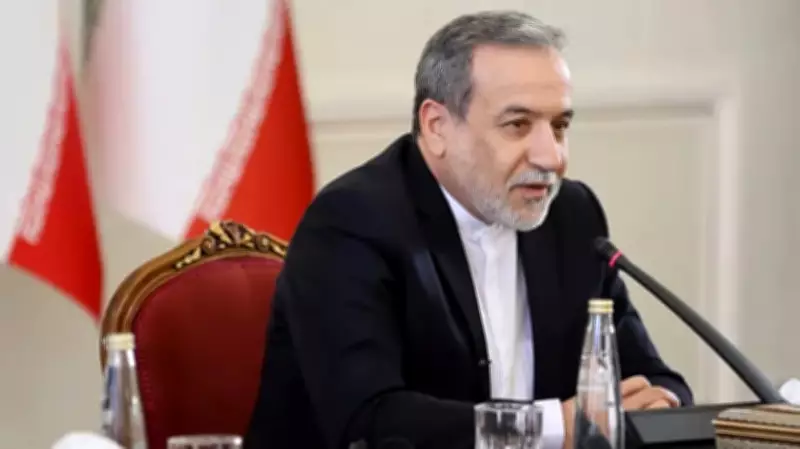
Iran has officially declared that the Strait of Hormuz is "completely open" for all commercial vessels and will remain accessible throughout the duration of the Israel-Lebanon ceasefire. This announcement was made by Iranian Foreign Minister Abbas Araghchi in a post on social media platform X on Friday.
Ceasefire Agreement and Maritime Access
In his statement, Araghchi emphasized that "in line with the ceasefire in Lebanon, the passage for all commercial vessels through Strait of Hormuz is declared completely open for the remaining period of ceasefire." The ceasefire, agreed upon between Israel and Lebanon late on Thursday, is set to last for ten days. However, it remains uncertain whether Hezbollah, the armed group engaged in conflict with Israel during the Iran war, will recognize this truce.
Araghchi further clarified that vessel passage through the strait will follow the coordinated route previously announced by the Ports and Maritime Organisation of Iran. This move aims to facilitate international trade through this critical waterway, which handles approximately one-fifth of the world's oil and liquefied natural gas shipments.

US Response and Ongoing Pressure
United States President Donald Trump confirmed in his own social media post that the strait was "completely open and ready for business and full passage." Despite this acknowledgment, Trump added that the US naval blockade would "remain in full force" until Iran reaches a deal with the United States to end the war. The US-Israeli conflict with Iran, which began on February 28, has resulted in thousands of casualties and previously led Iran to restrict traffic through the Strait of Hormuz.
The US subsequently blockaded Iran's ports in the Strait of Hormuz and the Gulf after talks between the US and Iran in Pakistan failed to achieve a breakthrough on Sunday. Reporting from Washington DC, Al Jazeera's Alan Fisher noted that "the chances of the US lifting the naval blockade were never particularly high as the Trump administration sees that as a way of putting more pressure on Iran."
Diplomatic Developments and Regional Implications
Fisher highlighted that Trump's primary concern is ensuring Iran does not possess nuclear weapons. "If Iran does give that assurance, what they will get in return is the big question. They'll want to know that if they give something quite significant, they're getting something in return," he explained. Trump also stated on Friday that Israel would no longer bomb Lebanon, and any US deal with Iran is not contingent on developments in Lebanon. "Israel will not be bombing Lebanon any longer. They are PROHIBITED from doing so by the U.S.A. Enough is enough!!!" he declared.
A spokesperson for United Nations peacekeepers in southern Lebanon reported no observed airstrikes since midnight on Friday but accused the Israeli military of violating airspace and conducting artillery shelling in the region. The Israeli military has not provided an immediate comment. According to the agreement shared by the US State Department, Israel is permitted to act in self-defense against imminent attacks but cannot carry out offensive operations against southern Lebanon.
Expert Analysis on Ceasefire Prospects
Mairav Zonszein, a senior Israel analyst with the International Crisis Group, told Al Jazeera that direct talks between Lebanon and Israel represent an important breakthrough. However, she cautioned that "the prospects of these talks moving toward a more sustainable agreement remain remote." Zonszein added, "Nevertheless, a diplomatic track that strengthens the Lebanese government and sees a gradual withdrawal of Israeli presence will contribute to weakening Hezbollah politically."
The reopening of the Strait of Hormuz marks a significant development in the ongoing conflict, offering temporary relief for global energy markets while diplomatic efforts continue amidst persistent tensions and US pressure on Iran.