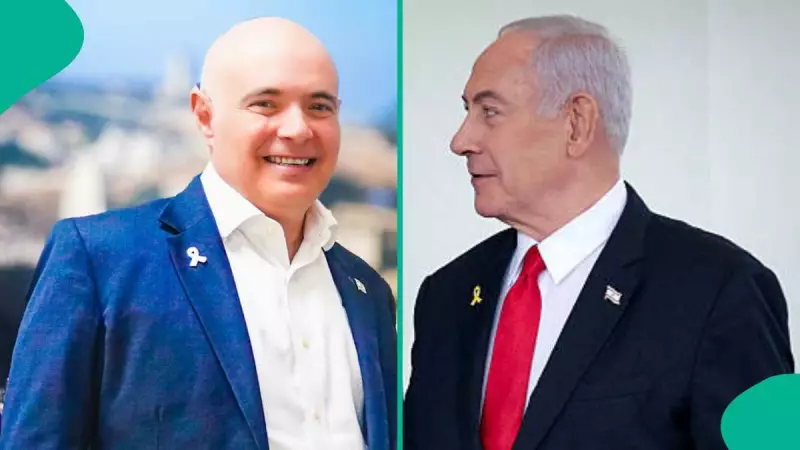
In a significant clarification, the Israeli Ambassador to Nigeria, Michael Freeman, has detailed the framework of his country's proposed support for Christian communities facing violence in Nigeria. The ambassador emphasized that any action would be a collaborative effort with the Nigerian government, not a unilateral intervention.
Partnership, Not Intervention: The Core of Israel's Stance
Ambassador Freeman made these statements during an interview with ARISE News on Monday, January 5, 2025. He was responding to the recent announcement by Israeli Prime Minister Benjamin Netanyahu, who declared an "eighth front" against radical Islamist violence globally, specifically highlighting support for persecuted Christians.
Freeman was unequivocal in stating that Israel's approach is rooted in partnership. "This is about working with Nigeria. It is not about working against Nigeria. It is working with Nigeria as a partner and as an ally," he stated. The ambassador explained that Prime Minister Netanyahu's message, delivered in a Christmas Day address on Wednesday, December 24, 2025, was a global stance against the persecution of any religious group.

Intelligence Sharing and Sovereign Respect
The proposed mechanism for this support, according to the ambassador, will focus on intelligence sharing and cooperation with Nigerian security agencies. Freeman stressed that Israel's interest extends beyond a single religious community, aiming to help curb violence affecting all Nigerians.
"Our interest is to work with Nigeria to stop all the violence in this country — against Christians, against Muslims, and against all Nigerians," Freeman said. This clarification seeks to position the initiative as one of technical and strategic support, fully acknowledging Nigeria's sovereignty and the primary role of its government in internal security matters.
Context of Growing Concerns and Domestic Calls
This diplomatic development occurs against a backdrop of heightened concern from Nigerian Christian bodies about targeted attacks. The Pentecostal Fellowship of Nigeria (PFN) has recently described the situation as a "Christian genocide" and called on President Bola Tinubu to engage in international diplomacy, including with figures like former US President Donald Trump who has made similar claims.
However, religious leaders have also been careful to note that the violence is perpetrated by radical elements, not by Muslims in general. The Israeli ambassador's remarks align with this nuance, framing the challenge as one of combating extremist violence rather than inter-religious conflict.
The coming months will likely see further dialogue between Israeli and Nigerian officials to operationalize this proposed partnership, with its success hinging on seamless integration with Nigeria's existing security architecture.