Kenyan Husband Makes Desperate Plea to Government After Multiple US Visa Rejections
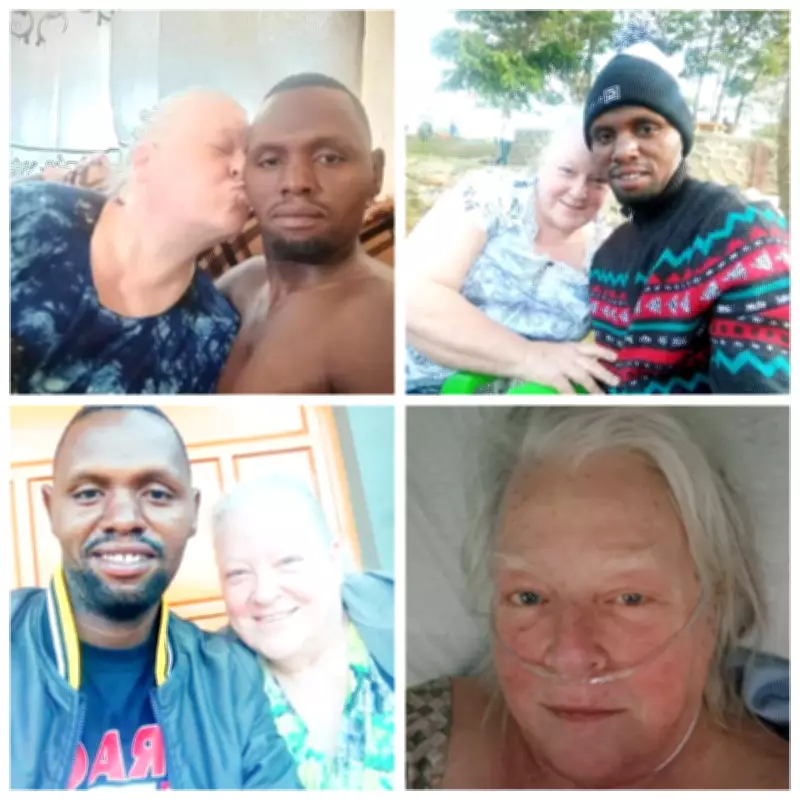
Bernard Musyoki Musungu Kakuawee, a 39-year-old Kenyan man, has issued an urgent appeal to the Kenyan government for assistance in securing a visa to visit his ailing 74-year-old American wife, Deborah Jan Spicer, who is currently hospitalized in the United States. The couple's story highlights the challenges faced by international families separated by immigration barriers and health crises.
A Love Story Tested by Distance and Bureaucracy
The couple first connected through Facebook in 2017, developing a deep bond despite their significant age difference and geographical separation. Musyoki revealed that he initially applied for a US visa in 2018, followed by another application in early 2020, but both attempts were denied by American immigration authorities.
Their relationship progressed despite these setbacks, with the couple meeting in person for the first time on December 20, 2020, in Nairobi, Kenya. They formalized their union by getting married on February 2, 2021, in a ceremony that marked the beginning of their legal partnership but did not resolve their immigration challenges.

Medical Crisis Compounded by Immigration Obstacles
The situation has become increasingly dire as Deborah's health has deteriorated. Speaking to TUKO.co.ke on Thursday, February 19, 2026, Musyoki disclosed that his wife has been hospitalized after testing positive for COVID-19 for a second time, with the virus causing severe damage to her lungs following a prolonged battle with pneumonia.
"She tested positive for COVID-19 again and one of her lungs is really damaged after fighting pneumonia for a long time," Musyoki explained, his voice filled with concern for his distant spouse.
This recent hospitalization follows previous health crises, including a January 2025 hospitalization that lasted several weeks after Deborah underwent heart surgery in the United States. During that medical emergency, Musyoki was similarly unable to travel to provide care and support to his recovering wife.
Multiple Visa Denials Despite Legal Marriage
Musyoki recently applied for a third US visa, hoping that his legal marriage and his wife's deteriorating health would strengthen his case, but he was denied once again. The repeated rejections have left him feeling helpless as he watches his wife's health decline from thousands of miles away.
Taking to Facebook to share his frustration, Musyoki posted photographs of Deborah lying in a hospital bed, accompanied by a heartfelt caption: "My mwende is in critical care in hospital, but I can't be with her. This is even after being legally married for over five years...so sad that she can't even travel...what a world."
Financial Arrangements and Cultural Traditions
In a related development, Musyoki revealed interesting details about their financial arrangements and cultural traditions. He disclosed that Deborah sends him approximately KSh 100,000 monthly for his upkeep, demonstrating their mutual support despite the physical distance between them.
The couple also honored Kenyan cultural traditions through their marriage, with Musyoki paying a dowry of KSh 100 for his Mzungu (foreign) wife. Since Deborah's parents are deceased, he negotiated the dowry payment directly with her and her adult children, who suggested the symbolic amount and requested that he take it to church as an offering.
Political Connections and Continued Advocacy
Musyoki, who recently entered Kenyan politics though unsuccessfully, has leveraged his connections and public platform to amplify his plea for government intervention. He continues to advocate for assistance in navigating the complex US visa application process, hoping that diplomatic channels might succeed where individual applications have failed.
The couple maintains that they are "madly in love" despite living on different continents and facing numerous obstacles, including significant age differences, cultural barriers, and now serious health challenges compounded by immigration restrictions.
Their story has captured public attention as it raises important questions about international marriage rights, immigration policies during health emergencies, and the role of governments in assisting citizens with legitimate family reunification needs across borders.