In a dramatic courtroom appearance, former Venezuelan President Nicolas Maduro has declared his innocence and claimed he was kidnapped by the United States. The hearing in Manhattan on Monday followed a daring military operation in Caracas that has plunged Venezuela into a new phase of political uncertainty.
Courtroom Drama and 'Kidnap' Claim
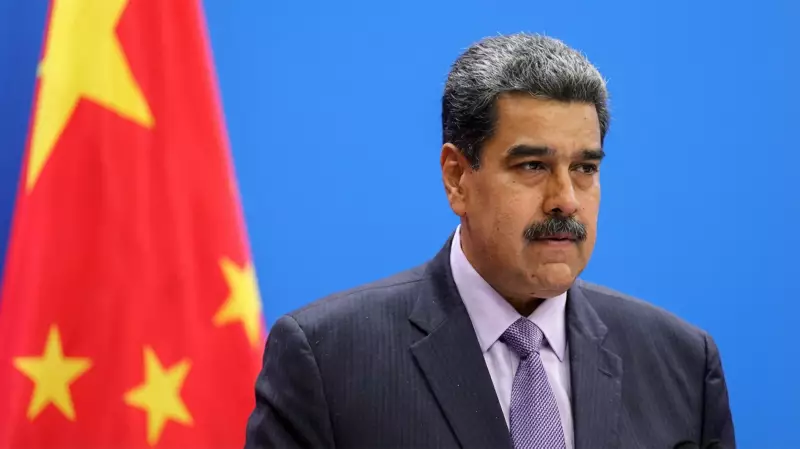
Standing before a federal judge, the 63-year-old Maduro pleaded not guilty to charges that include drug trafficking. Speaking through an interpreter, he made a bold statement: "I'm innocent. I'm not guilty." He further asserted, "I'm president of the Republic of Venezuela and I'm here kidnapped since January 3, Saturday. I was captured at my home in Caracas, Venezuela."
Maduro, who was smiling as he entered the courtroom wearing an orange shirt and beige trousers, was accompanied by his wife, Cilia Flores. She also entered a plea of not guilty. The judge ordered both to remain in custody and scheduled their next hearing for 17 March.

The Raid and Immediate Aftermath in Venezuela
This legal proceeding was set in motion by a high-stakes military operation on Saturday. US commandos, supported by warplanes and naval forces, seized Maduro and his wife in early morning airstrikes on their Caracas residence. In the wake of the capture, Maduro's former deputy, Delcy Rodriguez, was swiftly sworn in as the country's interim president.
The move prompted thousands of supporters to march through the streets of Caracas. However, prominent opposition leader Maria Corina Machado was highly critical of Rodriguez. From an undisclosed location, she told Fox News that Rodriguez is "one of the main architects of torture, persecution, corruption, narcotrafficking" and claimed she is "rejected" by the Venezuelan people. Machado, who recently left Venezuela to accept her Nobel Peace Prize, stated her intention to return "as soon as possible."
Geopolitical Ripples and Internal Power Struggles
The operation has significant international implications. Former US President Donald Trump stated that the United States is now "in charge" in Venezuela and intends to oversee the country's extensive but poorly maintained oil industry. He argued that elections cannot be held immediately, saying, "We have to fix the country first. You can't have an election. There's no way the people could even vote." This view contrasts with that of US House Speaker Mike Johnson, who suggested an election "should happen in short order."
Analysts have raised concerns that the raid may have disregarded international law. The operation also had a human cost; Havana reported that 32 Cuban nationals died during the action. US Defense Secretary Pete Hegseth confirmed nearly 200 US personnel were involved, with some injuries but no fatalities among American forces.
Internally, the stability of the new interim government is already in question. Brian Naranjo, a former US diplomat in Venezuela, warned of potential challenges to Rodriguez's authority from powerful figures like Interior Minister Diosdado Cabello and her brother, Jorge Rodriguez, who presides over the legislature. Naranjo starkly noted, "Delcy had better be sleeping with one eye open right now because right behind her are two men who would be more than happy to cut her throat and take control themselves."
Maduro, who succeeded Hugo Chavez in 2013 and has been accused by the US and EU of rigging elections and corruption, now faces a legal battle in New York. Meanwhile, Venezuela's 30 million citizens are left navigating a fraught political and economic future under an untested interim leadership.