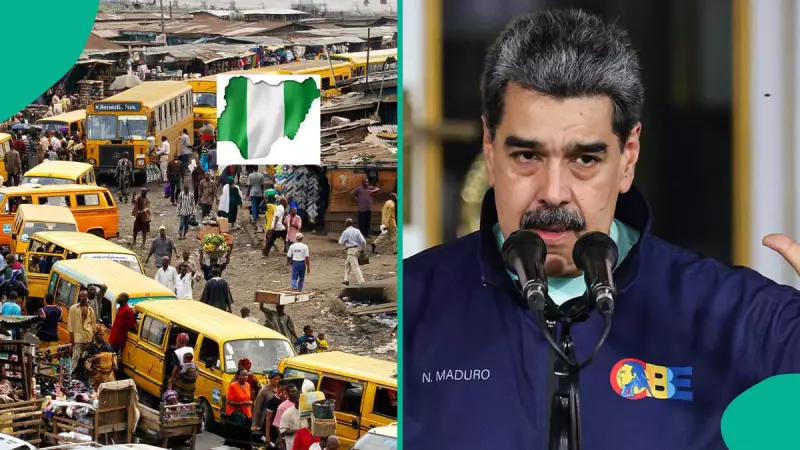
The dramatic capture of Venezuelan President Nicolás Maduro by United States forces on January 3, 2026, has sent shockwaves across the globe, casting a new light on his past international engagements. Among these, a significant but previously less-publicized visit to Nigeria in 2006 is now drawing fresh scrutiny and relevance.
From Abuja Summit to a New York Courtroom
Long before his arrest and subsequent charges in a New York court, Nicolás Maduro served as the foreign minister for the late President Hugo Chávez. In that capacity, he led a Venezuelan delegation to a pivotal summit in Abuja, Nigeria's capital, in 2006. The event aimed to forge stronger bonds between the African and South American continents.
Today, Maduro stands accused alongside his wife, son, and three others. The charges, mirroring an earlier 2020 indictment, include allegations of financing terrorism and ties to drug cartels—accusations he has consistently denied, framing them as a pretext for US interest in Venezuela's vast oil reserves.

Maduro's Vision for South-South Cooperation in Abuja
During the Abuja summit, Maduro articulated a bold vision for partnership independent of traditional Western powers. In an interview with Daily Trust, he emphasized that financial autonomy was the cornerstone of true regional independence.
He proposed concrete institutions to realize this goal, including:
- The establishment of a Bank of Africa and South America.
- Similar collaborative frameworks for the energy sector to reclaim full control over resources.
- The creation of a University of the South and a television station for the South to strengthen educational and communication ties.
Maduro framed the summit as a foundational step against shared challenges like poverty, urging for accelerated social and economic development through unity. He hailed the resulting Africa-South America Cooperation Forum as a "great leap forward," a permanent mechanism for dialogue.
A Principled Stance Against "Washington Elites"
When questioned about Venezuela's relationship with the United States even then, Maduro's words were telling. He denied a direct, singular conflict but stated, "the US is in conflict with the whole world."
He asserted that Venezuela's position was a "principled stance against the hegemonic ambition of the Washington elites." Committed to the Abuja summit's spirit, Venezuela hosted the follow-up forum in Caracas in 2008. Maduro warned participants to remain vigilant, as forces opposed to south-south solidarity would seek to derail their cooperative efforts.
The resonance of these nearly two-decade-old statements is palpable today. As Maduro faces the power of the US judicial system, his past advocacy for a united Global South front offers a poignant backdrop to his current predicament. For observers in Nigeria and across Africa, his capture reignites discussions on sovereignty, foreign intervention, and the enduring quest for a more balanced world order.