Social Media User Declares Iran as Dominant Force in Ongoing Conflict
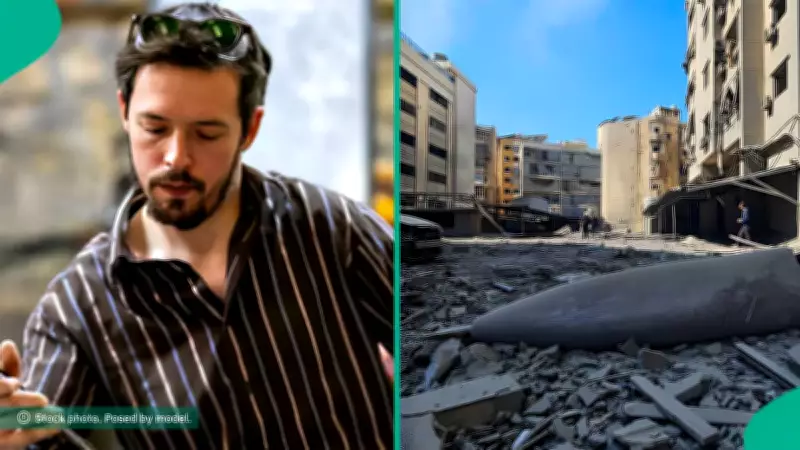
A young man has sparked widespread discussion across social media platforms after taking to his X account to share his perspective on the ongoing military confrontation involving Israel, Iran, and the United States of America. In his detailed post, the user offered a clear assessment of which nation he believes holds the strategic advantage in the heated conflict and which countries appear to be losing ground in the complex geopolitical struggle.
Online Debate Intensifies Over Conflict Assessment
Tensions have escalated significantly across multiple social media platforms as netizens engage in passionate discussions about the ongoing military operations between these powerful nations. The online debate surrounding the conflict intensified dramatically after this particular social media user weighed in with a strong and definitive opinion about the direction of the war and its potential outcomes.
The young man utilized his personal page on X, formerly known as Twitter, to share his comprehensive assessment of the current situation, providing a clear viewpoint on which side he believed had gained the upper hand in the military confrontation. Posting under the username @cirnosad, he presented a compelling argument that Iran had emerged as the dominant force in the ongoing confrontation, while both Israel and the United States had fallen behind strategically.

Detailed Analysis of Strategic Positions
In his detailed tweet, the poster suggested that Iran maintained a strategic advantage by not needing to strike directly at American territory. According to his carefully considered perspective, provoking a direct confrontation with the United States might cause a fundamental shift in the nature of the conflict, particularly concerning nuclear capabilities and escalation thresholds.
His post surfaced during a period when discussions about the war had completely dominated social media timelines and comment sections, with numerous users expressing genuine anxiety about how far the hostilities might spread and what the broader regional consequences might be for the Middle East and global stability.
In his exact words, the user stated: "Iran is winning the war. Israel and the US are losing the war. Iran doesn't need to target the US mainland, the party that does is the US/Israel to justify a nuclear attack on Iran."
Diverse Reactions from Social Media Users
Netizens responded with a wide variety of perspectives in the comments section, reflecting the complex nature of the conflict and differing interpretations of current events. One user named JRG Ovium commented: "This not even in the beginning, it not even a week. Peoples seems forget about the Iraqi war, yes the tech is indeed far way more sophisticated now than 30 or 10 years ago but the fundamental is the same. Until the USA announced Mandatory drafts like back then, Iran is loosing."
Another user identified as Dark 90 offered a different viewpoint: "I honestly was in the camp that Iran should've struck first, I admit that I was wrong and they definitely surprised me. The US/israel can't fix this. It's over."
User Allan provided military analysis: "U.S is now sending more refuelling planes to theatre. Where are they gonna land? They also now have to send B2 bombers on a rountrip from U.S mainland. Centcom has been demolished from the look of things."
Tombak king expressed skepticism about nuclear escalation: "Hmm I was thinking about todays probability of nuclear strike on Iran and still it's very low as neither US or Israel are cornered enough."
Several users questioned the assessment of Iranian dominance, with Whydoyouask asking: "Explain how are they winning? when there are no footage pf meaningful hits? even last tşme in short missle exchange they caused more destruction."
Albetrox expressed curiosity about Iranian resilience: "Cirno, how is Iran managing to continue the missile barrages and keep the fight up when the USA and Israel are hammering the mainland of Iran? It is quite impressive to be honest."
Soran suggested a strategic approach: "As long as Iran does the whole 'death by a thousand cutss' strategy and doesn't go too wild, then it will win."

Grizz offered perspective on American public opinion: "Bro, evangelicals here in the USA literally love Tel Aviv more than the entire USA. Trust me busting up Tel Aviv will break their heart more than their home getting bombed here. Outside of evangelicals, every American is supporting Iran."
Siberian raised concerns about nuclear capabilities: "cirnosad since Iran has planned for this kind of war for long, what do you think are Iranian plans to deal with US/Israel nukes? Israelis leaders are zealots ready to blow up the world and Americans believe in their exceptionalism crapp so they 'can't lose'."
Dudeeeee presented a controversial theory: "I still think they are going to target Mecca. They need ground forces who are already in theatre. That is the muslims. So fake Iran nuking Mecca get tens of millions of suicidee soldiers to throw into the wood chipper against Iran. Win - Win in their book."
Pirooz expressed ideological support: "We are witnessing the Islamic Republic of Iran's natural ascension as a GLOBAL SUPERPOWER. The world will now know the might of SHIA ISLAM! The resistance will LIBERATE Palestine and ALL of humanity from the satanic Baal tribe and Epstein empire. ALLAH AKBAR!"
Sam Zohat issued a warning: "Americans try and leash your fk president! You cannot live under safe roofs while my people getting bombarding! If he moves to nuke, every fk one of Americans will be legit target forever!!"
Broader Context of Regional Tensions
The social media discussion occurs against a backdrop of heightened regional tensions and military activities. The online debate reflects growing global concern about the potential for escalation and the broader implications for international security and diplomatic relations in the Middle East and beyond.
These exchanges on social media platforms demonstrate how digital spaces have become crucial arenas for geopolitical discourse, where individuals from around the world can share analyses, express concerns, and debate the complex dynamics of international conflicts in real-time as events continue to unfold across multiple fronts.