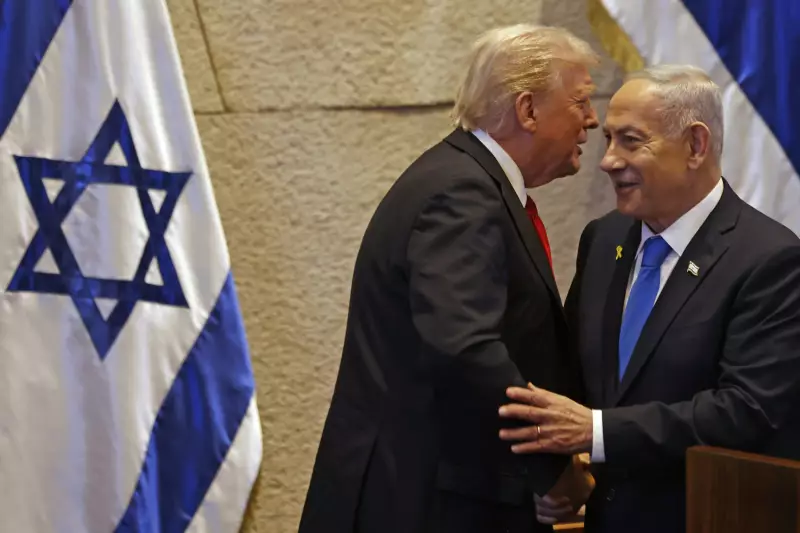
In a dramatic move that potentially averted a major regional war, Israeli Prime Minister Benjamin Netanyahu made a tense, last-minute phone call to then-US President Donald Trump, persuading him to call off imminent air strikes on Iran. This revelation comes from a report by The New York Times, detailing a moment of high tension as both nations prepared for a wider confrontation.
A Tense Phone Call That Changed Plans
According to the report, the situation was escalating rapidly. Diplomatic staff were being evacuated from Tehran, and airspace was being cleared, signalling that an American attack was moments away. It was at this critical juncture that Netanyahu intervened. He reportedly asked Trump to hold off on the strikes to give Israel more time to prepare for the inevitable retaliation from Iran that would follow any US military action.
Shortly after this decisive call, President Trump made a public statement offering a different explanation for the de-escalation. He claimed he had received information from "very important sources on the other side" that Iran had halted the killings of dissidents involved in the widespread anti-government protests.

"We were told that the killing in Iran is stopping, and there’s no plan for executions," Trump stated. "There’s no plan for executions or an execution. I’ve been told that on good authority. We’ll find out about it. I’m sure if it happens, I’ll be very upset."
International Pressure and Iran's Internal Crisis
The push to avoid military action did not come from Israel alone. Key regional governments, including Qatar, Saudi Arabia, Oman, and Egypt, also urgently advised the US administration against striking Iran. They warned that such an attack could ignite a catastrophic conflict across the entire Middle East.
Meanwhile, Iran continues to grapple with massive internal unrest. The government has imposed a nationwide internet blackout to control information flow. Despite this, shocking details have emerged. Two Iranian officials told The New York Times that at least 3,000 people have been killed during the government's crackdown on protesters.
Human rights organizations have condemned the violence. Mahmood Amiry-Moghaddam, Director of Iran Human Rights, provided horrifying details: "Horrifying eyewitness accounts of protesters being shot dead while trying to flee, the use of military-grade weapons, and the street execution of wounded protesters all point to a planned and widespread crime carried out with the aim of mass killing civilians."
He called for immediate international action, stating that Supreme Leader Ali Khamenei and his institutions "have committed one of the gravest crimes of our time."
Focus on a Single Life: The Case of Erfan Soltani
Amid the large-scale violence, global attention zeroed in on the fate of one individual: Erfan Soltani, a 26-year-old shopkeeper. Detained during the demonstrations, Soltani was believed to be at imminent risk of becoming the first protester executed since the latest wave of unrest began. His family feared he could be killed at any moment.
However, following intense international scrutiny and Trump's statements, Iranian officials appeared to reverse course. Iran's state-controlled media later stated that the charges against Soltani—"colluding against the country’s internal security and propaganda activities against the regime"—did not carry the death penalty if confirmed by a court.
On Thursday, January 15, the White House added that roughly 800 executions in Iran had been halted, and that Trump was "closely monitoring the situation." In a call with NBC News, Trump reflected on the events, saying simply, "We saved a lot of lives yesterday." Iran's Foreign Minister, Abbas Araghchi, subsequently told Fox News there were no plans for the "hanging" of protesters.