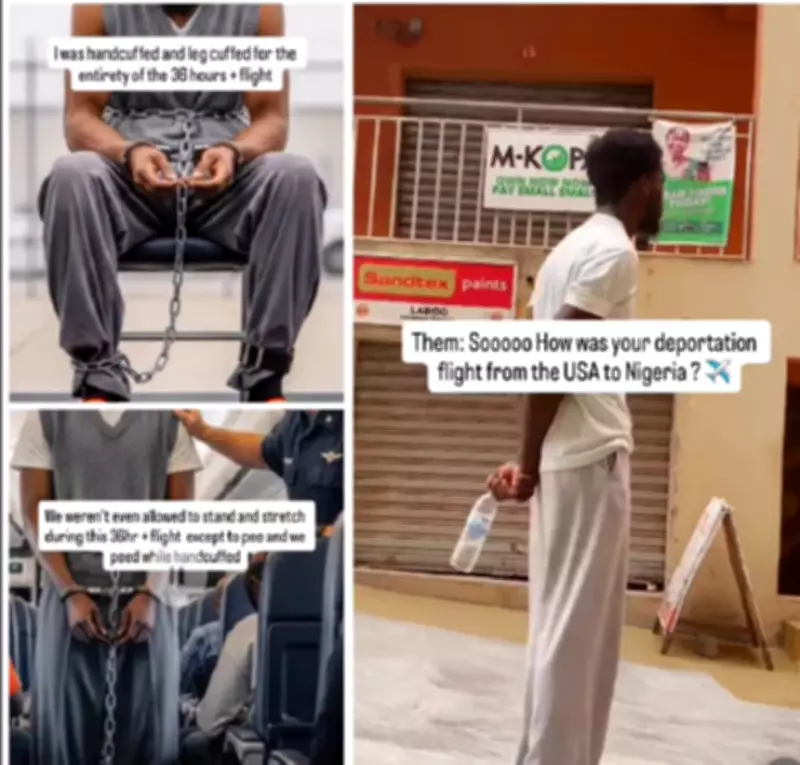
Nigerian Man Recounts 36-Hour Deportation Flight from US, Alleges Inhumane Treatment
A Nigerian man has publicly shared his harrowing experience after being deported from the United States, providing a detailed account of what he described as harsh and inhumane conditions during the removal process. According to his testimony, the journey was marked by extreme physical restraints and prolonged discomfort, raising concerns about the treatment of deportees.
Prolonged Restraints and Harsh Conditions
The man alleged that deportees, particularly Nigerians who were the last stop on the flight route, spent a minimum of 36 consecutive hours restrained with handcuffs, leg cuffs, and waist chains. He claimed they were unable to stand or stretch properly throughout the entire journey, which he described as unnecessarily prolonged. The flight reportedly made five stops, with Nigeria as the final destination, adding to the duration and discomfort.
He further detailed that meals had to be eaten while still restrained, and detainees were forced to relieve themselves under the same conditions. This, he argued, contributed to a degrading and physically taxing environment during the flight.

Allegations of Unjustified Restraints
Addressing the use of restraints, the man stated that air marshals and security personnel informed them the cuffs could not be removed because they were still considered to be on US soil while aboard the aircraft, even after leaving US airspace. He expressed frustration with this justification, viewing it as an excessive measure that exacerbated the hardship of the deportation process.
Additionally, he alleged that elderly men and women were subjected to the same treatment, highlighting a lack of consideration for vulnerable individuals during the deportation operations.
Mixed Emotions and Relief Upon Return
Despite the ordeal, the man clarified that he does not view his deportation itself as negative, acknowledging the legal reasons behind it. However, he criticized his experience while in ICE custody and during the deportation process, describing it as traumatic and inhumane.
He expressed gratitude for returning home safely and noted that his wife and family are relieved now that he is no longer in detention. This sentiment underscores a complex mix of relief and lingering distress from the treatment he endured.
The story has sparked discussions on social media and among advocacy groups, with calls for greater scrutiny of deportation practices and the humane treatment of individuals during such processes. As immigration policies continue to evolve, experiences like this highlight the need for balanced approaches that respect human dignity while enforcing laws.