The Cost of Unpredictability: Nigeria and the Consequences of Washington’s Shifting Priorities
By Ahmed Idrisu
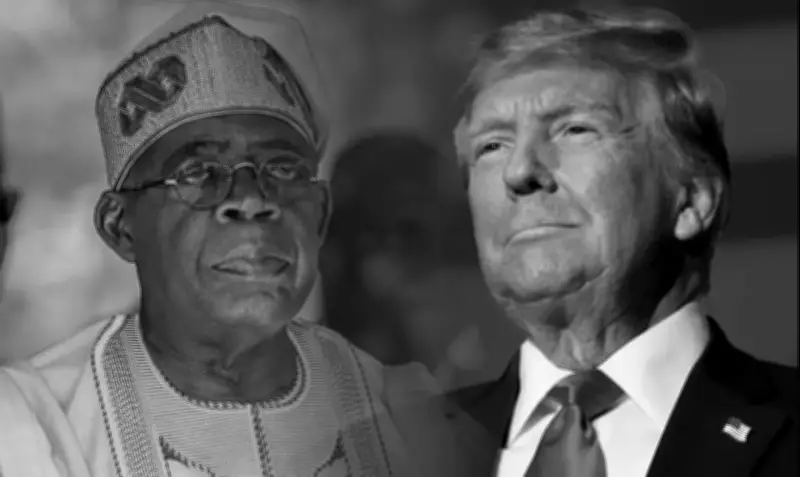
The relationship between the United States and Nigeria underwent a profound and rapid deterioration over the course of 2025, exposing a fundamental inconsistency in American foreign policy that has generated significant negative consequences for a long-standing partner. The sequence of events, beginning with trade measures and escalating to an overt threat of military force, demonstrates an approach to international affairs driven more by domestic political rhetoric than by strategic calculation or respect for established diplomatic protocols.
Economic Impact of Trade Tariffs
While American administrations have historically pursued interests abroad through a combination of persuasion and pressure, the actions taken against Nigeria this past year represent a departure toward a far more forceful and unilateral posture. The repercussions have not been confined to diplomatic cables and press statements. They have materialised in measurable economic damage and a palpable sense of uncertainty regarding the reliability of Washington as an ally.

The initial friction arose from a recalibration of American trade policy. In April 2025, the United States announced a new tariff of 14 percent on a variety of Nigerian goods entering the American market. The official rationale provided by the United States Trade Representative centred on what it termed a significant barrier to American commerce: a Nigerian policy that restricts access to foreign currency for the importation of approximately two dozen categories of American products.
While the American tariff largely exempts shipments of Nigerian crude oil, it applies squarely to the non-oil exports that Abuja has identified as critical for the nation’s long-term economic health. Nigerian exporters found themselves at a distinct disadvantage in the American market, and the flow of goods contracted sharply. The value of Nigerian exports to the United States fell by more than one-fifth over the first nine months of 2025 when compared to the same period in the previous year.
Geopolitical Tensions and Military Threats
The combined result of falling Nigerian exports and rising American imports produced a stark reversal in the bilateral trade balance. The economic ground shifted significantly in a short period, underscoring the vulnerability of Nigeria’s diversification efforts to sudden shifts in American policy.
Nigeria’s concurrent engagement with the BRICS grouping added a further geopolitical dimension to the trade tensions. The United States had previously signalled that nations perceived as aligning with this bloc could face an additional layer of punitive tariffs. This threat placed Abuja in a position where its pursuit of diversified international partnerships was being met with direct economic consequences.
Later, in early November 2025, Donald Trump issued a public threat of military intervention in Nigeria, which he justified by “Christian genocide being carried out by radical Islamist elements within the country”. The threat was accompanied by a warning that all forms of American assistance to Nigeria would be terminated and by a formal designation of Nigeria as a country of particular concern regarding religious freedom.
Nigeria’s Response and Broader Implications
The Nigerian government responded to this ultimatum with a firm rejection of the premise. Officials stated that the characterisation of the security situation as a one-sided genocide was a gross exaggeration and a distortion of complex realities. The Nigerian position maintained that the American narrative was a harmful simplification driven by political considerations rather than a sober assessment of facts.
The threat of military action, coming from a nation with which Nigeria has maintained decades of security cooperation and economic ties, marked a new and volatile low point in the relationship. The trajectory of 2025 illustrates a broader pattern. American policy toward Nigeria has oscillated between economic pressure and outright ultimatum, leaving little room for the steady, behind-the-scenes diplomacy that typically manages friction between allied nations.

This shift toward transactional pressure and unilateral action has not occurred in isolation. It unfolds against a backdrop of Washington’s rapidly changing positions toward all its other partners—evident in the military invasion of Iran, the forcible detention of Venezuela’s Nicolás Maduro, explicit threats to withdraw from NATO in response to what Trump characterizes as European reluctance to support operations against Iran, and the marked deterioration of relations with various African nations, most notably South Africa.
Conclusion: A Deficit of Trust
The economic data demonstrates that the US tariff policy in Nigeria inflicted concrete financial damage, while the military threat inflicted damage to the foundation of mutual respect and trust upon which international partnerships are built. For Abuja, the experience of the past year has provided a stark reminder of the costs that can arise when a powerful ally chooses to prioritise domestic political posturing over the careful management of a complex and valuable relationship.
The inconsistency on display has produced not only a trade deficit but also a deficit of trust that will require considerable time and effort to repair. Ahmed Idrisu, a public commentator, writes from Abuja.