A startling investigation by The New York Times has uncovered the unlikely source of intelligence that influenced a United States military strike in Nigeria in late December 2025. The report reveals that unverified data compiled by a screwdriver trader in Onitsha, Anambra State, played a key role in shaping the decision-making of US lawmakers and, ultimately, President Donald Trump.
The Controversial Strike and Local Accounts
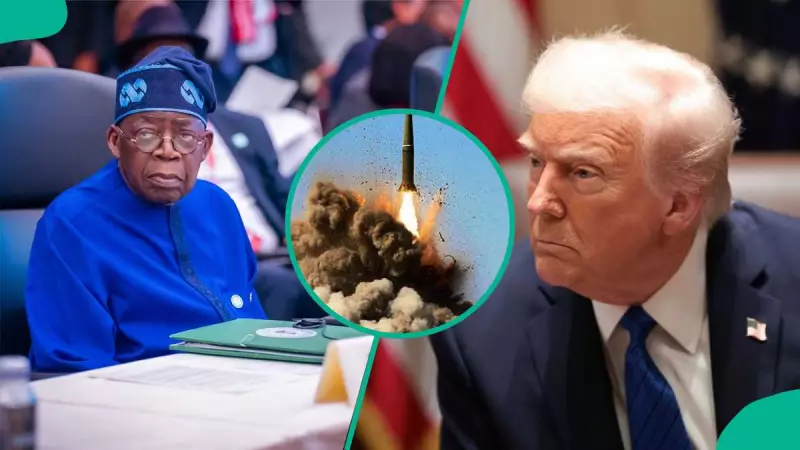
In December 2025, a US missile strike targeted what was described as an ISIS-affiliated group in Bauni village, Sokoto State. The operation, authorized by President Trump, was presented as a response to a request from the Nigerian government and part of a broader strategy following Nigeria's redesignation as a "country of particular concern" in October 2025 over allegations of Christian persecution.
However, the success of the strike was immediately challenged. A detailed report by HumAngle in January 2026, based on witness accounts from Bauni residents, painted a different picture. Locals insisted that no terrorists were killed or injured, as the militants had vacated the area long before the missiles hit. They described the attack as confusing and "performative," raising serious questions about its intelligence basis.

The Onitsha Connection: Emeka Umeagbalasi and His Data
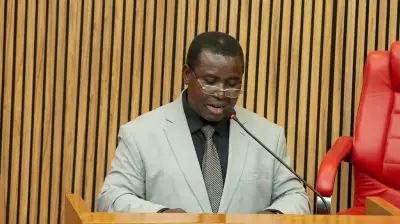
According to The New York Times, the chain of intelligence leading to the strike can be traced back to Emeka Umeagbalasi, the founder of the International Society for Civil Liberties and Rule of Law (Intersociety). Umeagbalasi runs his NGO from his home while operating a small shop selling screwdrivers and wrenches in Onitsha.
His research, which claims to document 125,000 Christian deaths in Nigeria since 2009, became a critical reference point for US Republican lawmakers. Congressmen Riley Moore, Ted Cruz, and Chris Smith cited his work to promote the narrative of a systematic slaughter of Christians in Nigeria, a claim Trump tasked them to investigate.
The methodology behind this influential data is highly questionable. Umeagbalasi admitted to The New York Times that he rarely verifies his information on the ground. He relies on Google searches, Nigerian media reports, and secondary sources from advocacy groups like Open Doors. He often assumes victims' religions based on the attack's location, stating, "If a mass abduction or killing happens in an area where he thinks many Christians live, he assumes the victims are Christians."
When pressed on his sources for claiming 20,000 churches were destroyed in 16 years, his simple reply was, "I Googled it." Despite this, he describes himself as a powerful investigator with degrees in security studies from the National Open University of Nigeria.
Political Fallout and Sovereignty Concerns
The revelation has ignited a political firestorm in Nigeria. The African Democratic Congress (ADC) launched a fierce critique of President Bola Ahmed Tinubu's administration. In a statement by spokesperson Bolaji Abdullahi, the party accused Tinubu of "outsourcing his constitutional responsibility" and effectively reporting to another president.
The ADC warned that the incident, where Nigeria appeared to play only a supporting intelligence role on its own soil, poses grave risks to the nation's sovereignty, strategic autonomy, and self-respect. The episode underscores the dangerous potential of unverified data being amplified through international political channels to justify military action.
The US Africa Command maintains that its December 2025 operation neutralised multiple ISIS militants. However, the nexus between a trader's Google-based research in Onitsha and a deadly missile strike in Sokoto raises profound questions about intelligence vetting, the manipulation of conflict narratives, and the protection of Nigerian sovereignty in international security engagements.