Iran Announces Strait of Hormuz Fully Open During Israel-Lebanon Ceasefire
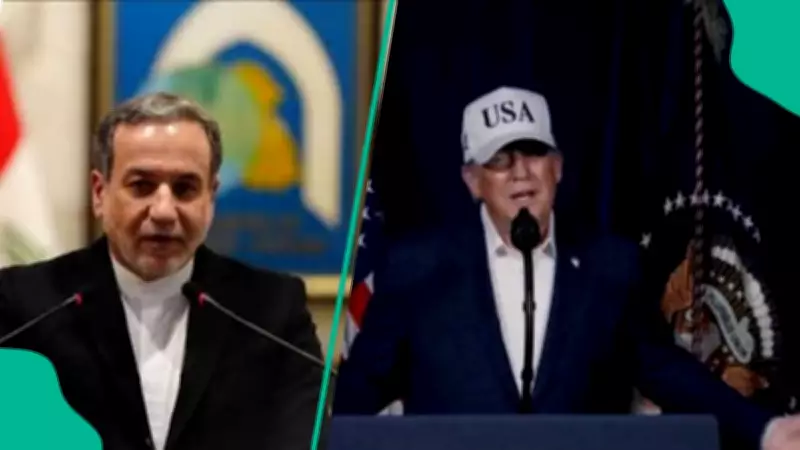
Iran has officially confirmed that the Strait of Hormuz will remain completely open for all commercial vessels throughout the duration of the recently established ceasefire between Israel and Lebanon. This critical announcement was made by Foreign Minister Abbas Araghchi via a post on social media platform X on Friday, April 17, 2026. Araghchi explicitly stated, "In line with the ceasefire in Lebanon, the passage for all commercial vessels through Strait of Hormuz is declared completely open for the remaining period of ceasefire."
Immediate Impact on Global Oil Markets
Following Iran's declaration, oil prices in the United States experienced a dramatic crash, plummeting by over 10% on the same day. This significant market reaction underscores the strait's pivotal role in global energy trade, as it facilitates the transit of approximately one-fifth of the world's oil and liquefied natural gas. The price drop reflects renewed market confidence in the stability of this vital maritime corridor, albeit amidst a fragile regional truce.
Details of the Ceasefire Agreement and Regional Dynamics
The ceasefire itself, agreed upon late on Thursday, April 16, is set for a 10-day period. However, substantial uncertainty persists regarding whether Hezbollah, the armed group engaged in combat against Israel's military operations in southern Lebanon, will formally recognize the truce. According to the terms shared by the US State Department, Israel is permitted to act in self-defense against imminent threats but is prohibited from launching offensive operations within southern Lebanese territory.

United Nations peacekeepers in southern Lebanon reported no observed airstrikes since the ceasefire's commencement at midnight, though they noted violations of airspace and artillery shelling by Israeli forces. The Israeli military has yet to issue an official comment on these allegations.
US Stance and Ongoing Naval Blockade
United States President Donald Trump acknowledged the strait's openness, confirming it was "completely open and ready for business and full passage." Nevertheless, he emphasized that the US naval blockade targeting Iran would remain in full force until Tehran reaches a comprehensive agreement with Washington to conclude the ongoing conflict. This blockade was initially imposed after failed diplomatic talks between the US and Iran in Pakistan, leading to the US Navy enforcing restrictions on Iranian ports in the Strait of Hormuz and the Gulf.
Analysts, including Al Jazeera's correspondent in Washington DC, noted that the likelihood of the US lifting this naval blockade was always minimal, as the Trump administration views it as a crucial lever to exert pressure on Iran. President Trump further declared, "Israel will not be bombing Lebanon any longer. They are PROHIBITED from doing so by the U.S.A. Enough is enough!!!"
Operational Protocols for Vessel Transit
Iran's Ports and Maritime Organisation has established coordinated routes for vessels navigating the strait. A senior Iranian military official clarified to state media that only non-military vessels would be permitted transit, with explicit authorization required from the Iranian Revolutionary Guard Corps Navy. This measure aims to ensure security and compliance during the ceasefire period.
Background and Broader Implications
The conflict, which ignited on February 28, 2026, has already resulted in the loss of more than 3,000 lives. During the hostilities, Iran had previously blocked traffic through the Strait of Hormuz, exacerbating global energy supply concerns. The current ceasefire and Iran's subsequent announcement represent a significant, though precarious, diplomatic development.
Mairav Zonszein, a senior analyst with the International Crisis Group, described the direct negotiations between Lebanon and Israel as "an important breakthrough," but cautioned that the prospects for a durable, long-term agreement remain highly uncertain. She added, "Nevertheless, a diplomatic track that strengthens the Lebanese government and sees a gradual withdrawal of Israeli presence will contribute to weakening Hezbollah politically."

The situation continues to evolve, with the international community closely monitoring adherence to the ceasefire terms, the stance of Hezbollah, and the broader implications for regional stability and global energy markets.