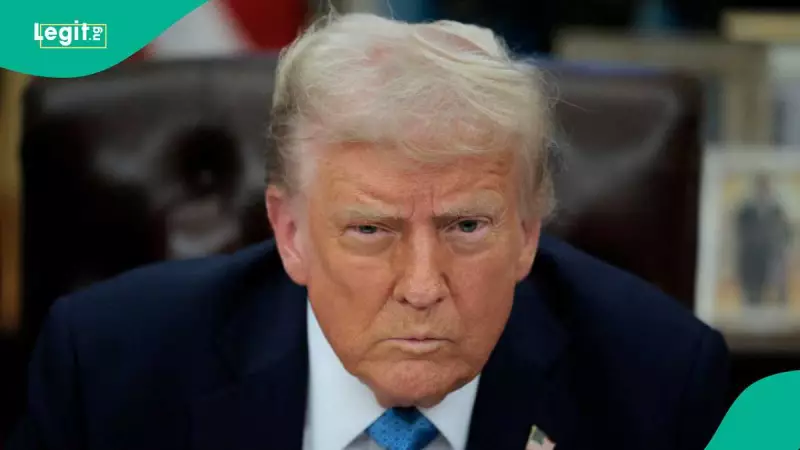
In a statement that has sent shockwaves through diplomatic and legal circles worldwide, United States President Donald Trump has declared that he does not require international law to guide his decisions, asserting that his personal morality is a sufficient compass. This controversial stance comes in the wake of a dramatic US military operation in Venezuela that involved strikes and the seizure of President Nicolas Maduro.
Trump's Defiance of Global Legal Norms
Speaking in an interview with The New York Times, President Trump explicitly dismissed the necessity of adhering to international legal standards. "I don't need international law. I'm not looking to hurt people," Trump stated. When pressed on whether he considered himself bound by such laws, he offered a qualified response, suggesting compliance was a matter of interpretation. He added that he does follow international law, but noted, "it depends what your definition of international law is."
These remarks, made public on January 10, 2026, have drawn immediate and sharp criticism from international law experts and United Nations officials, who warn that such rhetoric undermines the global order and sets a dangerous precedent.

Venezuela Operation Triggers Global Alarm
The context for Trump's comments is a highly contentious military intervention. Over the weekend, US forces carried out early morning strikes in Venezuela, with explosions reported in the capital, Caracas, and near key military installations. The operation culminated in the seizure of Venezuelan President Nicolás Maduro.
Critics have been swift to label the action a blatant violation of the United Nations Charter, which prohibits the use of force against the sovereignty of another state. Shortly after the operation, Trump indicated the US intended to "run" Venezuela and benefit from its vast oil resources. Administration officials later clarified that cooperation would occur with interim President Delcy Rodriguez.
Trump issued a stark warning, stating, "If she doesn’t do what’s right, she is going to pay a very big price, probably bigger than Maduro." The administration has also hinted at further potential actions against leaders like Colombia's Gustavo Petro and has renewed interest in acquiring Greenland.
Experts Warn of a Dangerous New Era
The international response has been one of profound concern. Margaret Satterthwaite, the UN Special Rapporteur on the independence of judges and lawyers, told Al Jazeera that dismissing legal norms was "extremely dangerous" and risked a return to an "age of imperialism." She warned that weakening these standards could embolden rival states and deepen global insecurity.
Yusra Suedi, an assistant professor of international law at the University of Manchester, echoed these fears. She cautioned that Trump's stance "gives permission to other states to essentially follow suit", potentially encouraging actions by China regarding Taiwan or Russia concerning Ukraine.
Political scientist Ian Hurd pointed to the troubled history of US intervention in Latin America, citing past actions in Panama, Haiti, Nicaragua, and Chile. "These never work well," Hurd argued, emphasizing that history offers clear lessons on the long-term costs of such interventions.
Within the Trump administration, senior aide Stephen Miller defended the hardline posture, criticizing the post-World War II international system. "We’re a superpower, and under President Trump, we are going to conduct ourselves as a superpower," Miller told CNN. While supporters see this as protecting American interests, critics see a direct threat to the stability of international relations.
In a related development, the seized Venezuelan leader, Nicolás Maduro, pleaded not guilty in a Manhattan courtroom on Monday, January 5, to charges of drug trafficking and weapons offences, all while maintaining he is Venezuela's legitimate president.