Trump Issues Stark Tariff Warning to Iran's Military Suppliers
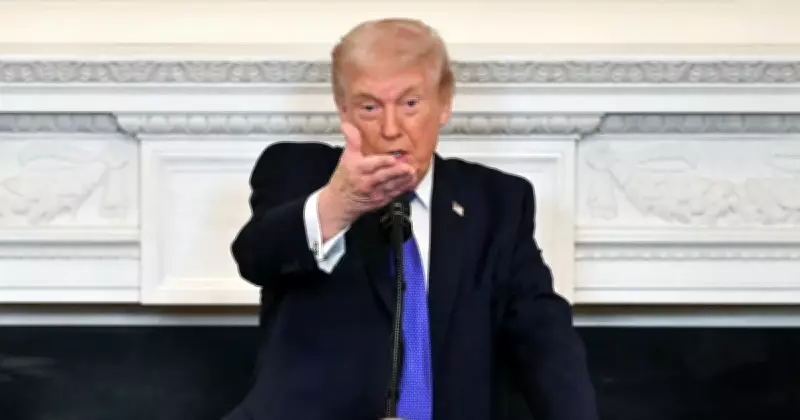
In a significant escalation of economic pressure, former President Donald Trump has declared that the United States will impose immediate 50% tariffs on all goods exported from any nation found to be supplying military weapons to Iran. The warning was delivered via his Truth Social platform, marking a hardline stance amid ongoing regional tensions.
Immediate Economic Consequences Announced
Trump's statement was unequivocal: "A country supplying military weapons to Iran will be immediately tariffed on all goods sold to the United States of America, 50 per cent, effective immediately. There will be no exclusions or exemptions." This policy represents a direct attempt to curb international military support for Tehran through severe economic disincentives.
The announcement follows closely on the heels of a temporary ceasefire arrangement between the U.S. and Iran, which was facilitated by Pakistani mediation. This diplomatic breakthrough led to Iran agreeing to reopen the strategically vital Strait of Hormuz, a key global shipping corridor that had been at the center of recent geopolitical friction.

Ceasefire and Diplomatic Developments
According to White House communications shared on social media platform X, Trump has implemented a temporary suspension of all military activities targeting Iran. This two-week pause in hostilities was negotiated after discussions with Pakistani Prime Minister Shehbaz Sharif and Field Marshal Asim Munir.
The president stated that the United States has already achieved and surpassed its military objectives in the region, and is now actively pursuing a long-term peace agreement with Iranian authorities. In a notable shift, Trump revealed that his administration is considering potential economic relief measures for Tehran, including discussions around tariff reductions and sanctions relief.
Background of Escalating Tensions
This latest development continues a pattern of warnings that began in March, when Trump issued one of his most severe threats yet to Iranian leadership. At that time, he warned that the United States could "completely obliterate" critical Iranian infrastructure including electric plants, oil wells, and Kharg Island if negotiations failed and the Strait of Hormuz remained closed.
Trump claimed the U.S. was engaged in serious discussions with what he described as a "new and more reasonable regime" in Iran, aimed at concluding American military operations in the country. However, he emphasized that failure to reach a swift agreement could trigger devastating military action against Iran's essential infrastructure.
Strategic Implications and Regional Dynamics
The simultaneous approach of economic pressure through tariff threats and diplomatic engagement through ceasefire negotiations highlights the complex strategy Washington is employing in its relations with Tehran. While specific details of the ceasefire agreement and ongoing negotiations remain limited, the developments suggest a multifaceted approach combining:
- Economic coercion through tariff threats against third-party arms suppliers
- Military de-escalation through the temporary ceasefire
- Diplomatic channels facilitated by Pakistani intermediaries
- Potential economic incentives through discussed relief measures
The reopening of the Strait of Hormuz represents a significant concession from Iran, given the waterway's crucial role in global energy transportation. This development, coupled with the tariff warning against arms suppliers, creates a complex landscape of pressures and incentives as negotiations continue toward a potential long-term settlement.